

Burkina Faso has suspended beauty pageants across the country and introduced a national science competition aimed at recognising and rewarding young women for their academic abilities.
The move has drawn attention to the West African country’s efforts to promote cultural values while encouraging more girls to pursue careers in science, technology and other technical fields.

In June 2026, Burkina Faso’s Ministry of Communication, Culture, Arts and Tourism announced the temporary suspension of all beauty competitions while the government worked on new regulations to guide their organisation.
The ministry said the decision was intended to protect the country’s cultural identity, moral and social values, as well as ethical standards and human dignity. It also stated that no new permits would be issued for beauty pageants while the suspension remained in force.
Rather than being a permanent ban, the suspension is part of a review of how beauty competitions should be organised in the country. Officials have indicated that the contests could return under revised rules that place greater emphasis on local culture and traditional values.
New science competition introduced
In August 2026, the Presidency of Burkina Faso launched a national science competition known as HAKILI Mousso, a name that means “Female Intelligence”.
The competition brought together 84 young women from across the country to demonstrate their knowledge and abilities in mathematics, physics and chemistry.
The participants were drawn from students who obtained science-track high school qualifications in 2026. The initiative was designed to identify talented young women, reward academic excellence and encourage them to consider careers in scientific and technical fields.
The competition concluded with an awards ceremony in September, where the best-performing participants received prizes in recognition of their achievements.
The winners in the three subjects received two million West African CFA francs each, alongside a laptop and a motorcycle. Other participants also received prizes, including cash awards, computers and scholarships.
The top performers were Inès Marie Fabiolas Nikiéma in chemistry, Aminata Traoré in physics and Adjaratou Bama in mathematics.
President meets winners
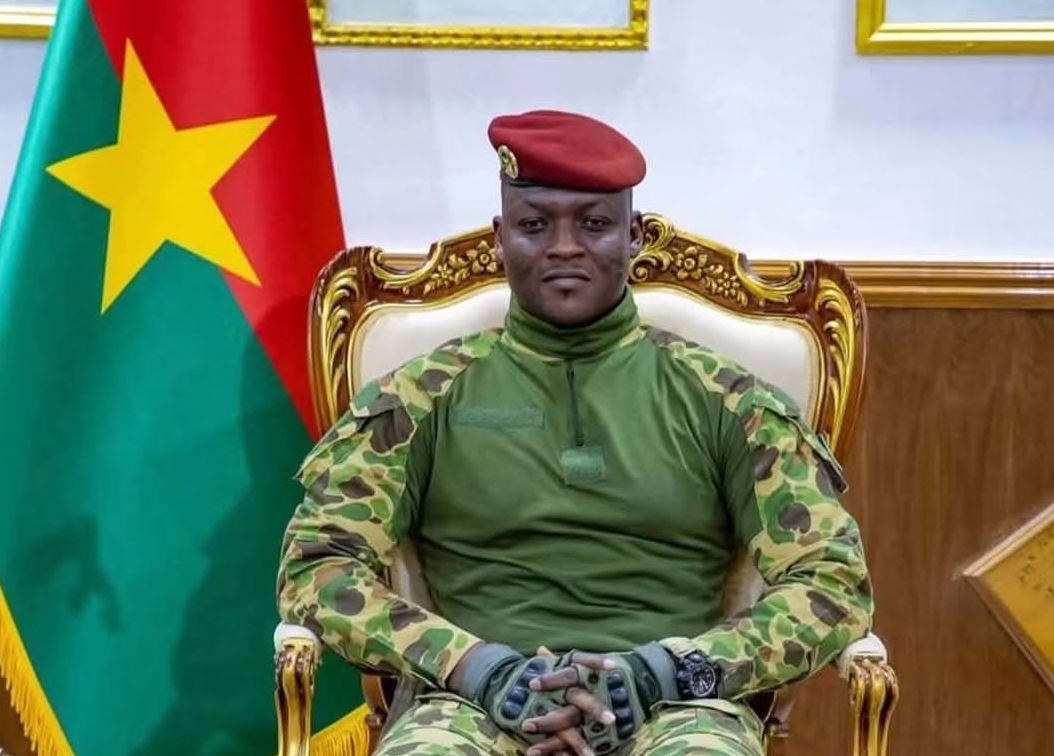
Following the competition, Burkina Faso’s President, Captain Ibrahim Traoré, received the finalists at the presidential palace on September 21.
During the meeting, he encouraged the young women to believe in their abilities, set ambitious goals and pursue careers in science.
The initiative also seeks to challenge the belief that scientific subjects are mainly suited to men and encourage more female students to pursue opportunities in fields where women remain underrepresented.
Figures presented by Burkinabe officials during the awards ceremony showed that women accounted for 36.7 per cent of enrolment in scientific courses in the 2025–2026 academic year, compared with 59.5 per cent in non-scientific courses.
By introducing HAKILI Mousso, the government is creating another platform through which young women can gain national recognition for their knowledge, hard work and academic achievements.
The development marks a shift in the country’s approach to celebrating young women, with greater attention being given to intellectual ability and scientific potential while the government reviews the future of beauty pageants.
