

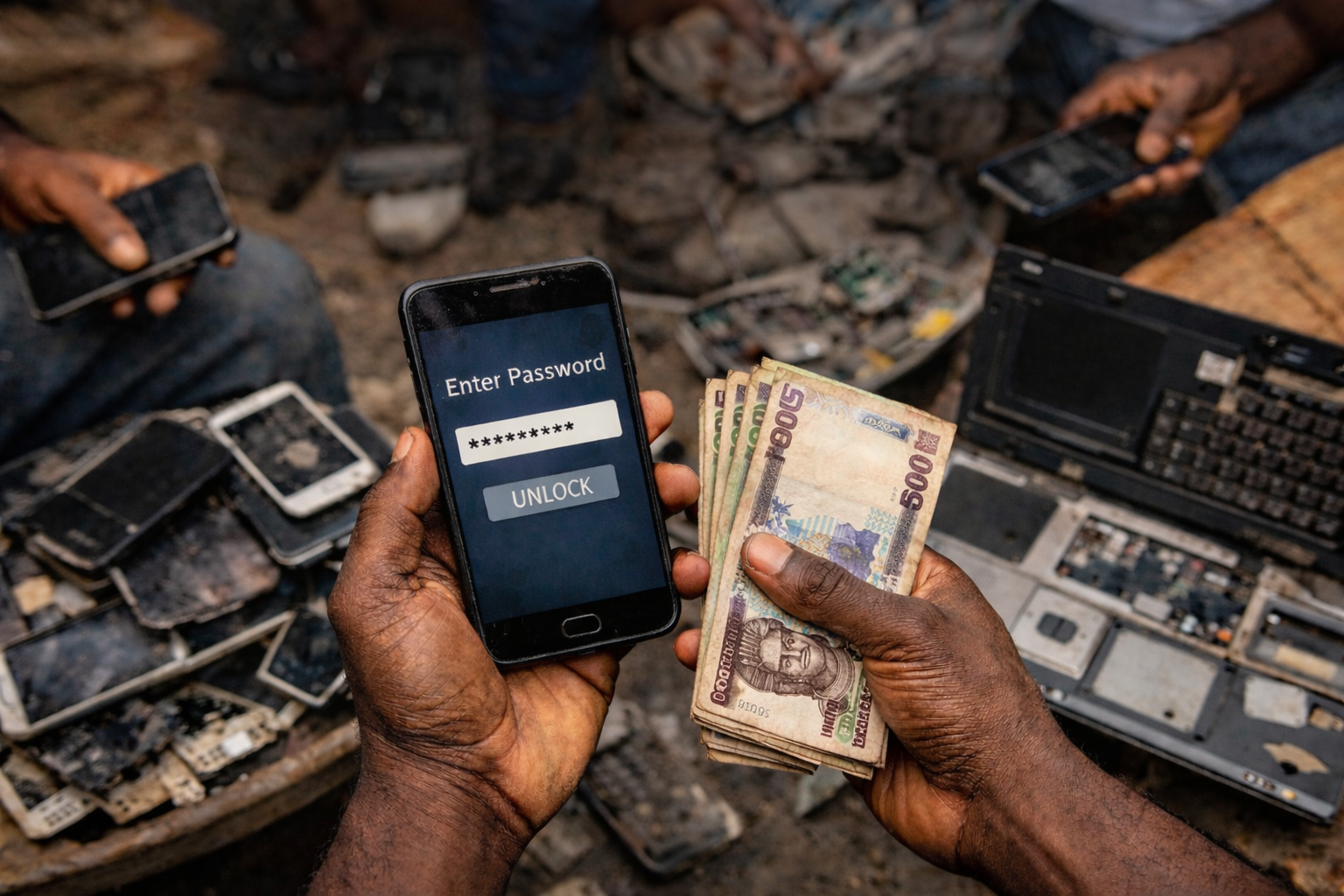
In Nigeria’s fast-growing second-hand electronics market, condemned phones and laptops, once considered worthless are finding new life on resale counters. But beyond the visible trade in damaged or outdated devices, a more troubling pattern is emerging: the monetisation of access. From major tech hubs like Computer Village to informal roadside markets, sellers are increasingly transferring not just hardware, but the passwords and digital identities embedded within them often in exchange for better prices.
What appears to be a simple transaction is, in many cases, a high-risk exchange of personal data. As economic pressures push more Nigerians to cash out on old devices, cybersecurity safeguards are frequently overlooked, turning passwords into bargaining tools and exposing sensitive information to unknown buyers. This report examines how a culture of convenience and survival is driving a dangerous trend where access is sold as easily as the device itself.

devices; they are relinquishing access to their .
“Condemn phone! Condemn computer! Handset to baje baje! We are buying at a good price!”
The call has become a constant feature on Nigerian streets, often amplified through megaphones as traders urge residents to exchange faulty gadgets for instant cash. The proposition is simple: bring any damaged device and walk away with money.
Yet, what many sellers fail to realise is that a faulty device is not necessarily an empty one. Even when a phone is water-damaged or a laptop appears beyond repair, internal storage often remains intact. Personal data including sensitive images, account details, and private communications can still be accessed or recovered.
What appears to be a straightforward sale, therefore, may in fact amount to the transfer of digital access to unknown parties.
Cybersecurity experts warn that the true value of these devices often lies not in the hardware, but in the data they contain.
Passwords as Hidden Currency
Contrary to standard resale practices where devices are wiped clean before transfer many condemned gadgets are sold while still locked or partially accessible. In some instances, sellers willingly provide passwords to facilitate quicker transactions and secure higher prices.
“Once the buyer can access it immediately, the price goes up,” a Lagos-based trader said. “If you don’t know the password, it becomes harder to sell.”
This informal pricing dynamic has effectively transformed passwords into a form of digital currency unlocking not just the device, but access to emails, social media platforms, banking applications, and private files.
A Risky Shortcut in a Struggling Economy
Amid rising inflation and the escalating cost of new electronics, many Nigerians are turning to the second-hand market as a practical alternative. Condemned devices offer a more affordable entry point for buyers unable to purchase new gadgets.
However, in the urgency to convert old devices into cash, proper data protection measures are often ignored. Instead of conducting secure data wipes, sellers frequently:
- Leave devices unlocked
- Share passwords with buyers
- Rely on technicians to “handle it”
The result is a thriving grey market in which access credentials are casually transferred alongside physical devices.
The Illusion of Data Deletion
Even when some level of precaution is taken, the risks persist. Experts note that factory resets or simple file deletions do not always guarantee complete data erasure. Residual data such as login credentials, usage history, and personal identifiers can still be recovered from second-hand devices.
This creates opportunities for buyers, technicians, or cybercriminals to extract valuable information long after the device has changed hands.
Unlocking for Profit and Controversy
The widespread availability of unlocking services has further accelerated the trade. Across Nigeria, technicians offer relatively inexpensive solutions to bypass passwords and restore access to locked devices, making them easier to resell.
However, this convenience raises serious legal and ethical concerns, particularly in cases where device ownership cannot be verified. Authorities have, at times, moved against individuals involved in unlocking suspicious devices linked to theft or fraud.
When Data Becomes the Real Asset
Cybersecurity analysts argue that in today’s digital economy, personal data often outweighs the value of the device itself.
“What people are selling is not just a phone,” a Lagos-based IT expert noted. “They are selling identities emails, contacts, financial access. That’s where the real risk lies.”
Information stored on these devices ranging from social media accounts to banking credentials and business communications can be exploited for fraud, impersonation, and other cybercrimes.
Growing Awareness, Slow Change
Although awareness is gradually increasing, many Nigerians continue to underestimate the risks involved. The immediate need for cash often takes precedence over concerns about data security.
Experts, however, maintain that basic precautions such as comprehensive data wiping, removal of linked accounts, and, where necessary, replacement of storage componentscan significantly reduce exposure.
A Market That Trades More Than Devices
As Nigeria’s second-hand electronics market expands, the boundary between hardware resale and data exchange is becoming increasingly blurred.
At hubs like and across roadside markets, business continues at pace phones repaired, laptops refurbished, and transactions concluded within minutes.
For many sellers, however, the transaction does not truly end when the device leaves their possession. In a digital age, what remains behind can prove far more valuable and far more dangerous than the gadget itself.
