

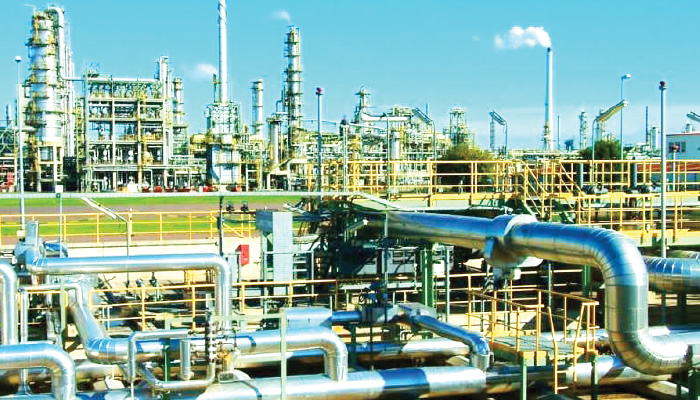
Despite the naira-for-crude arrangement aimed at guaranteeing sufficient supply to local refineries, the Dangote Petroleum Refinery has finalised plans to import 13.62 million barrels of crude oil in May 2026.
This volume accounts for roughly 139.5 per cent of its 19 million barrels requirement for the month.

Findings show that the Federal Government is expected to provide only 6.15 million barrels, leaving the management of the 650,000 barrels-per-day facility to source the remaining volume through imports.
At an estimated price of $110 per barrel, the imported crude would cost about $1.498 billion, equivalent to approximately N2.07 trillion at an exchange rate of N1,380.79 per dollar.
Industry stakeholders have cautioned that increasing dependence on imported crude may keep fuel prices elevated, with Premium Motor Spirit (PMS), also known as petrol, likely to stay above N1,300 per litre locally.
Commenting on the development, the National President of the Petroleum Products Retail Outlets Owners Association of Nigeria, Billy Gillis-Harry, said: “Speculation and price hikes in refined petroleum products will become inevitable.
‘’Once prices become unstable and trend upward, transportation costs will rise, triggering inflation in food prices and other essential commodities.”
Similarly, the National President of the Oil and Gas Service Providers Association of Nigeria, Colman Obasi, stated: “Dangote Refinery was not built to depend solely on Nigerian crude. This is not the first time it is importing crude. If it must import, then it will also need to export refined products to remain commercially viable.
“While exports may bring in foreign exchange and support macroeconomic stability, the reality is that this may not significantly improve the living conditions of the average Nigerian.”
Also speaking, Jeremiah Olatide described the situation as contradictory, noting: “Nigeria is a major crude oil producer, yet its largest refinery depends on imported crude. Key priorities should include ensuring consistent domestic supply, improving upstream production and security, refining pricing mechanisms under the naira-for-crude framework, and strengthening coordination between the refinery and NNPC Limited.”
Another industry expert, who chose to remain anonymous, pointed out wider risks, explaining that imported crude is priced in dollars at global rates, which raises feedstock costs, squeezes refining margins, and may drive up ex-depot fuel prices.
“It also raises demand for foreign exchange, exposes the refinery to currency volatility, and increases cost unpredictability. While imports may ensure steady supply, they expose the country to global shipping risks, geopolitical disruptions, and higher logistics costs.
“This trend could weaken confidence in government supply interventions, worsen the trade balance in the short term, and put additional pressure on the naira and foreign reserves,’’ the expert said.
Further findings indicate that the Federal Government has once again pledged to boost crude supply to domestic refineries, although similar assurances in the past were not fully achieved due to supply constraints.
In the first half of 2025, the Nigerian Upstream Petroleum Regulatory Commission announced plans to supply 770,500 barrels per day to local refineries, representing about 37 per cent of projected output of 2.07 million barrels per day under its Project 1 Million Barrels initiative. The commission also projected a short-term production target of 2.5 million barrels per day through improved collaboration between upstream operators and refiners.
Despite these challenges, the Presidency maintained that the naira-for-crude initiative has strengthened Nigeria’s resilience against global energy shocks.
Temitope Ajayi, Senior Special Assistant to the President on Media and Publicity, stated that the policy, introduced on October 1, 2024, has improved supply stability and supported the economy.
He added that a technical committee led by Wale Edun and Zacch Adedeji has helped sustain the framework.
According to him, global tensions, including disruptions linked to the Strait of Hormuz, have caused supply shocks and rising energy prices worldwide.
He said: “Many countries are experiencing shortages and extreme price increases. However, Nigeria has largely avoided these disruptions due to local refining capacity.
“Dangote Refinery has ensured product availability, eliminated fuel queues, and cushioned the impact of global volatility.
“Even with rising crude prices, the refinery recently reduced petrol prices by N75 per litre, despite paying premiums of up to $18 per barrel for crude. This demonstrates the value of local refining.”
