

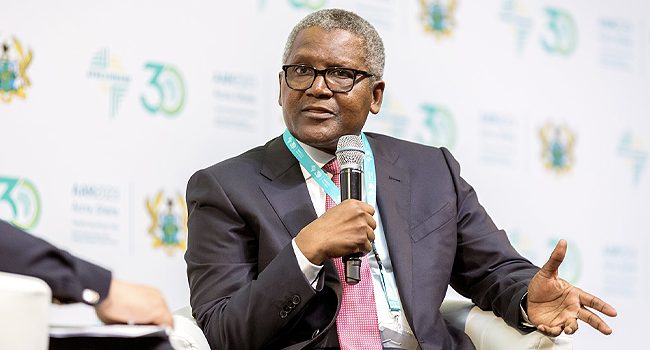
Africa’s richest man, Aliko Dangote, is set to break ground on a new $16 billion refinery in Kenya on Wednesday, describing the project as an important step towards achieving fuel self-sufficiency across the continent.
The proposed refinery, located in Lamu along Kenya’s Indian Ocean coast, will have a planned capacity of 700,000 barrels per day, matching the capacity of Dangote’s refinery in Nigeria. Construction is expected to take about three years.

The project is being developed alongside the major port infrastructure in Lamu. It has, however, faced a legal challenge from a local community over land rights, while environmental groups, including Greenpeace, have raised concerns about its potential impact.
Dangote dismissed the concerns on Tuesday, telling reporters: “There’s actually no problem with these sort of cases… There are people who don’t want the development of Africa.”
Tanzania and the Kenyan port city of Mombasa had previously been considered as possible locations for the refinery, but Dangote said Lamu was “much better”, with “better, cleaner water”, “solid land”, and a “deep sea area”.
He said the refinery would also feature a 1,000-megawatt power plant, with half of the electricity expected to be supplied to Kenya’s national grid.
Dangote presented the project as part of efforts to reduce Africa’s dependence on imported fuel and foreign expertise.
“By 2030, the majority of African countries will be self-sufficient (in fuel). It does not matter where it is refined, but it should be in the African continent, on the soil of Africa,” he said.
“If anybody is doing a big project going forward, you don’t have to go and bring Chinese or Indians and build it for you,” he added.
‘A start-up’
Questions have also emerged over how the refinery will obtain enough crude oil, particularly as East African countries are only beginning to develop significant oil reserves.
Dangote said the facility would source crude from several locations, including the Middle East and the United States, while also preparing to take advantage of increased production from countries such as Kenya, Tanzania and Mozambique.
“Are we going to wait until (Africa has) one quarter of the world’s population before we start thinking of what to do? We have to start addressing that issue today,” he said, referring to US President Donald Trump’s threats to halt diesel exports.
He said the Kenyan refinery would represent only part of the refining capacity needed to meet Africa’s growing energy demand.
“When you talk about 700,000 barrels per day, it’s actually small. For the region, it’s a big refinery, it’s a big investment, but it is a start-up,” he said.