

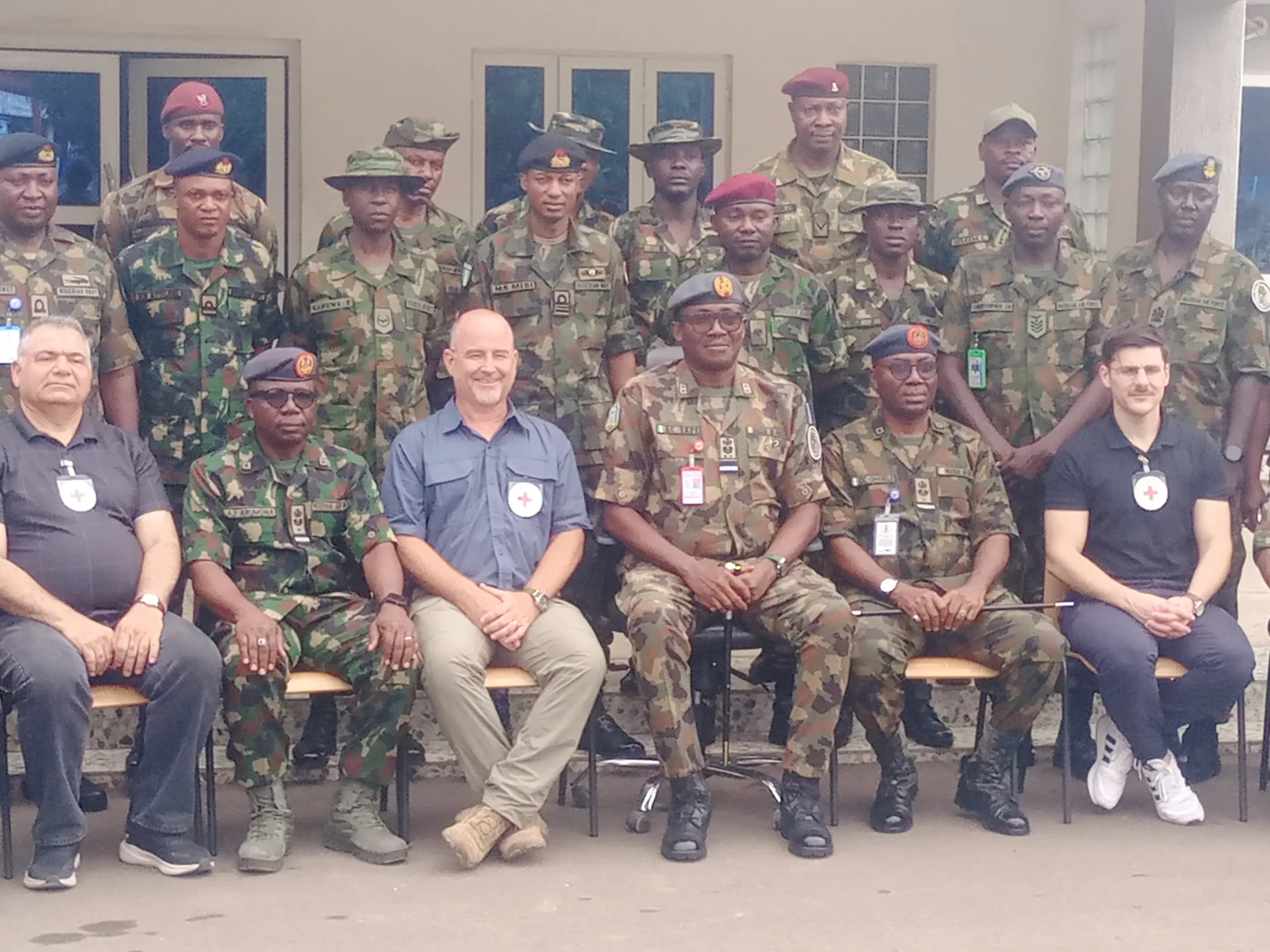
The Defence Headquarters and the International Committee of the Red Cross have commenced a week-long training programme aimed at strengthening the Armed Forces’ capacity to identify soldiers killed in combat and ensure their remains are handled with dignity.
The Battlefield Mortuary Affairs Programme, which opened on Monday at the Nigerian Air Force Base in Kaduna, will run from July 27 to August 1. It has participants drawn from the Nigerian Army, Nigerian Navy and Nigerian Air Force.

Addressing participants, the Deputy Director of the Defence Identification Centre, Air Commodore Chukwuma Ohanele, said the initiative was introduced to tackle the growing challenges associated with battlefield fatalities as military operations intensify across the country.
He noted that the collaboration with the ICRC would provide personnel with the expertise needed to properly identify deceased service members and manage their remains in line with global best practices.
Ohanele said, “This programme, running from July 27 to August 1, is a landmark initiative borne out of the collaboration between Defence Headquarters and the International Committee of the Red Cross. The training will deal with issues and challenges of military personnel identification and dignified management of the dead.
“With the high tempo of operations by the Armed Forces of Nigeria, battlefield deaths and their associated challenges have become inevitable. Experts drawn from the ICRC and the Armed Forces of Nigeria will address these challenges. The importance of this training cannot be overstated.”
He emphasised that handling the remains of personnel who die during military operations is a humanitarian duty as well as a professional responsibility.
“In the complex realities of modern conflict, the management of the dead is not only a technical responsibility but also a moral and humanitarian obligation. This innovative programme has been carefully designed to strengthen our capacity in this sensitive area, ensuring that our Armed Forces uphold the highest standards of professionalism, accountability and respect for human dignity,” he said.
According to him, the programme combines classroom sessions with practical exercises covering search and recovery missions, Explosive Ordnance Disposal awareness, mortuary collection procedures, examination of remains, preservation, transportation, repatriation, temporary burial arrangements and cemetery management.
He added that participants would also receive training on international humanitarian law, Nigerian military doctrine and the humanitarian mandate of the ICRC.
“The training will involve indoor and outdoor exercises, as well as assessment tests, ensuring that participants not only understand the principles but can apply them effectively in operational contexts,” Ohanele added.
The senior officer also commended the Chief of Defence Staff, General Christopher Gwabin Musa, for approving the initiative and acknowledged the support of the Defence Headquarters, Defence Identification Centre, the Nigerian Air Force School of Medical Sciences and Aviation Medicine, the Regiment Training School and the ICRC.
The Commandant of the Nigerian Air Force School of Medical Sciences and Aviation Medicine, Air Vice Marshal Anthony Ekpe, described the exercise as timely, noting that the nature of some military operations often makes the identification of fallen personnel difficult.
He said, “In these operations, we lose personnel, sometimes in gruesome circumstances that make it very difficult to identify them or even identify their body parts. That is why this training has become very essential and has come at the right time.
“At least some of our colleagues can be properly identified, and that will give closure to their families and allow them to be laid to rest with dignity.”
Ekpe urged participants to take full advantage of the training while thanking the Defence Headquarters and the ICRC for selecting the institution as the host venue.
Also speaking, the ICRC Forensic Manager, Dr Habib El TaKach, said the initiative grew out of discussions held in Pretoria, South Africa, in 2024. He explained that the programme is expected to improve the identification of personnel killed during military operations, reduce the number of missing persons and help families obtain certainty about the fate of their loved ones.
TaKach said proper identification depends on careful recovery of remains, secure transportation and comprehensive documentation, including photographs, videos and biological samples.
“All these steps are essential in helping us successfully identify the deceased and provide closure to their families,” he said.
