

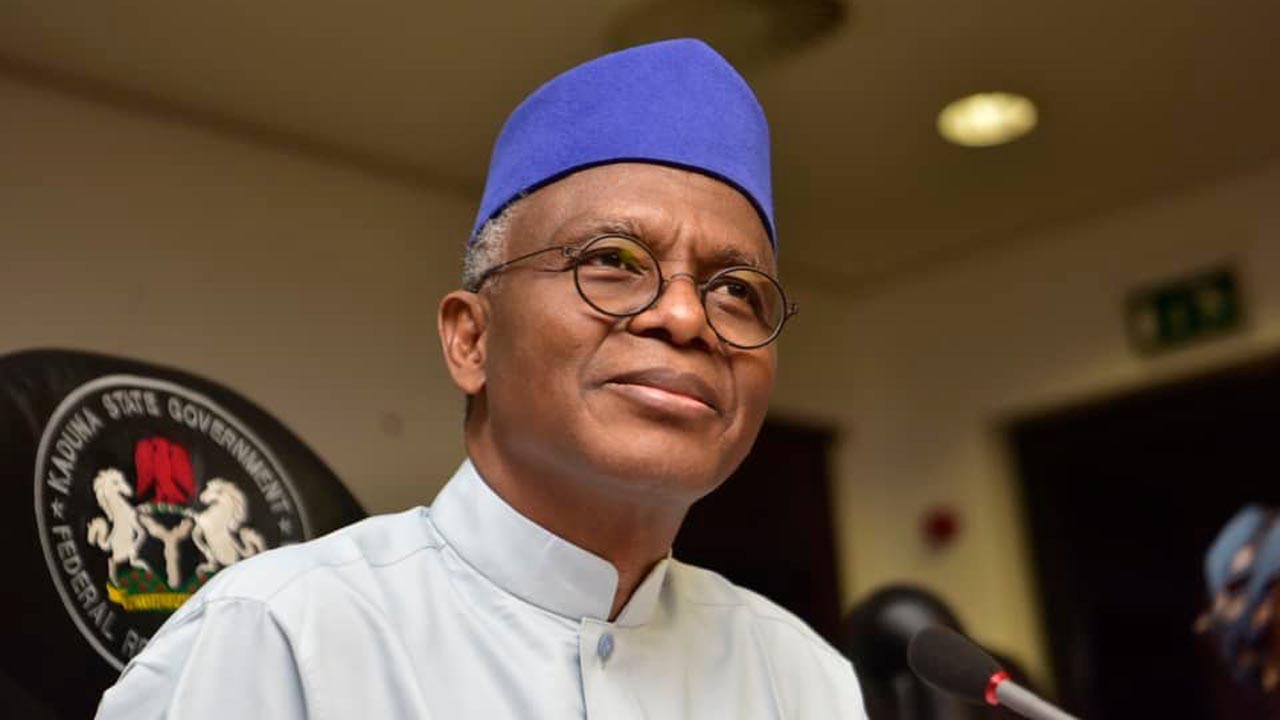
Northern human rights advocate, Comrade Ibrahim Garba Wala, has urged the judiciary to urgently reconsider and modify the bail conditions imposed on former Kaduna State Governor, Malam Nasir El-Rufai.
He described the existing requirements as a deliberate form of pre-trial punishment aimed at keeping the former governor in prolonged detention.

Wala, known for his work in human rights and anti-corruption advocacy, made this appeal in a statement issued on Saturday in Abuja.
He also commented on the recent reports claiming El-Rufai had died while in custody—claims later dismissed by his family. According to Wala, the speed with which the rumours circulated across the country reflected growing public concern about the former governor’s wellbeing.
“This rumour did not emerge from a vacuum. It is the natural consequence of a growing public panic that the treatment meted out to El-Rufai has crossed the line from a routine legal process into a highly coordinated, malicious silence and slow-death trap”, he said.
Wala referenced a recent statement by the President of the Nigerian Bar Association (NBA), Mazi Afam Osigwe, SAN, who had expressed concern over the increasing use of bail conditions by courts and law enforcement agencies as punitive tools. According to Wala, El-Rufai’s situation represents one of the most troubling examples of this practice.
He argued that the terms attached to El-Rufai’s bail—including multiple sureties who must be serving federal civil servants on Grade Level 17, submission of original Certificates of Occupancy for properties valued at hundreds of millions of naira in elite Abuja districts such as Maitama and Asokoro, as well as compulsory reporting at security headquarters—effectively amount to a denial of bail rather than a reasonable measure to ensure his appearance in court.
To support his position, Wala cited the Court of Appeal judgment in Dasuki v. DG, SSS, where the court ruled that requiring civil servants to provide properties worth millions of naira was both impractical and inconsistent with public service regulations. He also referred to the Administration of Criminal Justice Act (ACJA) 2015, which provides that bail conditions should only be designed to guarantee attendance at trial and should never function as punishment before conviction.
The activist further suggested that political considerations may be influencing El-Rufai’s continued detention. He claimed that longstanding opponents and vested interests were taking advantage of the judicial process to pursue unresolved grievances.
According to Wala, certain individuals within the current security establishment were using the case as an opportunity to revisit ideological disputes dating back to El-Rufai’s time in office, while influential regional groups were capitalising on lingering resentment over reforms and security measures introduced during his administration.
“By capturing or heavily influencing the machinery of federal law enforcement, these combined forces have transformed what should be a transparent legal process into a coordinated proxy war. It is an unholy alliance using the courts not to seek justice, but to execute a long-awaited vendetta”, he stated.
Wala outlined three key demands: the immediate review of El-Rufai’s bail terms to make them practical and attainable; the removal of what he described as prejudiced elements within the Department of State Services (DSS), the Independent Corrupt Practices and Other Related Offences Commission (ICPC), and other federal institutions; and the restoration of the constitutional principle that every accused person remains innocent until proven guilty.
“If Malam Nasir El-Rufai is allowed to suffer a silent, systematic breakdown in custody under the guise of impossible bail, it will mark the formal burial of constitutional liberty in Nigeria,” he warned.
