

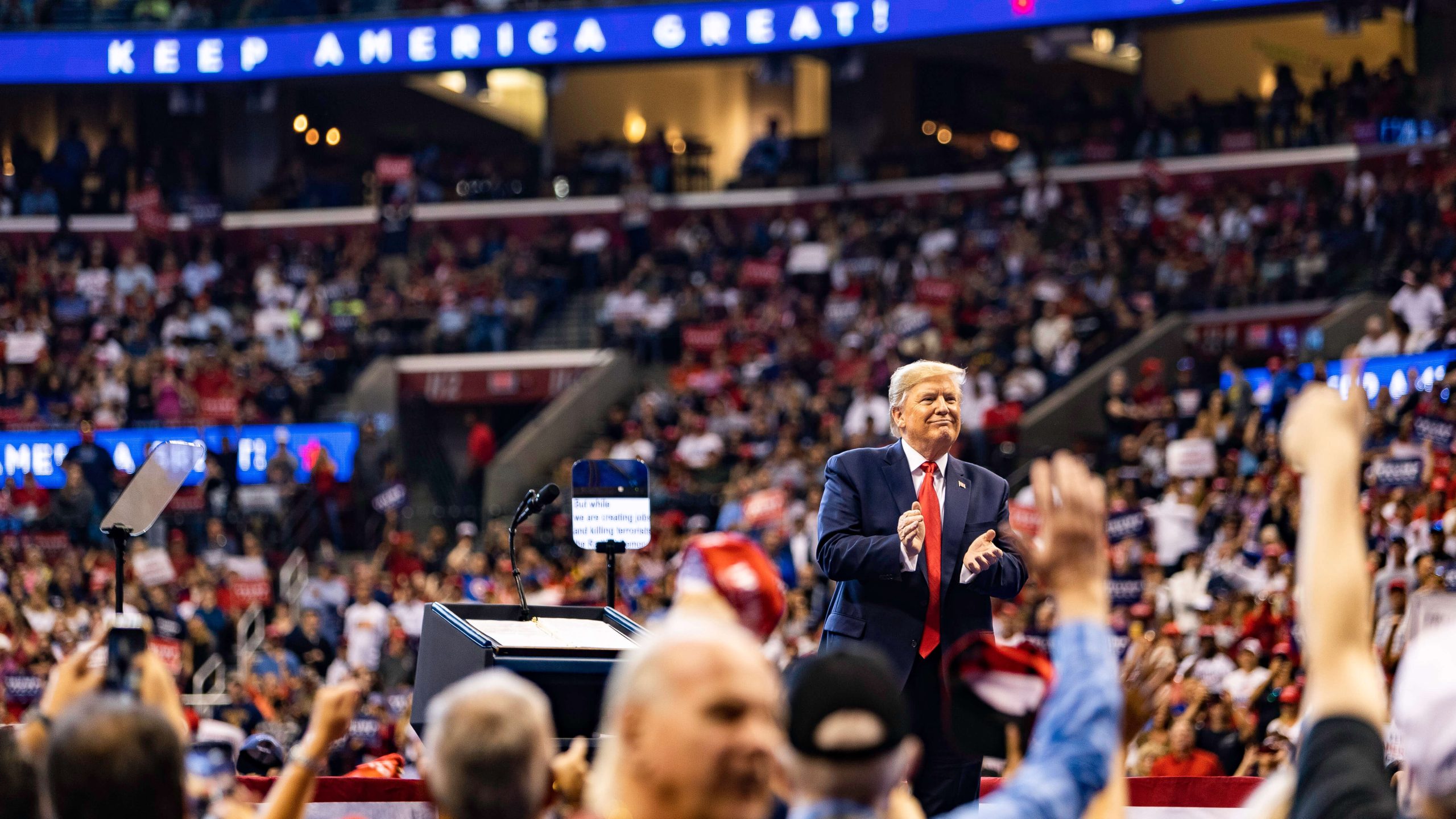
The control of the United States Congress is at stake as voters head to the polls on November 3, 2026, with Democrats seeking to wrestle control of both chambers from President Donald Trump’s Republican Party.
According to The Independent, the elections will also determine governors in 36 of the country’s 50 states, alongside contests for state legislative seats across nearly the entire country.

Although early voting has been ongoing for weeks, Election Day is expected to attract significant participation, with more than 100 million people likely to cast ballots, based on turnout figures from the 2022 midterm elections.
The scale of campaign spending has also highlighted the importance of the contests. By October 30, political advertising expenditure for the 2025–26 election cycle had reached a record $11.6 billion.
According to AdImpact, a firm that tracks political advertising, the highest spending has been recorded in competitive Senate races in Texas, Ohio and Michigan.
Control of Congress at stake
Campaign finance records show that billionaire Elon Musk has spent $442 million supporting Republican candidates.
Midterm elections generally attract fewer voters than presidential elections. More than 155 million votes, for instance, were recorded in the 2024 presidential election.
In the House of Representatives, Republicans currently hold a 218–214 majority, with two vacant seats and an independent member who caucuses with the Republicans.
Democrats need a net gain of four seats to take control of the chamber.
The Senate is also being contested, with Republicans holding a 53–47 majority. Democrats need to gain four additional seats to secure control.
About 10 races, including contests in Maine, Ohio, North Carolina, Iowa and Georgia, could determine which party controls the upper chamber.
Can midterms affect Trump’s presidency?
The elections come amid declining public approval of Trump’s performance. A September Reuters/Ipsos poll put his approval rating at 32 per cent, its lowest level.
Rising consumer prices and other domestic economic concerns could influence voting decisions and weaken Republican support.
Available indications also suggest that Democrats are more enthusiastic about voting than Republicans this year. If early voting patterns continue, they could point towards stronger Democratic performance.
Some Latino voters who supported Trump in 2024 may also be returning to the Democratic Party amid economic concerns and dissatisfaction with aspects of his immigration enforcement policies.
However, a major Democratic victory is not guaranteed. Republicans could benefit from lingering doubts about the Democratic Party, their advantage in campaign spending and concerns among moderate voters about some candidates who emerged from left-wing primaries.
Historically, midterm elections have often proved difficult for the political party occupying the White House. Trump’s Republicans therefore face a significant challenge as they seek to retain control of both chambers of Congress.
What previous midterm elections reveal
Midterm elections often serve as an opportunity for voters to assess a president’s performance and express dissatisfaction with the administration’s policies.
The results can also influence the president’s approach to governance and provide clues about the political messages potential candidates may adopt ahead of the next presidential election, scheduled for 2028.
The 2010 midterm elections, held during Barack Obama’s presidency, saw Republicans make significant gains, winning 63 additional seats in the House of Representatives.
The outcome was attributed partly to economic difficulties and public opposition to Obama’s healthcare reform legislation.
Democrats consequently lost control of the House, although they retained their Senate majority despite losing six seats.
Obama described the Republican victory as a “shellacking” and subsequently faced pressure from Republicans to significantly reduce non-defence spending.
In 2018, Democrats recorded a similar victory against Trump, gaining a net 40 seats in the House while losing two Senate seats.
At the state level, Republicans currently control 55 per cent of legislative seats across the country, compared with 43.8 per cent held by Democrats, according to Ballotpedia.
Who could become House Speaker?
If Democrats secure control of the House, their leader, Representative Hakeem Jeffries of New York, is expected to be a leading contender for the speakership.
The position is particularly influential because the Speaker of the House is second in the presidential line of succession, after the vice-president.
Jeffries would become the first Black American to occupy the office if elected. He could also direct House committees to investigate activities involving Trump and members of his administration.
The Democratic leader has repeatedly promised investigations into what he describes as “unprecedented levels of corruption” within the Trump administration.
He has also indicated that Democrats would prioritise reducing the cost of healthcare, groceries, housing, energy and other essential needs.
A Republican victory would leave the speakership in Republican hands, potentially retaining current Speaker Mike Johnson or another Republican candidate if he faces a challenge.
Republican legislative priorities are expected to include further tax cuts, increased defence spending and deeper reductions to social safety net programmes, building on Trump’s 2025 “One Big Beautiful Bill”.
Key races to watch
Several congressional contests are attracting particular attention.
One is the re-election bid of Republican Representative Mike Lawler in a New York district won by Democratic presidential candidate Kamala Harris in the 2024 election.
An open seat in a competitive Nebraska district is also drawing interest, particularly as farmers and truckers contend with rising fuel prices linked to the US war against Iran.
Democrats are also targeting two Republican-held seats in Pennsylvania and another in New Jersey as they seek to gain control of the House.
When will election results be announced?
There is no fixed time for the announcement of the final results of the 2026 midterm elections.
While initial results are expected after polling stations begin closing on Tuesday night, closely contested races could take days or even weeks to produce confirmed winners.
The first results are expected from Indiana and Kentucky, where polls are scheduled to close at 6 p.m. Eastern Time (11 p.m. GMT).
Polling stations in Georgia, South Carolina, Vermont and Virginia are expected to close at 7 p.m. Eastern Time (midnight GMT on November 4).
The final polling stations are scheduled to close in far western Alaska at 1 a.m. Eastern Time.
Meanwhile, concerns remain over whether Trump could attempt to interfere with the electoral process, which is administered by individual states.
The president has repeatedly alleged widespread election fraud since 2020, despite a lack of evidence supporting his claims.
State election officials and Democratic lawmakers have been preparing for possible legal challenges to any attempt by the administration to intervene in the elections.