


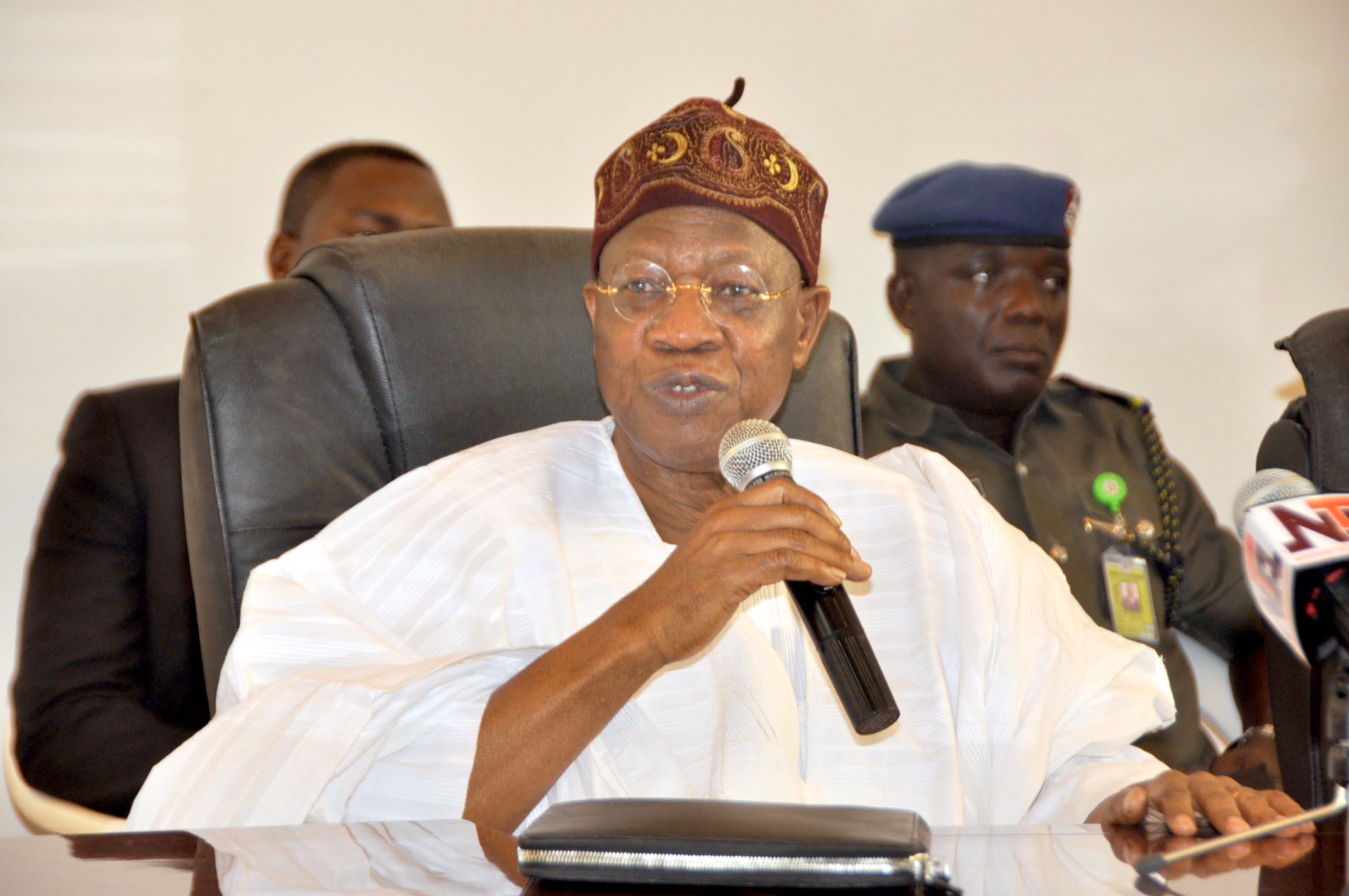
Former Minister of Information and Culture, Lai Mohammed, has said fake news is an epidemic and warned that, when combined with hate speech, it could threaten peace and security.
He spoke on Wednesday while delivering a public lecture titled, ‘Fake News, Disinformation and Artificial Intelligence: Defending Truth and Public Trust in the Digital Age,’ at Caleb University, Lagos.
He stated that the danger is not simply that AI can create better lies, but that the greater danger is that AI may create an environment in which people stop believing anything.
The ex-minister said the problem becomes much deeper if citizens conclude that every video may be fake and every photograph manipulated.
”A fake video can be debunked. But if citizens conclude that every video may be fake, every photograph manipulated and every recording artificial, the problem becomes much deeper. And when citizens no longer believe anything, they become vulnerable to believing anything.”

The ex-minister stated that during his years as Minister, he saw how social media could be used to influence public perception during politically sensitive periods.
He further highlighted that ahead of the 2023 elections, his ministry attention was drawn to the use of parody accounts, cloned media platforms, manipulated campaign speeches, altered photographs and videos, fabricated opinion polls, and exaggerated or false reports of threats and violence. He revealed that such content could influence perceptions of candidates, suppress participation or inflame tensions.
He said, ”AI makes such manipulation considerably more sophisticated. A fabricated audio recording of a candidate could circulate shortly before an election. A fake photograph could purport to show violence at a polling station. A synthetic video could falsely depict a candidate making an inflammatory statement. A fabricated document could pass as an official government communication.

”The speed of social media means that by the time a falsehood is debunked, millions of people may already have seen it. That is why the response to disinformation must be built around speed, credibility and verification.”
He said government has a major responsibility in fighting disinformation. He said, ”There is an obvious temptation to respond to false information by trying to control information itself. That approach carries serious risks.
”A campaign against misinformation and disinformation must not become a campaign against legitimate criticism. A government must distinguish between false information and unpopular opinion; deliberate deception and honest error; criticism and incitement; satire and malicious fabrication; investigative journalism and propaganda.”
The ex-minister urged journalist not merely be a reporter but also be a verifier, while calling on universities to promote media literacy and teach students to identify misinformation.