

The Federal Government of Nigeria has criticised the stance adopted by the United States Congress regarding “the persecution” of Christians in Nigeria.
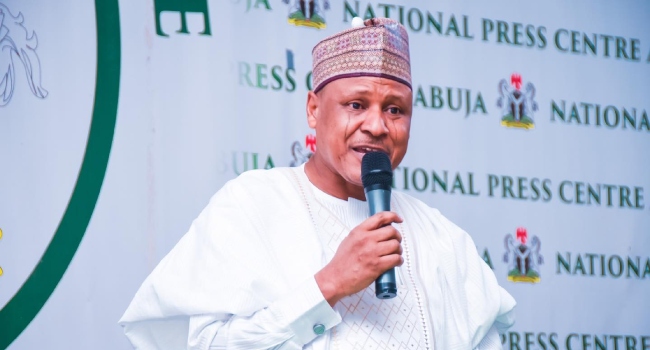
Nigeria’s Minister of Information and National Orientation, Mohammed Idris, made this known in a statement issued on Tuesday.

“It is important to state clearly that Nigeria does not have, and has never had, a state policy of religious persecution,” the minister said.
“The violence being confronted by our security agencies is not driven by government policy or religious bias, but by complex security threats, including terrorism, organised criminality, and longstanding communal tensions.”
On Monday, the United States House of Representatives Committees on Appropriations and Foreign Affairs formally presented a report to the White House detailing their findings and recommendations concerning the alleged persecution of Christians in Nigeria.
The submission followed President Donald Trump’s decision to redesignate Nigeria as a Country of Particular Concern.
The US president subsequently directed Congressman Riley Moore and Chairman of the House Appropriations Committee, Tom Cole, to spearhead a comprehensive probe into the reported persecution of Christian communities by terrorists, alongside the wider security challenges facing Nigeria.
Moore stated that the US delegation now possesses what he described as a clearer understanding of Nigeria’s security situation and the alleged persecution of Christians. He urged the Nigerian government to use the opportunity to strengthen diplomatic ties with the United States.
In response, the Federal Government maintained that while Nigeria continues to confront insecurity, the Constitution of the Federal “guarantees freedom of religion and freedom of worship for all citizens.
“The Federal Government remains firmly committed to upholding these constitutional protections and to ensuring equal protection under the law”.
It added that efforts remain underway “to improve humanitarian response for internally displaced persons, facilitate the safe return of affected communities, and promote community-based peacebuilding initiatives that foster sustainable coexistence”.