

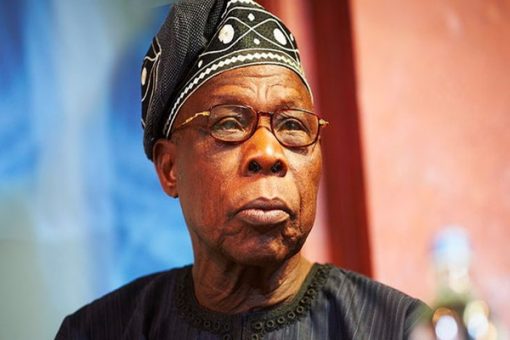
Former President Olusegun Obasanjo has said that the funding and arming of proxy groups by foreign actors remain one of the “greatest obstacles” to achieving lasting peace across Africa.
Obasanjo made the remarks on Thursday at the third Mashariki Cooperation Conference in Diani, Kwale County, Kenya, where discussions centred on “Emerging geopolitical dynamics and Africa’s security architecture.”

Drawing from more than four decades of involvement in peacebuilding and conflict resolution across the continent, he warned that military intervention without a solid political framework only deepens instability.
He said military action in African conflicts “without a credible political process is at best a pause in fighting and at worst a prolongation of it.”
Referring to the growing number of coups in the Sahel, Obasanjo said African institutions must be willing to challenge leaders who hide behind anti-colonial rhetoric while undermining their own citizens’ rights and welfare.
While acknowledging the frustrations that often drive public support for military takeovers, he stressed that military governments have failed to provide enduring development or real security.
Obasanjo also highlighted the importance of intelligence gathering in preventing conflict, saying warning signs are usually present long before violence erupts.
“In nearly every conflict I have helped to mediate, the warning signs were visible months or years before the first shot was fired,” he said.
“Ethnic tensions were being deliberately inflamed. Electoral processes were being manipulated. Youth were being recruited into militias. Economic marginalisation was deepening.
“Regional neighbours were beginning to take sides. The information existed. What was missing was the institutional will to act on it, to share it across borders and to take the political risks that early intervention requires.”
He called for stronger commitment to the African Union’s continental early warning system, urging better funding, staffing and closer links with decision-makers.
Obasanjo further said intelligence agencies have a duty to uncover and expose foreign involvement in fuelling African conflicts.
“The third conclusion is that the financing and arming of proxy forces by external actors is one of the greatest obstacles to durable peace in Africa, and that intelligence services have a particular responsibility to expose it,” he said.
He cited examples from the Democratic Republic of Congo, Sudan and Libya, where foreign governments have allegedly supported armed groups while publicly claiming to seek peace.
On Libya, he said: “The hypocrisy is breathtaking.”
Obasanjo added that African intelligence agencies that track and reveal such foreign interference are performing a vital service not only to affected nations but to the broader goal of peace on the continent.