

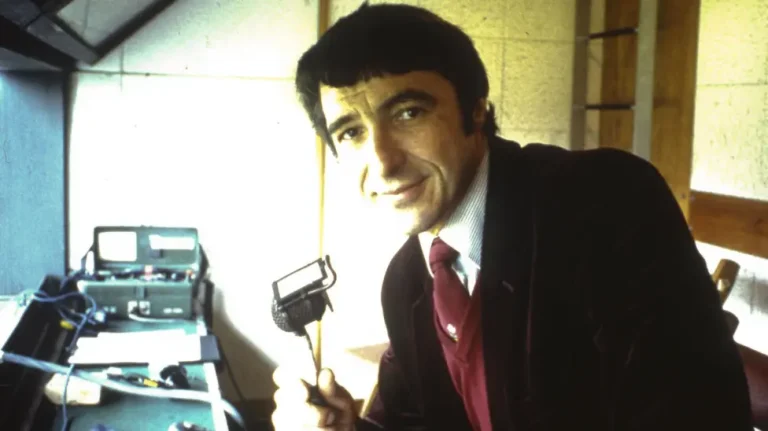
Former England scrum-half and respected BBC rugby commentator Nigel Starmer-Smith has died at the age of 81 after battling dementia for several years.
His son, Charlie, announced his death in a social media post on Thursday.
“Dad passed away peacefully this morning after a long battle with dementia,” Charlie wrote.
During his playing career, Starmer-Smith featured for Harlequins and the Barbarians. He also earned seven caps for England between 1969 and 1971 before retiring from professional rugby in 1976.
Following his retirement, he moved into broadcasting and journalism, becoming one of the familiar voices of English rugby.
He was diagnosed with dementia in 2015. In 2021, his son had spoken publicly about his father’s condition, describing dementia as a serious concern in the world of sport.
Charlie also recalled the difficulties the family experienced during the COVID-19 pandemic, when restrictions meant they could only see his father through a window.
He explained that during his father’s playing career, sustaining a head injury during a rugby match was seen as “like a badge of honour”. He also disclosed that dementia was present in the family, noting that his uncle had also died from the disease.
In an emotional tribute, Charlie described his father as a rugby player, commentator, editor, writer, storyteller, charity fundraiser, volunteer and devoted family man.
“He was (as they say in rugby circles) one of life’s great tourists,” he wrote.
Charlie said his father did everything for the family and remained strong alongside his wife despite losing two of their children at very young ages.
“He did everything for us and, despite having to bury two of his children at cruelly young ages, both he and my Mum refused to let the cavernous holes that Charlotte and Julian left behind define them.”
He added that he would not allow the illness, which gradually took away his father’s ability to communicate and eventually his dignity, to overshadow the memories he had of him.
Describing his father’s character, Charlie said: “He was a modest man and he’d hate for people to make a fuss. He loved to laugh but not as much as he loved to see others laughing.”
He encouraged those who knew his father to recall a happy memory and smile, saying that was how he would choose to remember him.