

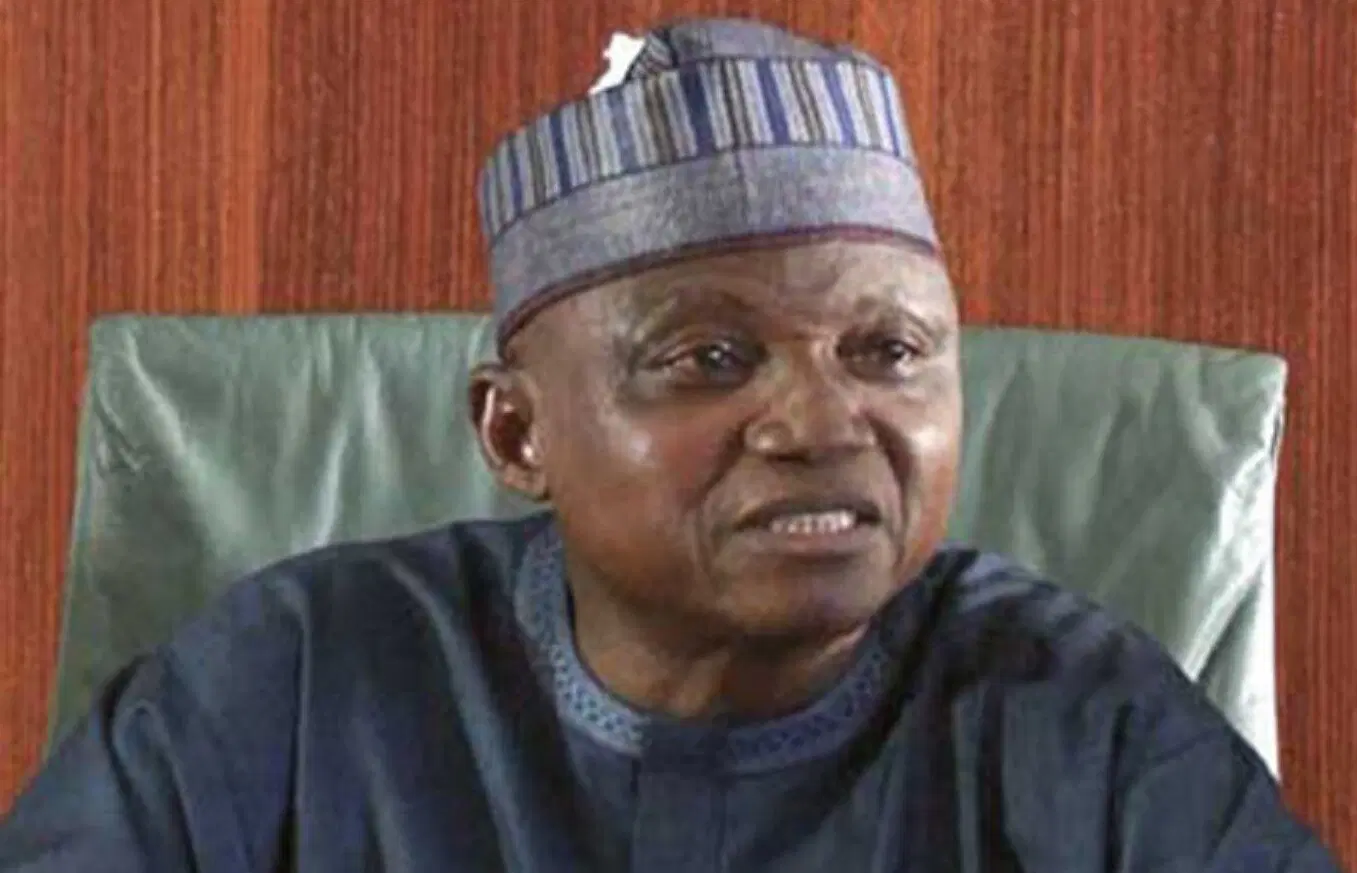
Former presidential spokesperson Garba Shehu has refuted former President Goodluck Jonathan’s statement that Boko Haram once nominated ex-President Muhammadu Buhari to serve as its preferred negotiator during peace talks with the Federal Government.
Shehu, who served as Senior Special Assistant on Media and Publicity to the late President Buhari, made his response in a statement shared on X on Friday.

He wrote in part, “Boko Haram did not nominate Buhari as their mediator. To be president in 2027, Goodluck Jonathan should look for another story to tell Nigerians.”
Jonathan had made the claim earlier the same day at the public presentation of Scars: Nigeria’s Journey and the Boko Haram Conundrum, a book authored by former Chief of Defence Staff, General Lucky Irabor (retd.), in Abuja.
He explained that his administration had established several committees to engage with the sect, and during one of those efforts, “Boko Haram nominated Buhari to lead their team to negotiate with the government.”
Jonathan added, “I felt that if they nominated Buhari to represent them and have discussions with the government, then when Buhari took over, it could have been an easy way to negotiate with them and they would have handed over their guns. But it was still there till today.”
He further remarked that the persistence of Boko Haram underscored the complexity of the insurgency. “I thought that after I left, within a reasonable time, General Buhari would wipe them out. But even today, Boko Haram is still there. The issue of Boko Haram is far more complex than it is often presented.”
Reflecting on the 2014 abduction of the Chibok schoolgirls, Jonathan described it as “a scar I will die with.” He said his administration had explored multiple strategies to end the insurgency but faced difficulties due to external influence and the insurgents’ access to sophisticated weapons. Jonathan advised the current government to adopt a balanced, “carrot-and-stick” approach to address the crisis.
‘Politically Motivated’
In his response, Shehu described Jonathan’s statement as “a terrible claim” and “a false start” if it was intended to bolster any future political ambitions.
He stated, “Muhammed Yusuf or Abubakar Shekau, the deceased leaders of Boko Haram, never nominated Muhammadu Buhari for any such role. In fact, Shekau routinely denounced and threatened Buhari, and their ideologies were in direct opposition.”
Shehu recalled that in 2014, Buhari narrowly escaped a bomb attack in Kaduna, which left some of his aides injured. He added that Buhari’s campaign at the time was built around defeating Boko Haram and restoring security in Nigeria.
The former presidential aide said earlier reports linking Buhari to Boko Haram in 2012 were politically motivated. He noted that “Contrary to the news making the rounds in those years that Boko Haram had nominated General Muhammadu Buhari as mediator, the retired military general denied knowledge of any such nomination.”
Shehu also cited a 2012 statement by the Congress for Progressive Change (CPC)—then led by Buhari—which refuted the claim. The party’s National Secretary, Buba Galadima, had clarified that Buhari “was not aware of the appointment.”
He further referenced the late CPC National Publicity Secretary, Rotimi Fashekun, who had criticized the then PDP-led government, describing the claim as “a ploy to divert Nigerians’ attention from massive looting.”
Shehu concluded by recalling Fashekun’s remarks that there were “three variants of Boko Haram”—the original sect, criminal elements, and a political faction allegedly linked to the then ruling party.