

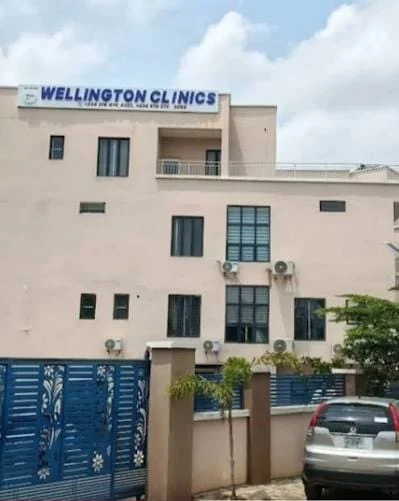
An Abuja-based medical facility, Wellington Clinics, has rejected allegations linking it to a transactional organ-harvesting scheme involving a kidney transplant carried out at the hospital.
The hospital said it neither participated in nor profited from any financial transaction involving the kidney donor or recipient. It also announced the suspension of all renal transplant-related services while investigations into the April 24, 2026 procedure are ongoing.

The clarification follows a Nigeria Police Force investigation into an alleged organ-harvesting and human-trafficking syndicate operating across Abuja and Nasarawa State.
The police recently arrested and paraded four suspects, including two doctors associated with Wellington Hospital, over allegations that a 22-year-old man identified as Samuel Ezekiel was deceived into having a kidney removed at the facility.
According to the police, the alleged victim received $1,250, equivalent to about N1.7 million, for the kidney.
Wellington Clinics, however, said its records identified the donor as Abubakar Hassan. It explained that the surgery was performed by a specialist medical team led by Dr Benjamin Oyimeh, a Senior Consultant Nephrologist and Chief Executive Officer of Crown Medical and Kidney Centre.
In a statement signed by its Director of Administration, Yemi Olatunbosun, the hospital said its role was restricted to providing a properly equipped theatre and suitable facilities for the operation under an agreed rental arrangement.
The clinic stated, “Wellington Clinics did not participate, facilitate, negotiate, or benefit from any transactional arrangements.”
It explained that the operation was conducted under the supervision of a licensed senior consultant nephrologist, with the specialist team maintaining responsibility for both the donor and recipient throughout the procedure.
The hospital said its arrangement with specialist medical teams places responsibility for patient recruitment, medical assessment, donor-recipient compatibility checks, informed consent, ethical screening and other clinical and legal requirements on the lead consultant.
It added that the consultant and his team were responsible for ensuring compliance with the National Health Act 2014 and relevant Medical and Dental Council of Nigeria guidelines.
According to Wellington, the donor was admitted on April 24, 2026, as a scheduled kidney donor and underwent a left donor nephrectomy that same day. The kidney was subsequently transplanted into a patient with end-stage kidney disease.
The facility stressed that both the donor and recipient survived the procedure.
The hospital said the donor submitted several documents during admission, including a court affidavit, digital National Identification Number slip, birth certificate from the National Population Commission, affidavit of consent and statutory declaration of age.
He was also accompanied by a man identified as Abubakar Isa, who was introduced as his brother.
Wellington said its records showed that the donor was admitted as Abubakar Hassan, born on February 4, 2000, under hospital number WCA/8066/2026. He was discharged on April 28, four days after the surgery.
The hospital added that the donor returned on July 11 for wound care and removal of remaining stitches and was discharged two days later.
It said the donor had explained that he had travelled and could therefore not attend some of his previously scheduled follow-up appointments.
The hospital’s account differs from the police allegation that the donor’s actual name was Samuel Ezekiel and that his identity had allegedly been altered to facilitate the transplant.
The police investigation is focused on allegations that vulnerable young people were deceived into donating organs and that documents were manipulated to enable kidney removals.
However, the police have not reached a final conclusion regarding the responsibility of Wellington Clinics, the doctors or other individuals linked to the case, and the allegations remain subject to investigation and due process.
Wellington maintained that there was nothing at the time of admission to suggest that the documents provided by the donor were fraudulent or that his identity had been deliberately misrepresented.
The clinic stated, “Since the records department of Wellington relied on the above documents submitted on admission, as per the current level of practice, we were not aware or suspicious of any misrepresentation or manipulation of identity at the time.”
It further said it had no independent evidence indicating a financial or transactional relationship between the nephrology team, donor, recipient or any other person involved in the transplant.
The hospital explained that its responsibilities did not include carrying out forensic investigations into the personal relationship between donors and recipients beyond reviewing identification documents, declarations and other records required for medical treatment.
It therefore treated the donor as a consenting adult based on the information and documents available to it.
Wellington also denied having any knowledge of an alleged payment for the kidney, saying it understood that the transplant was intended to save the life of a patient suffering from end-stage kidney disease.
Despite its denial, the clinic said it had taken the allegations seriously and suspended its renal transplant-related services pending the outcome of the investigation.
The hospital stated that it was “cooperating fully with the relevant investigative authorities probing the circumstances surrounding the kidney transplant” and would abide by the findings of the investigation.
It added, “We remain committed to ethical and evidence-based healthcare and will continue to cooperate with all relevant investigative and regulatory authorities.”
The controversy comes amid increased efforts to strengthen ethical standards in Nigeria’s organ-transplant sector.
In March 2025, the Federal Government introduced the Standards and Guidelines for Establishing and Coordinating Organ/Tissue Transplantation Services in Nigeria to improve ethical safeguards, transparency and accountability in the sector.
The Federal Ministry of Health and Social Welfare said the framework was developed in response to concerns over unethical practices and was intended to protect both organ donors and recipients.
The guidelines cover areas including ethics, donor protection, patient safety, minimum operational standards and regulatory compliance.
The government also announced plans to map and certify health institutions involved in organ donation and transplantation and establish an organ donation and transplantation registry and banking system.
The renewed focus on organ harvesting also reflects longstanding concerns over the exploitation of vulnerable Nigerians in the transplantation process.
The Federal Government acknowledged in 2025 that the country had experienced troubling cases involving unethical organ harvesting and other abuses in the sector, reinforcing the need for stronger safeguards.
Under the National Health Act, the donation and allocation of human organs for transplantation must follow prescribed procedures, while certain violations, including charging a fee for a human organ, are subject to criminal sanctions.
The police investigation attracted national attention after allegations emerged that 22-year-old Samuel Ezekiel was recruited and taken to Wellington Hospital in Life Camp, Abuja, where his kidney was allegedly removed.
Police subsequently announced the arrest of Emmanuel Ode, Dr Benjamin Oyimeh, Dr Daniel Otukpa and David Idoko over the alleged organ-harvesting and human-trafficking network.
