

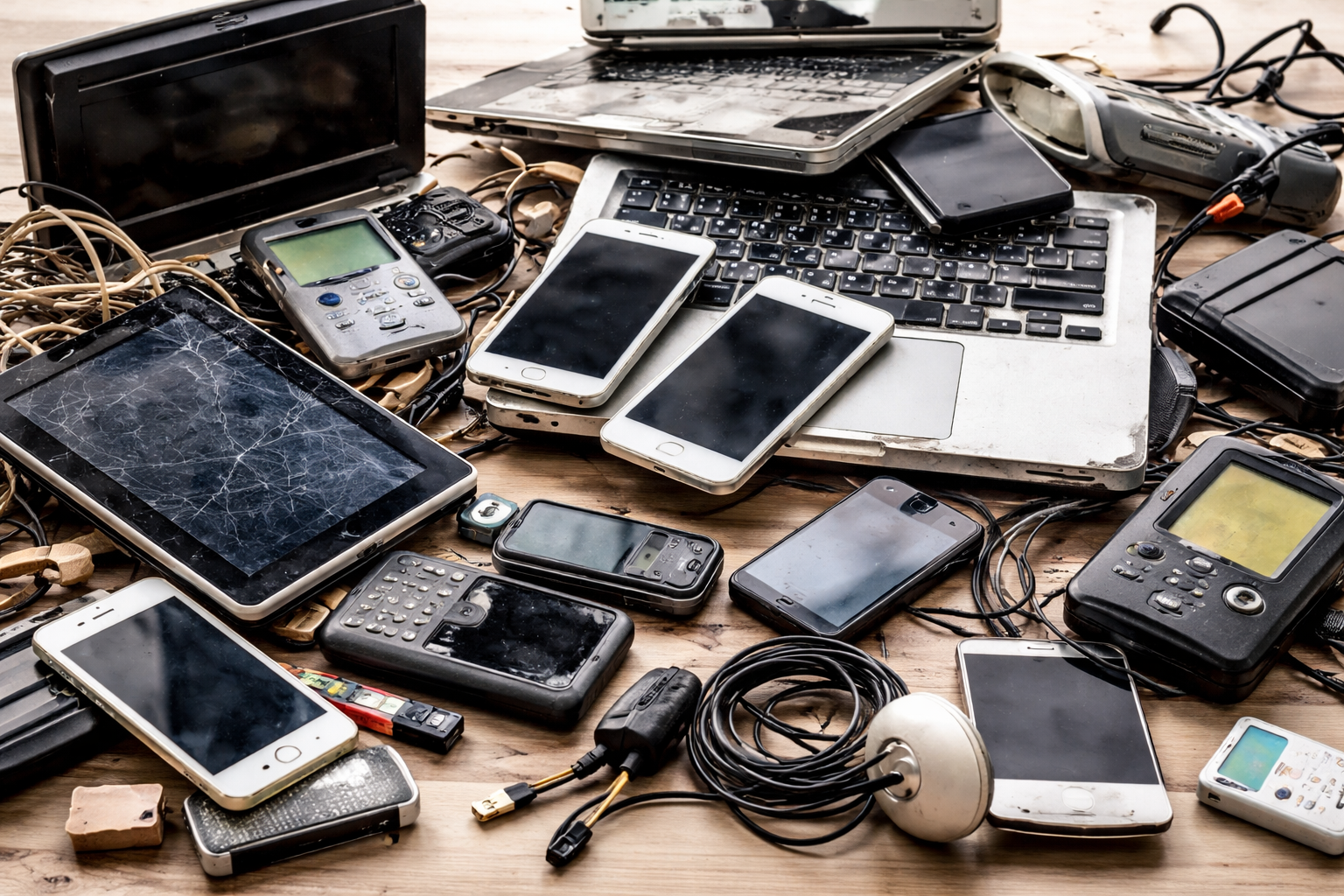
Recycling old electronics responsibly is important because devices contain toxic materials (like lead and mercury) but also valuable resources (like copper and gold).
Here’s how to do it properly:

♻️ 1. Start by Reducing & Reusing
Before recycling, consider:
- Repairing your device
- Donating to schools or charities
- Selling if still functional
This extends the device’s life and reduces waste.
🔐 2. Protect Your Personal Data
Before giving away or recycling:
- Back up important files
- Sign out of accounts
- Perform a factory reset
- Remove SIM cards and memory cards
🔌 3. Separate Components
Different parts may need different handling:
- Batteries (especially lithium-ion)
- Chargers and cables
- Screens and accessories
Never throw batteries in regular trash—they can be hazardous.
Related Posts
🏢 4. Use Certified E-Waste Recyclers
Look for:
- Government-approved recycling centers
- Certified e-waste handlers (they follow safe environmental practices)
In Nigeria, you can explore:
- Lagos Waste Management Authority – offers guidance on proper disposal
- E-Terra Technologies Limited – one of the leading formal e-waste recyclers
📦 5. Take Advantage of Take-Back Programs
Many electronics brands and retailers accept old devices:
- Trade-in or recycling programs
- Drop-off bins at stores
🚫 6. Avoid Informal Dumping
In places like Alaba International Market, informal recycling happens—but it can involve unsafe practices like burning wires, which harms health and the environment.
🌍 7. Why It Matters
Responsible recycling:
- Prevents pollution
- Protects human health
- Conserves natural resources
- Supports a circular economy