

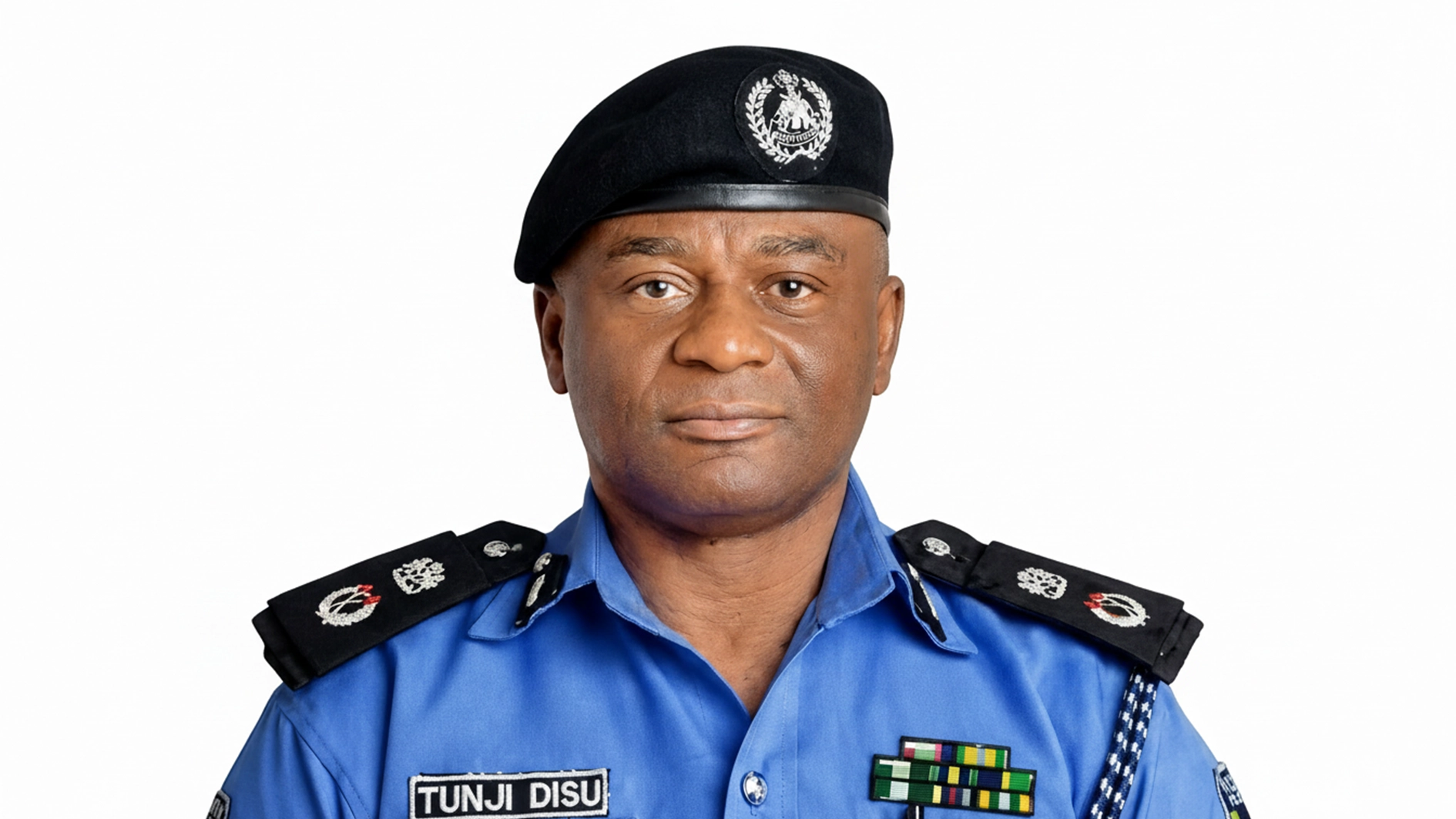
Inspector-General of Police Tunji Disu has directed police commands nationwide to forward investigations involving terrorism financing, banditry and other money-related crimes to specialised units for proper handling.
The directive was announced on Tuesday during a meeting between the Nigeria Police Force and the leadership of the Nigerian Financial Intelligence Unit at the Force Headquarters in Abuja.

Disu said the evolving nature of crime requires law enforcement agencies to pay closer attention to financial transactions, noting that criminal groups increasingly rely on the movement of illicit funds across borders.
“The dynamics of crime is changing daily everywhere in the world, and within seconds monies are moving over the continent.
“Monies that have to be laundered, monies that a lot of people want to clean by different deceits. Financial intelligence is a necessity,” he said.
The IGP explained that stronger cooperation between the police and the NFIU would improve the fight against terrorism, banditry, crude oil theft and other organised crimes by tracing the financial networks behind them.
“We need to collaborate more and share intelligence because of the security situation we have in the country today—terrorism, banditry, and even in cases of theft of crude. Following their proceeds will assist to bring down the crime to nothing less than 50 per cent,” he said.
“Following the money, a lot of their crimes will be solved, so we need to collaborate. We need to continue to see ourselves as symbiotic twins.”
As part of efforts to strengthen financial investigations, Disu said the Force had established a Proceeds of Crime Section headed by a Deputy Commissioner of Police with expertise in anti-money laundering and counter-terrorism financing.
“We have directed all our officers to direct cases they discover that have to do with terror, banditry, and where monies have been circulated to teams that are specialised in handling it.
“The Force has established the Proceeds of Crime Section, and this is headed by a Deputy Commissioner of Police with vast experience and expertise in financial crime to strengthen anti-money laundering and counter-terrorism financing,” he said.
He added that the creation of the section had improved the Force’s contribution to Nigeria’s anti-money laundering system.
“The establishment and operationalisation of the section have enhanced the visibility and relevance of the Force within the Nigerian anti-money laundering architecture,” he added.
Disu also urged the NFIU to continue supporting the police through joint training programmes, particularly in financial intelligence and asset tracing.
“Let us share intelligence. Let us train together. When trainings come your way, we plead, give us some slots, especially training that has to do with movement of money around.
“We are sure 50 per cent of this crime can be solved by just following the money,” he said.
Earlier, NFIU Chief Executive Officer Hafsat Bakari described the Nigeria Police Force as a strategic partner in tackling financial crimes, saying financial intelligence has become a vital tool in investigations involving terrorism financing, kidnapping, cybercrime, corruption, human trafficking, illegal mining, arms trafficking and organised crime.
“Financial intelligence has increasingly become the thread that connects criminal conduct to those who profit from it.
“In this regard, the collaboration between the NFIU and the Nigerian Police Force remains essential to ensuring that criminals are not only arrested but deprived of the financial resources that sustain their operations.”
Bakari praised the police for their contribution to Nigeria’s removal from the Financial Action Task Force grey list and called for sustained cooperation ahead of the country’s 2027 mutual evaluation.
“The future of law enforcement is intelligence-driven. Criminals today have financial footprints long before they leave physical evidence,” she said.
She added that the NFIU would continue to support the police through intelligence sharing, operational support, strategic analysis and capacity building.
