

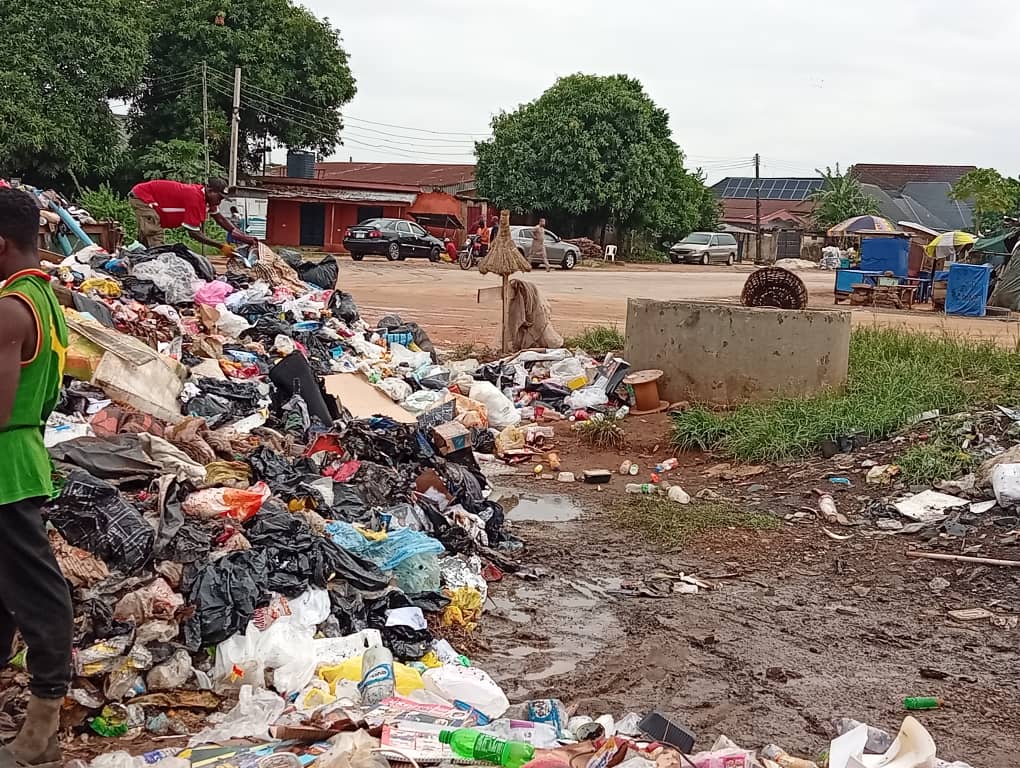
Residents of Owerri, the capital of Imo State, have raised concerns over a potential outbreak of Lassa fever and other illnesses as refuse continues to pile up across the state.
The problem has worsened following recent rainfall, which has soaked the decomposing waste, intensifying health and environmental risks. Traffic congestion has also emerged in parts of the city, including Douglas Road, World Bank Roundabout, Orji, Jehovah Jireh along Egbu Road, Umuguma Hospital Road, Amakohia, and Irete, where debris from refuse dumps has partially blocked roads.

The Eastern Waste Management Company (EWAMAC), responsible for clearing refuse in Imo, recently appealed for patience via its social media platforms without providing a specific timeline for waste removal. EWAMAC posted on Wednesday, “We hear you. We see the concerns. And we are responding. Our teams are actively working to improve the current situation across Owerri, with ongoing efforts focused on waste evacuation and environmental clean-up in key areas. While progress may not be immediate in every location, please be assured that coordinated actions are underway to restore cleanliness across the city. We appreciate your patience and continued cooperation.”
Residents have expressed frustration online. Promise Chigozirim wrote on Facebook, “They are the worst in waste management; the entire state is dirty.” Chimezie Ebosim added, “This is the most ineffective agency in Imo State right now. The whole of Owerri is littered with waste and stinks.”
Martins Ogunlade, Associate Director of Climate at Corporate Accountability and Public Participation Africa, described the situation as a creeping disaster. He highlighted that accumulated refuse blocks drainages, causing floods, while providing breeding grounds for rats, mosquitoes, and cockroaches. Stagnant water trapped in waste fosters malaria and other diseases, while decomposing organic matter contaminates soil and water, affecting agriculture. Children and youths playing near these sites risk respiratory illnesses from toxic gases such as methane and hydrogen sulphide.
Ogunlade also warned of economic consequences, including declining property values and reduced business activities. He urged authorities to prioritise prompt refuse disposal, provide emergency funding, implement proactive policies, and involve community monitoring to safeguard public health and reduce disease outbreaks.
