

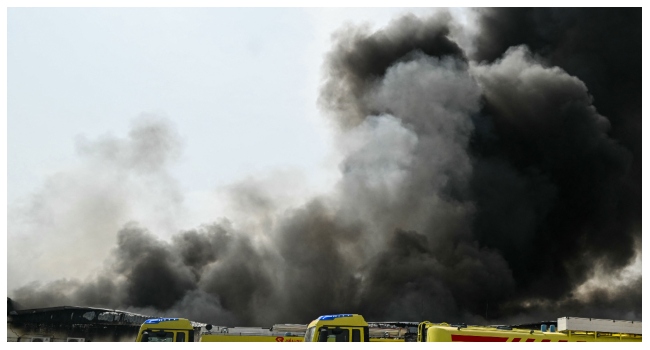
Iran launched a fresh wave of missile and drone strikes on Sunday, targeting United States military bases across the region and sites in Israel, state media reported, in retaliation for a large-scale US-Israeli assault that killed Supreme Leader Ali Khamenei.
Iranian state television said 27 US bases in the region were targeted, along with Israel’s military headquarters and a defence industries complex in Tel Aviv.

“A few minutes ago, pilots of the air forces of the Islamic Republic of Iran successfully bombed US bases in the countries of the Persian Gulf and in the Kurdistan region of Iraq over several phases of operations,” the Iranian army said in a statement carried by state TV.
Khamenei, Iran’s supreme leader since 1989 and a longstanding adversary of the West, was killed in the opening phase of what officials described as a massive joint attack by the United States and Israel.
Iranian state television confirmed his death early Sunday, hours after US President Donald Trump announced the killing of the 86-year-old cleric, whom he described as “one of the most evil people in History”.
Regional Escalation
Iran’s Revolutionary Guards vowed to launch the “most ferocious” operation in history against Israel and US bases in Gulf countries, which were already assessing the damage from earlier Iranian strikes.
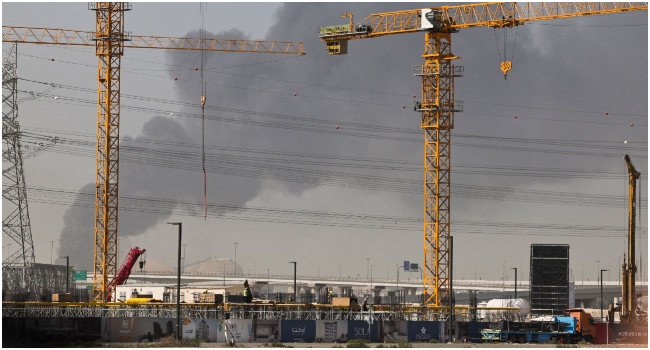
Fresh explosions were reported in Doha, Dubai and Manama, while air raid sirens sounded in central Israel as the military said it was responding to incoming Iranian missiles.
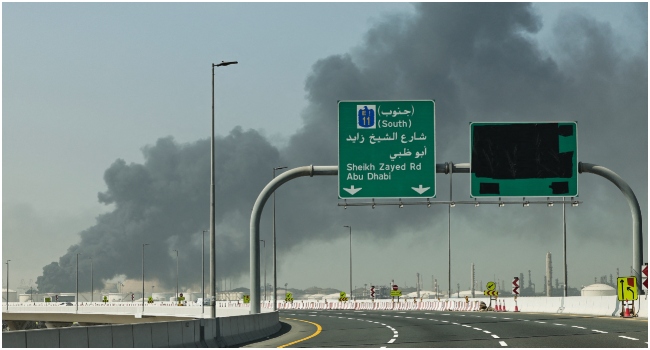
In the United Arab Emirates, smoke was seen rising from the port of Jebel Ali in Dubai. Two people were reported killed in Abu Dhabi, while four were injured in Dubai. In Israel, emergency services said a woman was killed in the Tel Aviv area and around 20 others wounded in earlier strikes.
Iran’s Red Crescent said on Saturday that earlier strikes had left 201 people dead and hundreds injured inside Iran.
The judiciary confirmed the deaths of senior figures including Ali Shamkhani, a top adviser to Khamenei, and General Mohammad Pakpour, head of the Revolutionary Guards.
Defiance in Tehran
Senior Iranian officials vowed retaliation. Mohammad Bagher Ghalibaf, the speaker of parliament, said Trump and Israeli Prime Minister Benjamin Netanyahu had “crossed our red lines” and “will suffer the consequences”.
Ali Larijani, head of Iran’s Supreme National Security Council, declared: “The brave soldiers and the great nation of Iran will teach an unforgettable lesson to the international oppressors.”
In Tehran, witnesses reported cheers when initial reports of Khamenei’s death emerged, followed later by large crowds of mourners gathering in Enghelab Square chanting “death to America”.
Succession Questions
Khamenei’s death has intensified speculation over Iran’s political future. State television reported that President Masoud Pezeshkian and two other senior officials would oversee a transitional period.
Exiled opposition figure Reza Pahlavi, son of the late shah, hailed Khamenei’s death, declaring that “the Islamic Republic has effectively come to an end”.
Strikes and Strategic Fallout
The Iranian judiciary said a strike on a school in southern Iran killed 108 people, although the toll could not be independently verified.
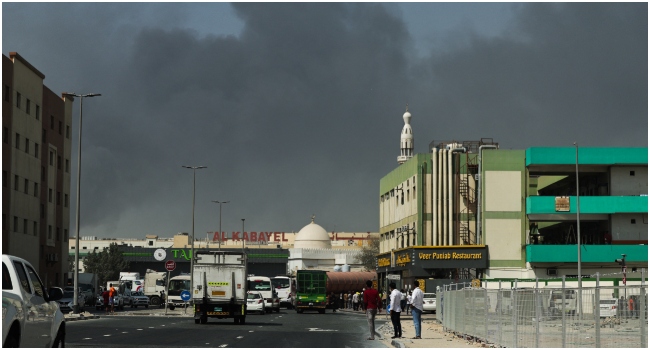
Smoke was also seen rising from US bases in the United Arab Emirates and Bahrain, home to the US Navy’s Fifth Fleet.
Iran’s Revolutionary Guards reportedly contacted ships to announce the closure of the Strait of Hormuz, a crucial oil transit route, though it remained unclear whether the threat was being enforced.
Airspace was closed across Iran, Iraq, Kuwait, Syria, the UAE and Israel, and multiple airlines suspended flights to the region.
President Trump warned that any further retaliation from Tehran would prompt the United States to respond with a force “never been seen before”. He also reiterated calls for regime change in Iran, urging security forces to stand down.
Israeli Prime Minister Netanyahu addressed Iranians directly, saying: “This is your time to join forces, to overthrow the regime and to secure your future.”
Meanwhile, Oman — which had been mediating nuclear talks — called for an immediate ceasefire. Iran also appealed to the United Nations Security Council, which convened an emergency session, to act to halt the attacks.