

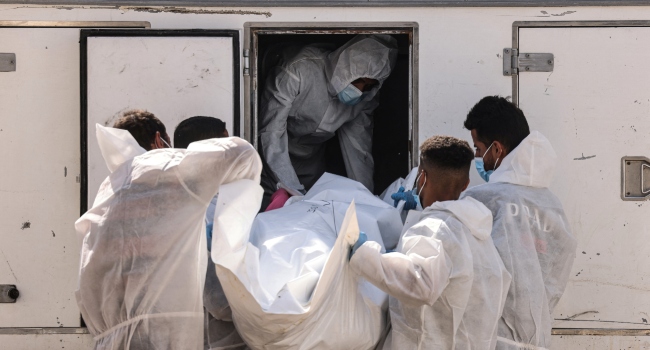
Israel announced on Sunday that it had received the remains of three additional captives from Hamas as part of the ongoing hostage-prisoner exchange under the US-brokered ceasefire agreement in Gaza.
Despite intermittent flare-ups, a fragile truce has held in the territory since 10 October, focusing primarily on securing the return of all Israeli hostages—both the living and the deceased.

“The coffins of three fallen hostages were received through the Red Cross and handed over to IDF and Shin Bet forces inside the Gaza Strip,” the Israeli Prime Minister’s Office said in a statement. It added that the remains would be transferred to a forensic medical centre in Israel for identification.
Hamas’s armed wing claimed it had discovered the bodies earlier on Sunday “along the route of one of the tunnels in the southern Gaza Strip.”
When the ceasefire was announced, Hamas was holding 48 hostages, including 20 confirmed alive. Since the truce began, the group has released all 20 surviving hostages and started handing over the remains of 28 deceased captives. So far, 17 bodies have been returned—comprising 15 Israelis, one Thai national, and one Nepalese citizen.
Israel has accused Hamas of deliberately delaying the return of the remaining bodies. However, the Palestinian group insists the process has been hampered by the destruction and debris left by Israeli airstrikes, which have buried many bodies beneath the rubble.
Hamas has urged mediators and the Red Cross to provide additional equipment and personnel to assist in locating and retrieving the remains.
In a statement, Hamas spokesman Hazem Qassem said Sunday’s handover demonstrated that the group “was making every effort to return the bodies as quickly as possible.”
Meanwhile, a campaign group representing the families of Israeli hostages urged the government to intensify efforts to recover all deceased captives.
“The Hostage Families demand that the prime minister act with determination and firmness to ensure Hamas fulfils its commitments under the agreement and returns all deceased hostages to Israel,” the Hostages and Missing Families Forum stated.
In addition to the 17 bodies, Hamas has also returned partial remains of another hostage whose body had been recovered by Israeli forces last year—an act that provoked outrage in Israel, with officials accusing Hamas of violating the ceasefire terms.
“We call for the return of all 11 deceased hostages who have still not been brought back to Israeli soil,” said Inbal Bachar, aunt of Sahar Baruch, whose remains were returned earlier in the week. “We cannot continue our lives until they all return,” she added during Baruch’s funeral.
In Gaza, Palestinians expressed hope that the truce would eventually lead to an Israeli military withdrawal and an end to their suffering.
“We want the second phase of the agreement to begin so that we can return to our homes,” said Naif al-Sulaibi, a resident of Jabalia in northern Gaza. “As long as the Yellow Line and the army remain here, life is impossible, and conditions will stay unbearable.”
The second phase of US President Donald Trump’s ceasefire plan has yet to be finalised. It is expected to address key issues such as disarming Hamas, establishing a transitional authority, and deploying an international stabilisation force in Gaza.