

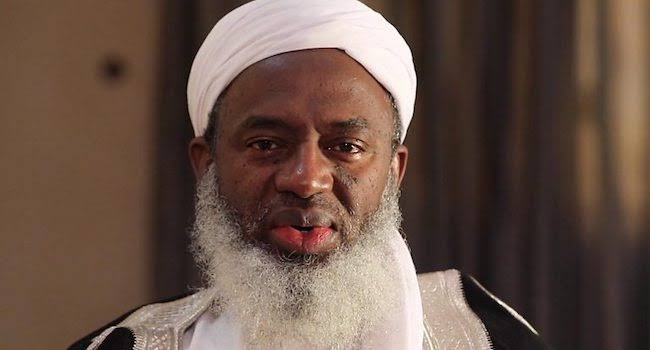
Kaduna-based Islamic cleric Ahmad Gumi has stated that the abduction of schoolchildren is a “lesser evil” when placed side by side with the killing of soldiers.
In an interview published by the BBC on Tuesday, he stressed that although both acts are unacceptable, they do not carry the same level of severity.

Gumi defended his earlier remarks, saying his comparison reflects a moral hierarchy rather than an endorsement of criminal behaviour. According to him, “Saying that kidnapping children is a lesser evil than killing your soldiers — definitely it is lesser,” insisting that “killing is worse than kidnapping, but they are all evil. Not all evils are of the same power.”
He argued that neither scripture nor global practice supports the belief that governments must refuse to negotiate with terrorists. He described the stance as impractical, noting that many countries that publicly reject negotiation still do so privately when necessary.
“That phrase, ‘we don’t negotiate with terror’, I don’t know where they got it from. It’s not in the Bible. It’s not in the Quran. In fact, it’s not even in practice. Everybody is negotiating with outlaws, non-state actors — everybody,” he said. “We negotiate for peace and our strategic interests. If negotiation will bring a stoppage to bloodshed, we will do it.”
Addressing criticism that his interactions with bandits legitimise armed groups, Gumi dismissed such views as lacking understanding of the realities of conflict mediation. He emphasized that he does not operate independently, saying, “I go there with the authorities. I don’t go alone. And I go there with the press.”
He revealed that his last engagement with bandits occurred in 2021, during efforts to initiate dialogue. While state officials welcomed his involvement, he claimed the federal government “wasn’t keen.”
Gumi also called for increased military presence in troubled areas but stressed that the armed forces alone cannot resolve the crisis. He noted that military commanders acknowledge the limitations of a solely force-driven strategy, saying, “We need a robust army… but even the military is saying our role in this civil unrest, in this criminality, is 95 percent kinetic. The rest is the government, the politics, and the locals. The military cannot do everything.”
He described the bandits largely as Fulani herdsmen locked in what he called an “existential war” tied to their cattle-based livelihoods and family heritage, adding, “They are fighting an existential war. Their life revolves around cattle… They’ll tell you, ‘This cow I inherited from my grandfather’. They are mostly Fulani herdsmen, not the Fulani town — we have to differentiate between the two.”