

Deadly clashes between Israel and Hezbollah in Lebanon placed the newly signed US-Iran peace deal under renewed pressure on Friday after officials postponed planned talks between Washington and Tehran in Switzerland.
The delay came as Iran’s chief negotiator warned that Tehran would not compromise on its red lines and insisted its finger remained “on the trigger”, even as shipping resumed through the Strait of Hormuz, which had been effectively closed during the conflict.

President Donald Trump and his Iranian counterpart, Masoud Pezeshkian, signed the agreement earlier this week to end a war that began on 28 February with US-Israeli strikes that killed supreme leader Ayatollah Ali Khamenei.
The agreement also sought to end hostilities in Lebanon, which Iran had insisted must form part of any settlement, making Israel’s continued military campaign a growing source of concern for Washington.
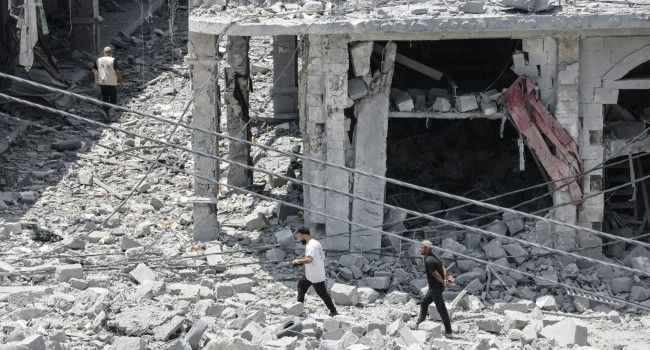
Israel’s military said it struck more than 80 Hezbollah targets in Lebanon on Friday and killed dozens of fighters in response to what it described as ceasefire violations.
Lebanese authorities said Israeli airstrikes killed 18 people in the south, while Israel’s military confirmed four soldiers had died, prompting strong reactions within the country.
Prime Minister Benjamin Netanyahu said Israeli forces would remain in Lebanon “as long as necessary” and vowed Hezbollah would pay a “heavy price” for its attacks.
Far-right National Security Minister Itamar Ben Gvir escalated the rhetoric, declaring after the soldiers’ deaths that “all of Lebanon must burn”.
French Foreign Minister Jean-Noel Barrot urged Israel to “respect” the agreement brokered by President Emmanuel Macron, who hosted the signing ceremony at Versailles.
Preparations had been completed for Iranian and US delegations, led by Mohammad Bagher Ghalibaf and US Vice President JD Vance respectively, to meet at the Swiss resort of Burgenstock overlooking Lake Lucerne.
The talks were expected to begin a two-month negotiating process on unresolved issues, particularly Iran’s nuclear programme.
Switzerland’s foreign ministry confirmed the postponement but said it “remains ready to facilitate these talks”.
The Financial Times, citing diplomats, reported that Israel’s strikes in Lebanon prompted the delay, although officials had not confirmed this.
A diplomatic source from the United Arab Emirates said the agreement faced “two spoilers” — Israel, which “didn’t like it”, and hardline opposition within Iran.
Ghalibaf reiterated on Friday that negotiations with the United States would remain subject to Tehran’s “red lines”.
“If the enemy seeks to be excessive, we have proven that our fingers are on the trigger and we have no hesitation in giving a crushing response to the enemy,” he said, according to the official IRNA news agency.
Vance expressed unusual frustration with Israel’s approach, telling the New York Times: “you can’t just kill your way out of solving every single national security problem that you have”.
Iran’s new supreme leader, Ayatollah Mojtaba Khamenei, who succeeded his father, said on Thursday that he approved the agreement despite holding a “different view”.
A key part of the deal required the immediate reopening of the Strait of Hormuz, a vital global shipping route whose closure had driven up energy prices.
Maritime tracking company AXSMarine reported that 25 commercial vessels passed through the reopened waterway on Thursday, the highest daily figure since mid-April.
During peacetime, around one-fifth of the world’s oil and liquefied natural gas exports pass through the strait.
The US military said on Thursday that it had lifted its naval blockade of Iranian ports, allowing ships to resume sailing to and from Iran, although American warships would remain in the region.
Under the agreement, Washington will immediately lift oil sanctions imposed on Iran.
The deal also provides that, once both sides reach a final agreement on Iran’s nuclear programme, the United States will facilitate the release of a 300 billion-dollar reconstruction fund bac ked by regional countries.