

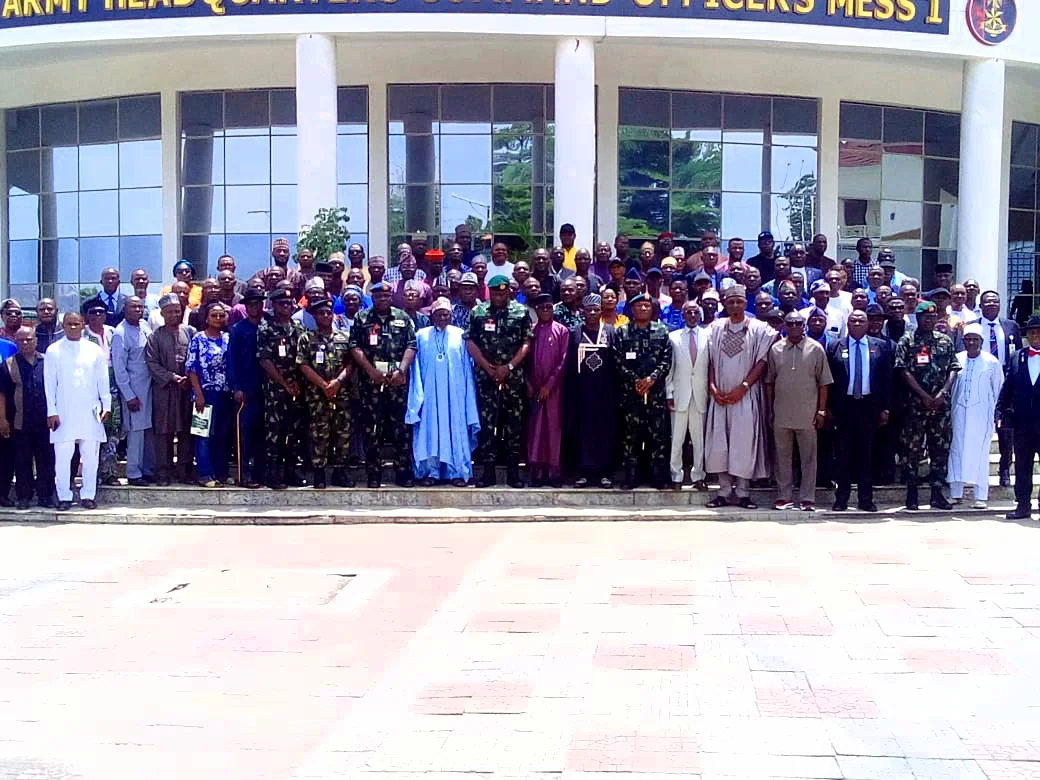
The Nigerian military has announced plans to involve retired military personnel in addressing the country’s increasing violent conflicts through mediation, negotiation, and community peacebuilding efforts.
This was disclosed by the Chief of Defence Staff, Gen. Olufemi Oluyede, during the launch of a mediation and conflict resolution training programme for veterans in Abuja on Monday. The programme, organised in collaboration with the Mediation Training Institute and Defence Headquarters, is designed to equip ex-servicemen with modern skills in resolving disputes and preventing violence.

Oluyede explained that the initiative represents a strategic shift toward combining military operations with non-violent approaches to security challenges, especially as many conflicts now arise from local disputes and community tensions. He stressed that relying only on force is not enough to achieve lasting peace, highlighting the importance of dialogue and early intervention.
He stated: “This initiative reflects the understanding that sustainable security requires both kinetic and non-kinetic responses.”
According to him, veterans are well suited for this role because of their experience, discipline, and credibility, which can help them intervene effectively in community conflicts before they escalate. He also noted that the programme will strengthen early warning systems and improve communication between communities and security agencies, while still supporting existing security structures rather than replacing them.
The President of the Coalition of Concerned Veterans Association, Isaac Oguntuyi, described the training as a continuation of national service and encouraged participants to pass the knowledge on to other retired personnel nationwide. He reaffirmed that veterans remain committed to maintaining national stability.
Similarly, Abiodun Durowaiye-Herberts, National Coordinator of REMENAF, said ex-servicemen are well positioned to support intelligence gathering, community engagement, and conflict prevention due to their operational background.
Overall, the initiative reflects a growing focus on preventive security strategies aimed at reducing violence by addressing its root causes and easing pressure on active military forces.
