

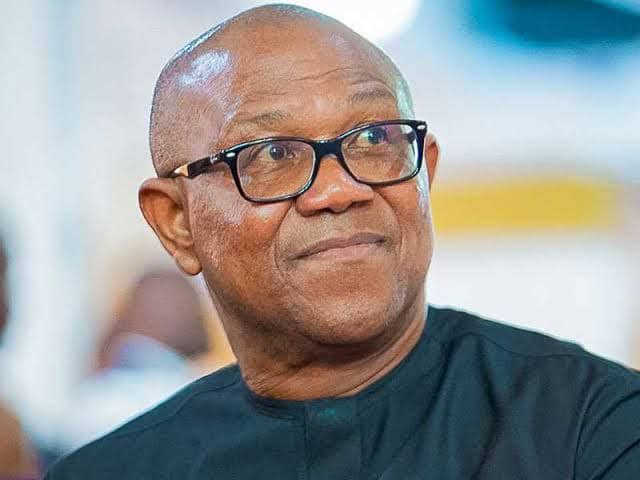
Former Labour Party presidential candidate, Peter Obi, has criticised Nigeria’s electricity generation capacity of about 5,000 megawatts, describing it as woefully insufficient and a major drag on productivity that highlights enduring leadership failures.
In a post shared on X on Saturday, Obi condemned Friday’s national grid collapse, branding the incident a “national shame”.

“In January 2025, we witnessed the first grid collapse of that year, which was followed by several other collapses. Now in January 2026, the national shame has commenced with yesterday’s collapse,” Obi wrote.
He expressed concern that Nigeria has, for three consecutive years from 2023 to 2025, ranked among countries with the poorest access to electricity worldwide, with nearly 100 million citizens living without power.
Comparing Nigeria with other African nations, Obi noted that the country’s power generation remains alarmingly low relative to its population.
“South Africa, with about 64 million people, generates over 40,000 megawatts. Egypt, with about 115 million people, also generates over 40,000 megawatts, while Algeria produces over 50,000 megawatts. Nigeria, with over 240 million people, produces just about 5,000 megawatts,” he stated.
Obi blamed the situation on sustained leadership failures, insisting that the electricity sector requires capable and committed leadership to deliver meaningful results. He urged Nigerians to place a premium on competence and compassion when making leadership choices ahead of the 2027 general elections.
Meanwhile, Vanguard reported on Friday that Nigeria was thrown into widespread darkness following the collapse of the national electricity grid — the first such occurrence in 2026.
The system failure reportedly happened around 1 pm, when power allocation to all electricity distribution companies (DisCos) dropped to zero. Figures from the Nigerian Independent System Operator (NISO) showed that national electricity generation fell to zero megawatts, triggering a total nationwide blackout.
In a statement issued on Friday, NISO, an arm of the Transmission Company of Nigeria (TCN), attributed the collapse to the simultaneous tripping of several 330kV transmission lines, as well as the disconnection of some grid-connected power generating units.