

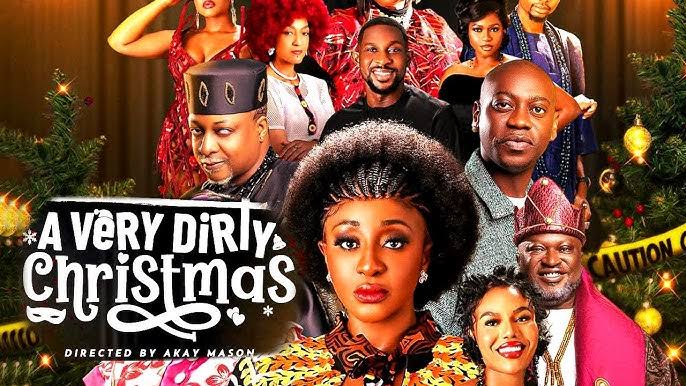
The National Film and Video Censors Board (NFVCB) has justified its decision to approve the Nollywood movie A Very Dirty Christmas, stating that a detailed review showed the title neither demeans nor diminishes the Christian faith.
The board’s Executive Director, Dr Shaibu Husseini, explained the position on Wednesday in a series of posts on X, following backlash from Christian organisations over the film’s title.

Husseini said the production, including its title, received approval after regulators examined the storyline, thematic elements and the filmmakers’ creative purpose.
He noted that the board viewed the title as symbolic rather than literal in meaning.
“During review, the title was interpreted as metaphorical rather than literal—understood as a reference to human conduct, moral contradictions, or social realities unfolding during a festive period, and not as an ascription of impropriety to Christmas as a sacred Christian event,” he said.
According to him, the assessment of the title was carried out within the wider framework of the film’s plot and themes, rather than as a statement about Christmas itself.
He further clarified that the movie does not portray, reenact, mock or diminish the nativity, the birth of Jesus Christ, or any fundamental Christian beliefs.
“There is no scene, dialogue, or imagery within the film that ridicules Christian worship or theology. In line with established regulatory principles, the NFVCB places significant emphasis on context and intent over isolated literary or semantic interpretations when exercising its statutory mandate,” he added.
Husseini, however, acknowledged that the board had opened discussions with the film’s producers following objections raised by Christian groups and communities.
He revealed that the NFVCB advised the producers to consider adjusting or stylising the title to address public concerns “without undermining the creative integrity and exploitation of the work”.
He added that post-approval title revisions are common in the global film industry, referencing the 2019 Indian film Judgemental Hai Kya, which was renamed after criticism from mental health advocates.
According to Husseini, the board’s actions were consistent with the NFVCB Act and aimed at avoiding public misinterpretation and potential religious conflict.
“Though engagement is ongoing, we are pleased to report that the producers are responding positively, and steps that will eventually be taken will be consistent with preserving goodwill among stakeholders and audiences,” he said.
The dispute arose after the release and promotion of A Very Dirty Christmas, a Nollywood film produced by actress Ini Edo, which attracted condemnation from the Christian Association of Nigeria and other Christian bodies.
The groups described the title as offensive, arguing that linking Christmas with the word “dirty” undermines the religious importance of the celebration marking the birth of Jesus Christ. They demanded an apology from the producers and urged regulators to suspend or reassess the film’s approval.
In response, the filmmakers maintained that the title is metaphorical, reflecting moral dilemmas and family conflicts explored in the story rather than a critique of Christianity.
Despite the controversy, the film has continued to screen in cinemas across the country, as public debate over its title intensified and drew the intervention of the National Film and Video Censors Board.