

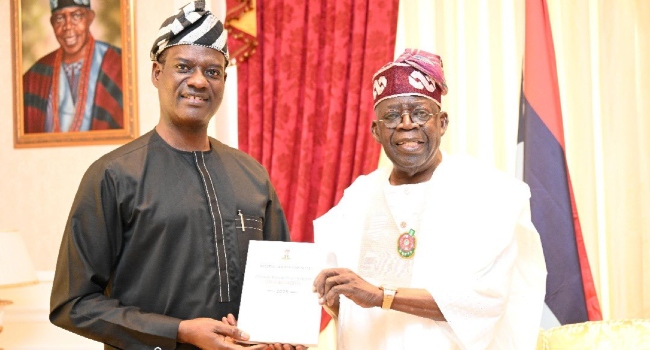
The Minister of Finance and Coordinating Minister of the Economy, Taiwo Oyedele, has stated that the federal government will not reinstate fuel subsidy despite growing concerns over rising living costs.
He made the remark on Tuesday in Paris, France, during a meeting with global investors alongside President Bola Tinubu.

Oyedele explained that subsidies create economic “distortions” and stressed that petrol prices would not be controlled, as the government believes market forces should determine pricing.
Following the removal of the subsidy in May 2023, Nigeria experienced a sharp rise in inflation, reaching a 19-year high.
Headline inflation increased from 22.41% in May 2023 to 34.19% by June 2024, largely driven by higher costs of fuel, food, and transportation, which intensified the cost-of-living crisis.
Inflation continued to climb after the June 2023 announcement, with food inflation surpassing 39% by October 2024.
The removal of the subsidy, alongside currency devaluation, led to a nearly 300% rise in transport costs and worsened poverty levels.
“We will not bring back fuel subsidy because it creates distortions for the economy, and we won’t introduce price control because we believe in the market… the situation in Iran presents new opportunities for us as the world looks to diversify sources of energy and invest in new markets”, the minister said.
Earlier, President Tinubu told investors that the removal of the subsidy, which he described as a “burden”, has contributed to stability in Nigeria’s foreign exchange market.
“Subsidy that was a burden to the entire country, was removed and ever since we have achieved FX stability”, Tinubu said.
A subsequent statement from his adviser on information and strategy highlighted that the administration’s economic reforms are aimed at eliminating distortions, stabilising macroeconomic indicators, and supporting inclusive growth.
The president also reaffirmed his government’s commitment to transparency, fiscal discipline, and the implementation of key reforms.
At the meeting, Oyedele pointed to Nigeria’s economic performance, noting that the country recorded 11.2% GDP growth in dollar terms in 2025, strengthening its ambition to reach a $1 trillion economy by 2030.
He added that the government is focused on ensuring reforms translate into tangible benefits for citizens and pledged to release quarterly financial data.
The Director General of the Debt Management Office, Patience Oniha, also assured investors of prudent debt management and a commitment to sustainable financing.
Tinubu reiterated his administration’s focus on deepening reforms, improving transparency in the oil sector, and strengthening security through measures such as police decentralisation and tackling terrorist financing.
“The focus remains on policy stability and diligent execution to ensure these strategic shifts translate into concrete benefits for all Nigerians”, the president said.
Some investors at the meeting praised the government’s reform efforts and expressed confidence in Nigeria’s economic outlook, while Tinubu assured them of continued fiscal discipline, transparency, and policy consistency.