

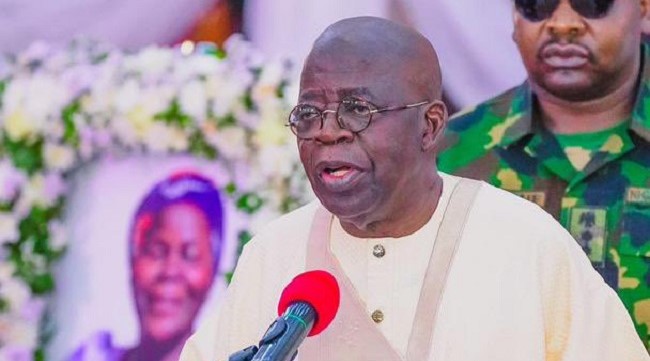
The National Orientation Agency (NOA) has said that Nigeria’s debt profile has “significantly decreased” since President Bola Tinubu took office in 2023, rejecting claims that the nation’s debt has continued to rise.
Earlier, PUNCH Online reported that the Debt Management Office (DMO) disclosed Nigeria’s total public debt stock had increased to “N152.40 trillion as of June 30, 2025.”

According to the DMO, the figure represents a N3.01 trillion rise from N149.39 trillion recorded at the end of March 2025 — a 2.01 percent increase within three months. In dollar terms, the total debt grew from $97.24 billion to $99.66 billion, showing a 2.49 percent rise. The breakdown further indicated that “Nigeria’s external debt climbed to $46.98bn (N71.85tn) in June, up from $45.98bn (N70.63tn) in March.”
However, in an explainer dated October 24, 2025, and shared via its official X handle on Monday, the NOA said false information had created a misleading impression about the country’s debt burden. It noted that verified data from the DMO, the Central Bank of Nigeria, the Ministry of Finance, and the Federal Inland Revenue Service tell a different story.
According to the agency, Nigeria’s total public debt as of June 2023 stood at $113.42 billion, with a debt-to-GDP ratio below 40 percent — a level considered sustainable by both the IMF and the World Bank.
The NOA explained that by December 2024, the figure had dropped to about $94.22 billion, reflecting a decline of over $19 billion within 18 months.
“The reduction in Nigeria’s debt shows that the federal government is actively managing its borrowings and repayments. Instead of accumulating more debt, Nigeria has been making down payments of some of its loans and avoiding unnecessary new borrowings. This is a positive sign of fiscal responsibility,” the agency stated.
It further noted that before the current administration, debt servicing consumed nearly all government revenue, with about 97 percent of total earnings in the first half of 2023 going toward debt repayment.
“By the end of 2024, this ratio had improved to 68 percent, and it has reduced to less than 50 percent by the second quarter of 2025. While still high, this is a significant improvement, showing better fiscal management and increased government revenue,” the NOA explained.
Emphasizing the Tinubu administration’s commitment to meeting its financial obligations, the NOA said the federal government repaid a $3.26 billion IMF loan within two years and spent around $7 billion on external debt servicing during the first 18 months of the presidency.
While acknowledging that the country’s debt remains within a manageable range, the agency said Nigeria still faces challenges due to its dependence on oil revenue. It, however, commended the government’s efforts to boost non-oil income through better tax collection and measures to curb financial leakages.
The NOA added, “In the first half of 2024, non-oil revenue increased by 30 percent compared to the same period in 2023. The Nigeria Customs Service collected N1.3 trillion in the first quarter of 2025, more than double the N600 billion collected in the same period in 2023. This remarkable increase is a testament to the federal government’s renewed focus on strengthening revenue mobilisation without raising tax rates.”
The agency also noted that the Nigerian economy is showing steady recovery and diversification, driven by reforms in agriculture, telecommunications, and the services sector.
It referenced a World Bank report projecting Nigeria’s GDP growth at 3.7 percent in 2024 — the country’s strongest expansion in nearly a decade, excluding post-pandemic rebounds.
According to the NOA, the federal government is also prioritising heavy investment in infrastructure, agricultural development, digital innovation, and small business support to foster sustainable economic growth and reduce the nation’s reliance on oil revenue.