

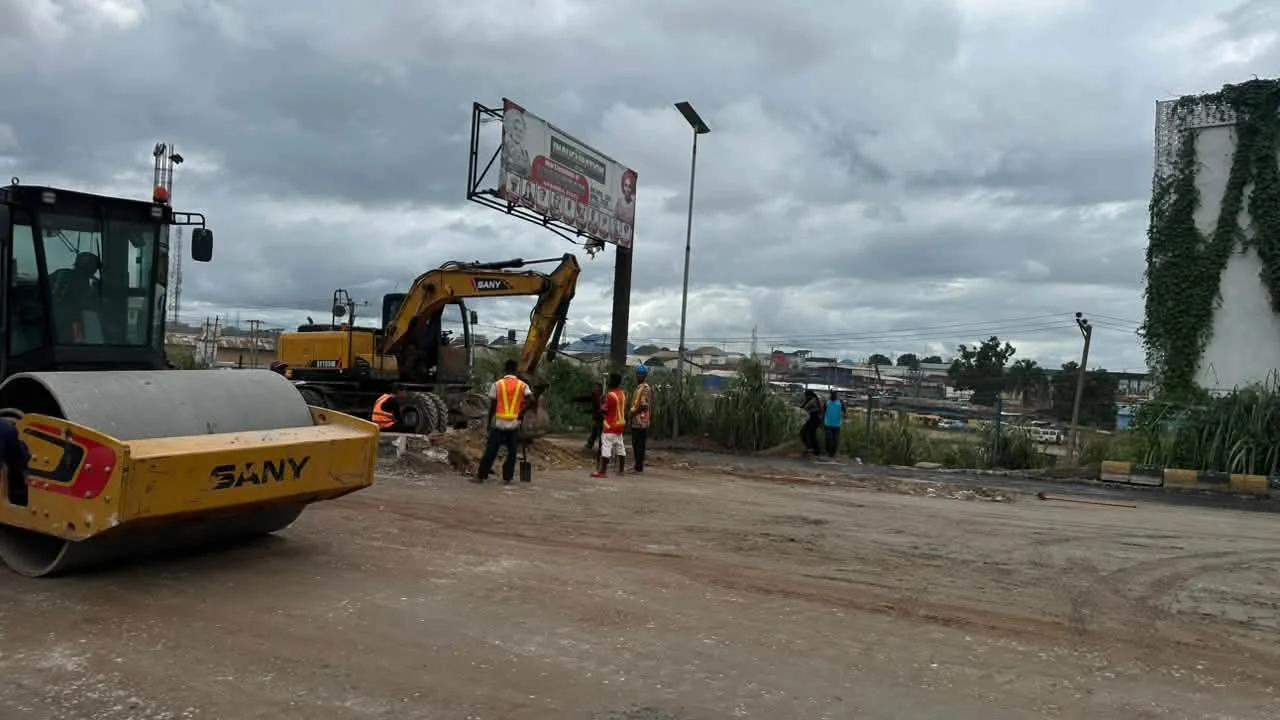
The reopening of the First Niger Bridge between Onitsha, Anambra State, and Asaba, Delta State, has been delayed by one week due to persistent heavy rainfall.
The bridge, which was closed for rehabilitation on September 7, was initially scheduled to reopen on Monday, September 21, 2026.

However, the Federal Ministry of Works has extended the completion date by another week, subject to favourable weather conditions.
The development is expected to prolong traffic congestion, longer travel times and increased transport costs for commuters using the route.
Rain delays rehabilitation work
The Acting Federal Controller of Works, Federal Ministry of Works, Anambra State Field Headquarters, Timothy Emenike, had announced the closure to allow emergency repairs and maintenance.
The work includes replacing vandalised railings, bolts and nuts, repairs to parts of the expansion-joint steelwork and stanchion or steel-truss nuts, as well as installing CCTV cameras.
The ministry also said the repairs were aimed at restoring the bridge to a safe and properly motorable condition.
However, when our correspondent visited the bridge on Monday amid heavy rainfall, the facility remained barricaded, with construction equipment and workers still on site.
Some sections of the bridge that had already been repaired were also reportedly affected by the persistent rainfall.
Emenike said the contractor would require at least three consecutive dry days before work could resume fully.
“We have actually done a lot of work on most portions of the bridge, but with the constant heavy rains for almost one week, some areas have been affected and need at least three dry days for us to return to site.
“So, in view of what is on the ground, we have extended the date for the completion of the project by one week, depending on the weather. For now, we pray that we shall have three dry days for us to return to site.”
He added that lighting challenges affecting night operations had been addressed and security concerns around the bridge had also been resolved.
Emenike said Works Minister Dave Umahi would inspect the bridge after completion before giving approval for its reopening.
Contractor faces further delays
A site engineer, who spoke on condition of anonymity because he was not authorised to speak, said most of the vandalised bolts and nuts had been replaced and work had reached the asphalt stage.
“The vandalised bolts and nuts have been fixed. We are at the asphalt level at the moment, but we are having little downtime due to incessant rainfall each time it rains.
“Within this period, we had almost three days of rain, and each time there is rainfall for a day, the job is delayed for two days or more. The rains also prevented the arrival of some materials like asphalt, and at the moment, we are waiting for asphalt, although the ministry has ordered it.”
The engineer also identified inadequate lighting as a challenge that affected night operations.
“Inadequate lighting also affected night operations, as the security of workers and the safety of materials could not be guaranteed.”
He said the bridge might not reopen as originally planned because the rehabilitation had not been completed, but added that the ministry remained committed to reopening it as soon as possible.
Commuters face higher fares
The closure has continued to affect motorists and commuters travelling between Anambra and Delta states.
Motorists approaching the bridge from the Asaba side were seen experiencing delays while trying to use alternative routes, particularly the Onitsha-Owerri Road.
Some commuters reportedly alighted from vehicles near diversion points and trekked to continue their journeys, while others used commercial boats or walked across parts of the area.
A motorist, Uchenna Orji, said the closure had placed significant pressure on road users.
“This is the situation we have found ourselves in today. While we commend their efforts at ensuring the safe condition of the bridge, it must be pointed out that the suffering and untold hardship motorists are facing today on this route is due to their lack of proper planning.
“The resultant gridlock on the alternative routes provided is worsened by the poor conditions of the roads. The authorities should have first fixed these alternative routes before closing the bridge; it would have saved motorists the untold hardship.”
Another commuter, a trader, Nkiruka Ozo, said the closure had significantly increased journey times and transport costs.
“People plying this route now spend over three hours for a journey of less than 45 minutes due to the very bad portions of the alternative routes, especially the Onitsha-Owerri Road.
“Apart from that, the transportation cost has more than tripled, thereby extending the hardship on motorists. We urge the authorities concerned to speed up the work.”
The Works Ministry has advised motorists to continue using the Second Niger Bridge route through Obosi and the Onitsha-Owerri Road towards Asaba and other destinations until the First Niger Bridge reopens.