

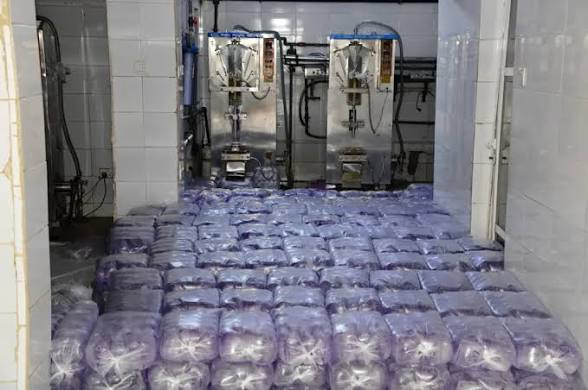
Producers of sachet water in Imo State have suspended operations for three days due to rising production costs, particularly the price of nylon used for packaging.
The shutdown, initiated on Monday by members of the Association of Table Water Producers, Imo State chapter, has already caused supply disruptions affecting residents in Owerri and surrounding areas.

Many residents reported scarcity and increased prices, noting that a bag of sachet water, previously sold for ₦350, now costs about ₦500. Retail hawkers who usually sold three sachets for ₦100 were seen selling one sachet for ₦100 as of Wednesday, attributing the hike to reduced supply.
Some association members, speaking on condition of anonymity, linked the development to rising production expenses, including higher prices of nylon and diesel used to run generators. One source said, “Due to the ongoing war in Iran, the prices of diesel, fuel, and nylon have increased, and ATWAP members can barely meet up with cost of production. We decided to quietly shut down tools so that people will miss us, and then we can introduce the new price. But we told people that we are doing routine maintenance.”
However, the state Chairman of ATWAP, Bismark Lumanze, denied that the producers were on strike, insisting the shutdown was for routine maintenance.
Lumanze said, “No, we are not on strike, but on agreed routine maintenance of our factories to ensure we produce clean and safe water. We had already increased the prices of table water and pure water before the three-day mandatory break for maintenance. So it’s not true that we are on strike. However, business supplies will resume from Thursday 12 am.”
He added that the association had already adjusted prices prior to the temporary shutdown and assured that supply would resume after the maintenance exercise. The exercise, he explained, was intended to promote hygiene by allowing operators to clean machines, replace filters, and service production facilities.
The ATWAP chairman also expressed concerns over regulatory pressures on the sector, including allegations linking sachet water to environmental pollution and moves by the National Assembly to streamline the business.
