

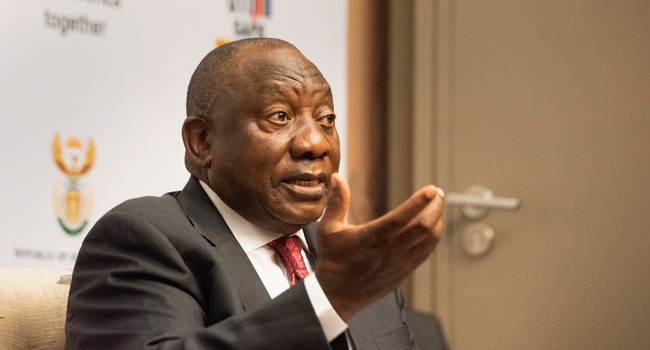
A South African court is due to rule on President Cyril Ramaphosa’s bid to set aside a report that found he has a case to answer over the theft of large sums of cash from his private farm according to BBC.
In 2022, an independent panel said Ramaphosa may have committed serious misconduct relating to the theft of $580,000 (£443,000), hidden in a sofa, at his Phala Phala game farm in the Limpopo province. He denied any wrongdoing.
Ramaphosa challenged the findings of the report after the Constitutional Court ruled that parliament had violated the constitution by blocking moves to impeach him.
The ruling could either exonerate the president or clear the way for him to possibly face impeachment.
Wednesday’s ruling will be handed down by the Western Cape high court – the same court that blocked a parliamentary committee from proceeding with the impeachment process while a review challenge of the report is under way.
The scandal, dubbed “Farmgate” by local media, has plagued the president since it broke in 2022 when South Africa’s former spy chief Arthur Fraser detailed it in an explosive dossier that he sent to the police.
Fraser, a close ally of former President Jacob Zuma, who Ramaphosa replaced, accused the head of state of hiding the theft from the police and tax authorities.
The actual theft happened in 2020, when thieves broke in and allegedly stole the money, in US dollar bills, that had been stuffed into a sofa.
Two people were found guilty of the theft earlier this month.
Ramaphosa confirmed that a robbery had taken place but said the money had been from the legitimate sale of buffalo from his livestock business.
While numerous probes cleared him of any wrongdoing, parliament began an impeachment process in 2022 and established an independent panel to investigate the allegations.
It came to some damning findings, including saying there was “substantial doubt about the legitimacy of the source of the currency that was stolen” and concluding that Ramaphosa “has a case to answer”.
Shortly after, the president initiated a legal application to have the report set aside but dropped this when parliament voted against accepting its findings.
He revived it again in May this year after the Constitutional Court, the country’s highest court, ordered parliament to refer the panel report to an impeachment committee.
In his challenge, Ramaphosa said the panel had “misconceived its mandate, misjudged the information placed before it and misinterpreted the four charges advanced against me”.
If the court rules in his favour, this may mean the end of this impeachment process but only if parliament doesn’t try to appeal against the ruling.
If it rules against him, this clears the way for the committee to examine the charges against the president and make a recommendation.
If it recommends impeachment, the matter is put to a vote. A two-thirds majority in parliament is required to remove the president.
Ramaphosa’s ANC has enough votes to block this.
Ramaphosa is the first president to face impeachment proceedings under new rules introduced in 2018.