
Special Report: Inside world of local nail trimmers with crude, unhygienic tools [VIDEO/PHOTOS]
With additional reports from Josiah David, Oyedokun Taiwo, Toyibat Ajose, Esther Adekanla, Adelani Khadijat

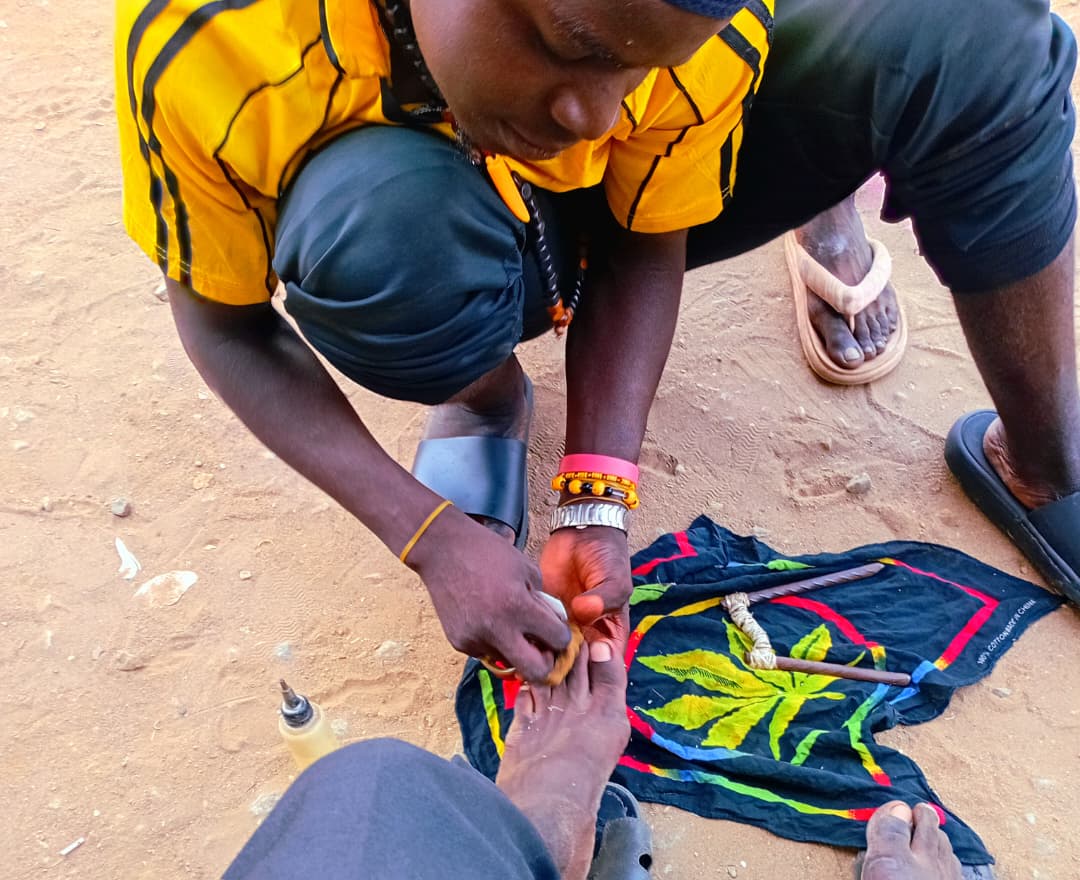
From a distance, if you hear clicking sounds of metals at intervals, it maybe a call to loyal or prospective customers for possible patronage. No voice alerts advertising services, just clicks of scissors or other metals and the loyal customers already get the message that their local manicure-pedicure ‘specialist’ is around.
The informal nail care subsector particularly in Lagos and other commercial centres nationwide is mostly dominated by young male northerners popularly called ‘Masu yankan farce’ in Hausa language on mission to the cities to make earns meet and possibly have spare to send home to their families.

While standard manicure and pedicure outlets exits and in abundance, however, the charges are sometimes above what the average man/woman on the streets can afford. Moreso, not everyone has the luxury of time to go spend in nail parlours.
For context, manicure referring to care of the hands involves cleaning, filing, cuticle care, hand massage, and nail polishing. Pedicure on the other hand refers to care of the feet. The process involves soaking feet, cleaning/filing toenails, removing dead skin with a pumice or file, and foot massage.
Regular manicure and pedicure process
A regular manicure begins with soaking of hands in warm soapy water which aids in soothing and softening the dead skin cells. Your fingernails are then cleansed, clipped and filed properly. Before applying the moisturising lotion in your hands, the manicurist massages your hands gently and finally the regular manicure ends up with application of nail polish with a base coat, main coat and a top or the final coat. A regular pedicure begins with soaking of your feet in a warm water tub and then the pedicurist scrubs your feet so as to clear off any dead skin. Then your toenails are clipped and filed properly. You also get a brief massage on your feet and legs before you are applied with a soothing lotion. Toenails are finally polished with nail polish.
Sharp, crude, unsterilised tools
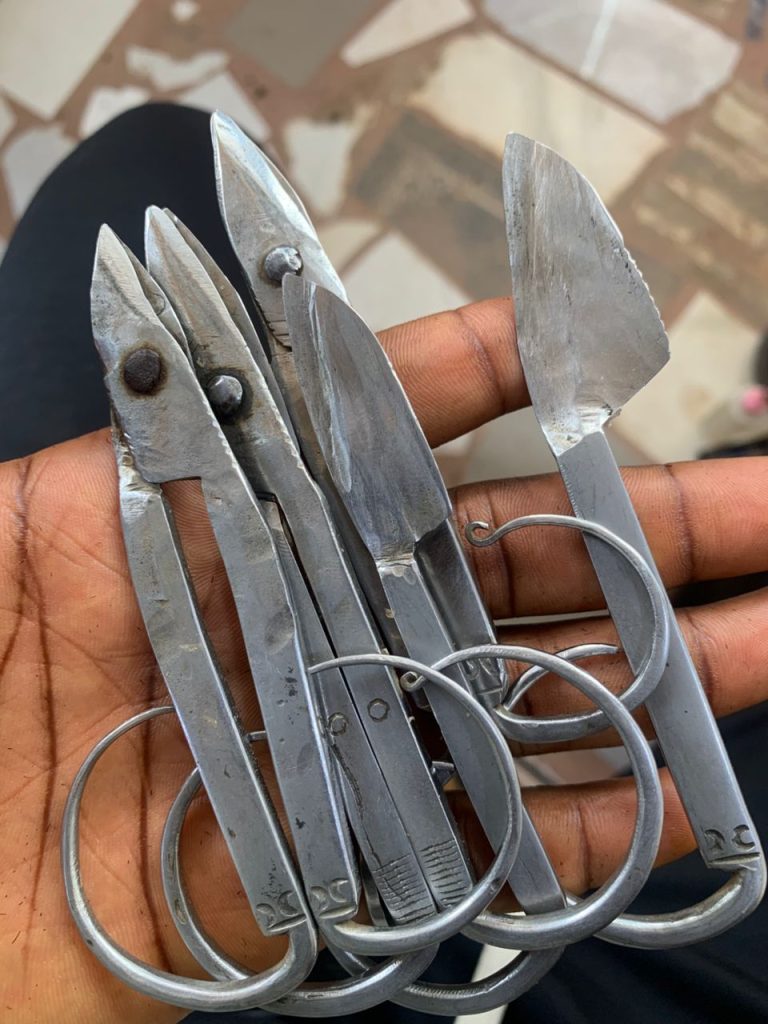
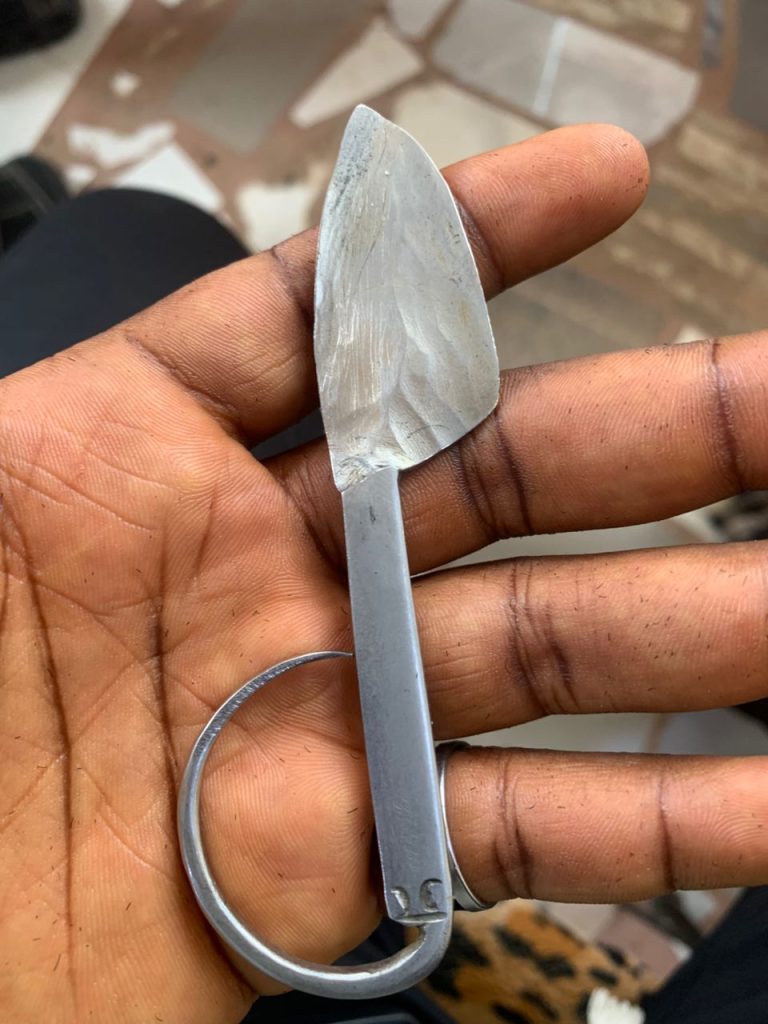
Investigations by NewsClick Nigeria revealed that while a standard pedicurist uses antiseptics and other antibacterial products to soak both legs and hands to kill germs, use foam baths, pedicure peppermint, foot scrubs, apply creams after the scraping, and use cream to massage and smooth the leg, the mobile trimmers only use crude tools and unbranded spirits to attend to their customers.
A typical toolbox of a local nail-cutter consists of various sizes of scissors, a fire lighter, and spirits, among others. In the past, the service was provided by mostly elderly men who are presumed to be more professional. However, owing to the alarming rate of unemployment, most young and jobless men who have been frustrated by stiff hardship in the land, now dominate the trade and define the standards of operations all by themselves.
It’s our only means of survival – Local nail trimmers
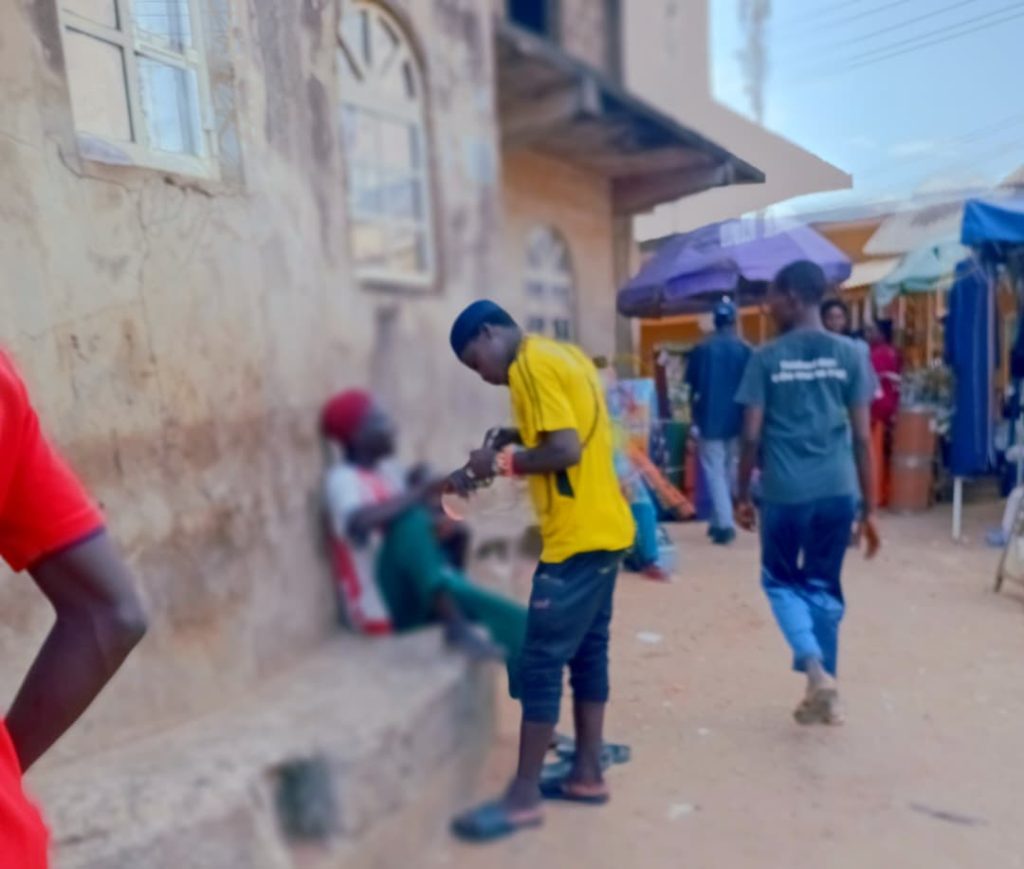
A nail trimmer who identified himself as Mohammed said he only recently came to Lagos and learnt the trimming in few days from his friends who had been here years earlier. He said with about three thousand Naira, he was able to procure the needed items for the business.
“I came to Lagos about a year ago and have been in the business since. I learnt for few days from my friend who came to Lagos two years earlier than I did. I would follow him about and watch him trim nails. After about two weeks, I bought my own tools and started going about independently. I charge N200.00 per service and can make as much as N3,000.00 in a day. We’ve been very careful as to not inflict injuries on our customers. It’s our only means of survival here and we have to do it well if we still want to remain in business,” Mohammed said speaking a mix of pidgin English and Hausa language.
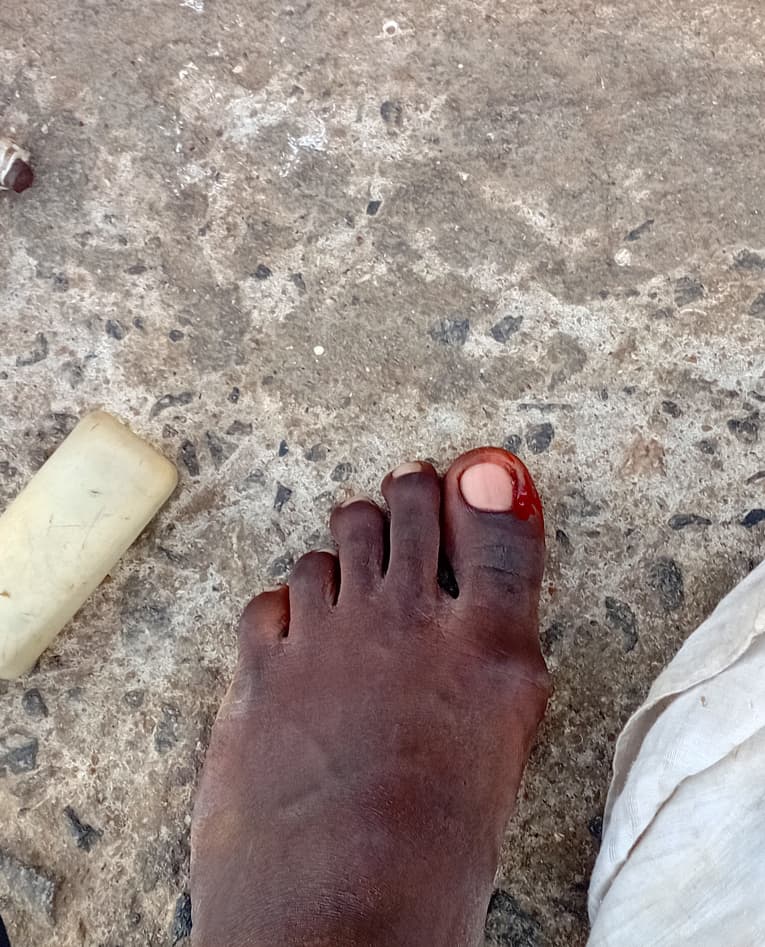
Another trimmer who confirmed injuring some of his customers while cutting their nails said he most times uses spirit to stop the bleeding.
“Sometimes, I injure my customers and it’s not entirely my fault. Some of them won’t stable their hands and legs while cutting and the razor might mistakenly cut them leading to bleeding. We have about three substances that we apply to stop the bleeding.”
Why we patronise them – Customers
Some customers told NewsClick Nigeria that they hardly have the time to cut the nails themselves or go for proper manicure and pedicure.
“As a man and busy owner, I usually don’t have the time to cut my nails myself. I also don’t see myself going for manicure or pedicure treatment, that is something reserved mostly for women. So I turn to this Aboki boys who usually move around my work place. I have like two that I use and they seem kind of good at what they do,” a computer engineer operating at Alaba International market, Ojo, Lagos told NewsClick Nigeria.
“I stopped using their services over two years ago when they wounded me on two different occasions. The bleeding was much and the guy was just applying one dirty liquid that I can’t authenticate the source or name. I had to go treat myself at the hospital after both incidents and vowed never to use them again. I’ve been making time to cut my nails myself or beg my wife and children to do so for me,” a man who identified himself as Feranmi said
Local nail trimmers customers could contact deadly diseases if… – Medical experts warn
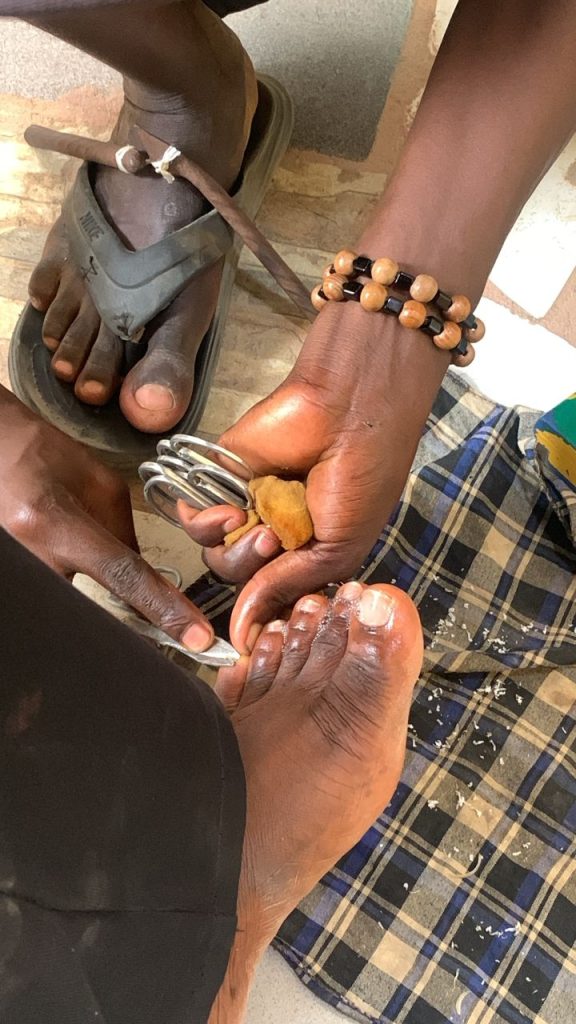
Meanwhile, medical experts have warned that local nail trimmers who don’t sterilise their tools well could infect their customers with deadly diseases such HIV/AIDS, hepatitis B and tetanus.
A medical doctor, Dr Akintayo told NewsClick Nigeria that a trimmer who just serviced an HIV/AIDS patient and ended up cutting the person could end up infecting another person without properly sterilising the object used.
On hepatitis B, Dr Akintayo said the disease, which is an infection of the liver, could either be chronic or acute and could be spread when people come in contact with the blood, open sores or body fluids of an infected person.
The high rate of chronic hepatitis B, he noted, has been identified as the result of the use of unsterilised sharp objects for circumcision and inscribing tribal marks, a practice carried out by local practitioners who often use the same implement on many clients.
In the same light, he noted that there were high concerns that unsterilised implements used by roadside nail technicians put people on high risks of contracting diseases, especially hepatitis B.
Dr Akintayo also noted that customers also stand risk of contacting a tetanus infection which is a serious illness caused by bacteria found in soil, saliva, dust and manure and could enter the body through a deep cut.
All comers affair…
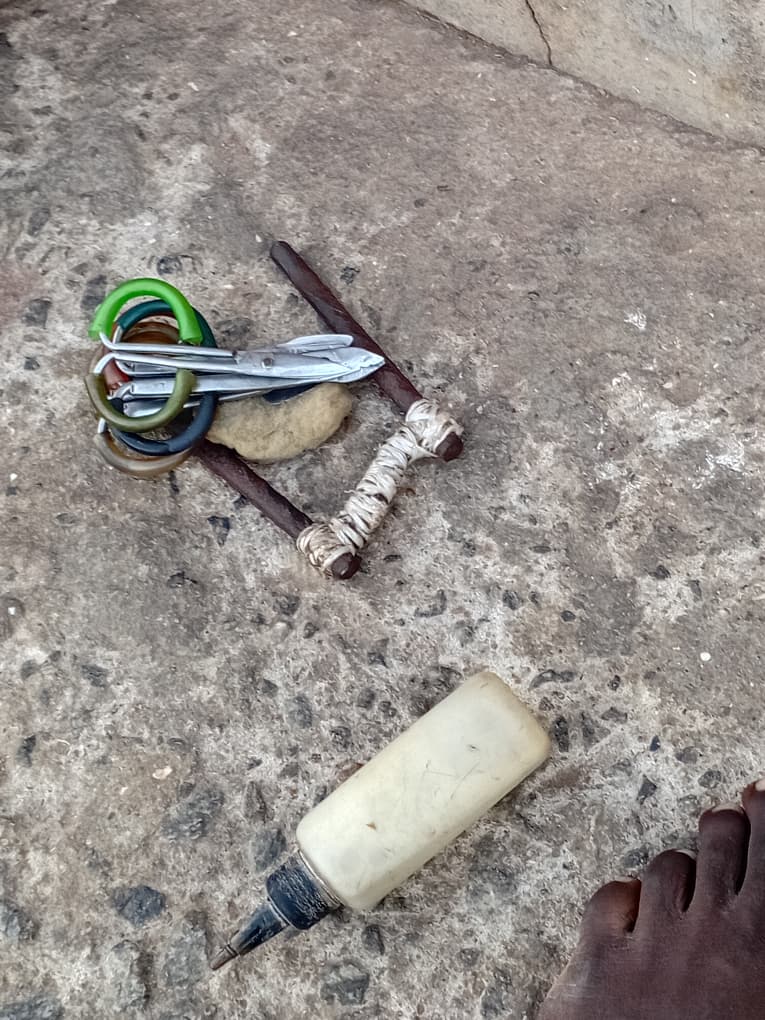
Most worrisome of the rapidly growing nail trimming business is it’s highly unregulated ecosystem of operation. While the business could be summarily dismissed by local, state and federal government agencies as petty, however, the fact that it has a direct impact on people’s health calls for concern, strict regulations and training of those currently plying it.