
[Special Report] ‘Owo Kabiesi’, ‘Owo awon boys’: Inside pitiable world of Lagos petty traders and multiple unofficial levies
With contributions from Esther Lanade, Josiah David

When President Bola Tinubu in June 2025 signed four tax reform bills into law, including the Nigeria Tax Act, which became effective January 1, 2026, Nigerians, particularly those below the taxable net were happy and hopeful of a new turnaround, at least economically.
The law exempts employees, self-employed, traders, entrepreneurs and others earning less than N800,000 annually from personal income tax.
In March, the Federal Government prohibited the collection of taxes in cash and banned roadblocks for revenue enforcement. The Executive Secretary of the Joint Revenue Board, Mr Olusegun Adesokan, stated the framework was designed to end informal, coercive, and fragmented tax practices.
However, three months down the lane, the ‘below tax net’ cadre particularly the petty traders are still heavily taxed and worst still by informal tax collectors! The levies are forcefully collected without receipts or clearly defined government-approved accounts.
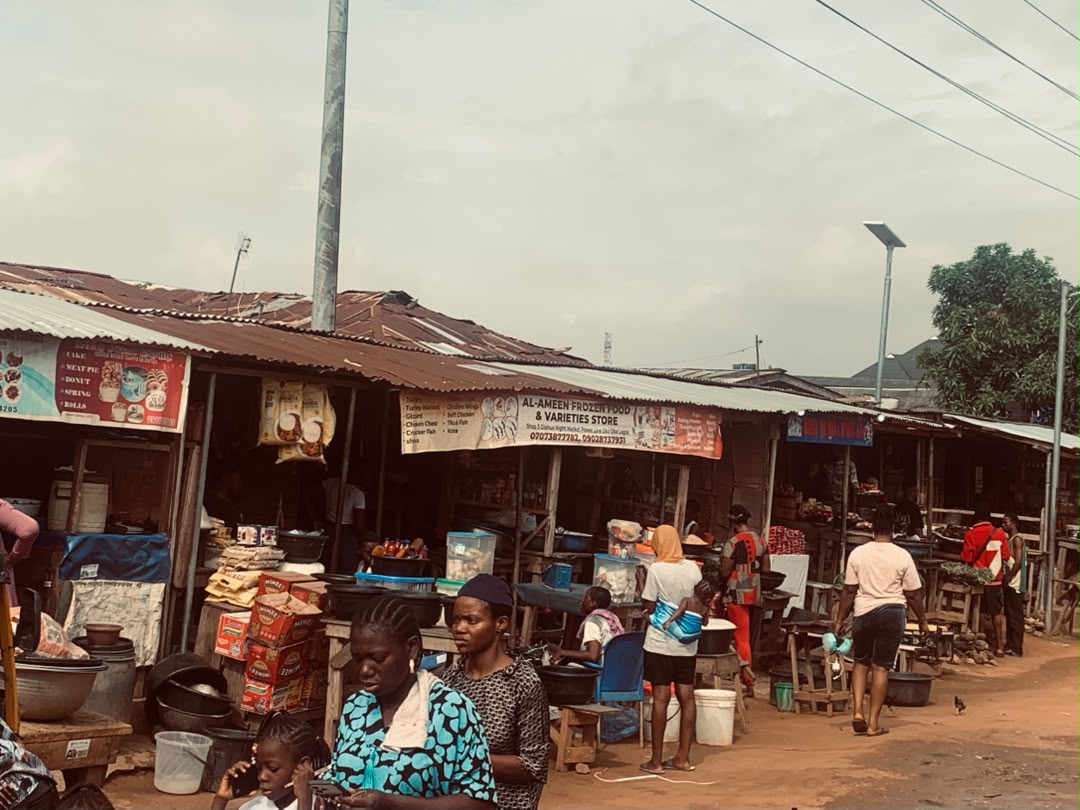
A scheduled visit to selected markets in Lagos state by NewsClick Nigeria team revealed that an average petty trader with total items for sale worth as little as N3,000 – N5,000 is subject to as much as N1,000 – N2,500 in daily unofficial levies.
Amid rising living costs and economic pressure across the country, small-scale traders continue to face increasing pressure, with many struggling to sustain their business and support their families. The cost of goods, transportation, and many other continues to rise, placing more pressure on market traders in their daily operations.
Unaccounted daily levies
Finding by NewsClick Nigeria revealed that the unofficial ‘tax collectors’ usually move around the makeshift markets including BRT shelters from 4pm demanding the levies from the sellers. All category of sellers including hawkers (sachet water) and wheelbarrow pushers are levied.
A sachet water hawker told NewsClick Nigeria that she pays N100 each to over five different collectors from 4pm till 8pm. According to her, the collection is coordinated by agberos (motor park officials) and could come with narratives like money for the king, boys, and other tags.
“I’ve been selling sachet (pure) water in Ikotun for like a year now. I hawk in the morning but stay under a shield in the evening. We pay levies on weekly and monthly basis to the market authorities (Iya and Baba oloja) and Kick Against Indiscipline (KAI) officials.
However, on daily basis, some agberos usually on the authority of Oba of Igando and their union leaders in the evening collect N100 levy each from all sellers in all the makeshift markets including BRT shelters. They collect Owo kabiesi, Owo union, Owo awon boys, and so many others. There could be as many as five of them from that 4pm to 8pm. That is about N500 each. This happens on a daily basis and you dare not pay them,” she narrated.
Levies eating up our profits – Traders
For many traders, the challenge of managing their profits while still coping with different levies they are required to pay for selling in markets cannot be overlooked.
Some also fear that their goods could be seized by certain KAI officials adding to their problems.
Findings by NewsClick Nigeria suggests that these payments are not officially tied to any recognised market levy structure. Instead, they appear to be collected across different market points, including areas like Ikotun, Igando, Agege and other axis.
One thing remains consistent, traders are lamenting these levies, with many expressing frustration and saying it has become a persistent burden.
A trader in the Agege area of Lagos who identified himself as Tochukwu told NewsClick Nigeria that all traders are required to purchase tickets on a daily basis, regardless of whether they operate from a fixed stall or engage in hawking activities.
He further stated that even individuals not formally trading within designated stalls are still issued tickets.
In his words: “They do buy tickets even if the person is hawking, and even if the person is not trading there, they will still give him or her a ticket.”
He explained that the tickets are distributed through the local council and are made available to traders via the market leadership hierarchy.
According to him, the revenue collected from the tickets is not retained in full by collectors, as a portion is deducted as commission, while the balance is remitted to the council and market authorities, including the market leadership.
He further stated: “They get the tickets from the local council and share them to traders.”
The respondent also explained that traders who fail to purchase the required ticket risk having their goods confiscated by enforcement officers.
He added that these payments are made on a daily basis, making them a compulsory and routine obligation for traders within the market environment.
“If you don’t collect the ticket, they will seize your goods,” he said.
Another trader, identified as Mama Blessing, said collections are usually carried out in the morning by individuals operating within the market.
According to her, “I previously worked at Ikotun close to the markets and have people selling there. This money has nothing to do with the levy of Iya Oloja or Baba Oloja levy. This one is strictly from the Oba people because I know how they used to collect this money very well. If you do not pay, it is a very big trouble for you. They will not give you a receipt. You won’t be able to do anything if you don’t pay. It is the Oba that will send people to collect money from you.”
A young girl selling broom at Ikotun, corroborated thus: “these people usually collect money from us, N100 or N200. Those selling phone accessories are charged N500. If you don’t pay they will either seize your goods or forcefully shut your market. I can’t ascertain what they use the money for but I know different set of collectors come for morning, afternoon and evening,” she said.
Meanwhile, In a separate finding by NewsClick NG team who visited a two popular market in Ogba, it was gathered that baales do not collect any form of payment from traders.
According to the report, traders stated that the only official payment they make is to the Iyaloja, which they explained is meant for security and environmental sanitation within the market.
The payment structure, according to traders, varies depending on the size of the business. Normal shop owners reportedly pay ₦500, while kiosk owners and those operating simple tables pay ₦300. These payments are made once weekly.
LG chairman, Oba’s palace keep mum
Lagos Assembly moves to unify taxes, curb multiple taxation and illegal levies
On May 8, 2026, the Lagos State House of Assembly held a one-day public hearing to gather stakeholders’ input on the proposed Lagos State Harmonised Taxes and Levies Law.
The proposed bill is designed to establish a unified legal framework for the collection of taxes and levies by both the state government and local government councils across Lagos State.
The Chairman of the House Committee on Finance, Hon. Obafemi Saheed, explained that the bill seeks to harmonise multiple taxes and levies into clearly defined categories, with the aim of simplifying collection processes and improving efficiency in revenue administration.
He added that the proposed law also prohibits illegal roadblocks and unauthorised revenue collection, while encouraging the use of electronic payment systems to strengthen accountability, transparency, and operational efficiency within the state’s tax administration system.
The Deputy Speaker of the House, Hon. (Mrs.) Mojisola Meranda, noted that the bill is intended to eliminate duplication, reduce confusion, and address the challenges of multiple taxation, which have long raised concerns among residents, businesses, and investors operating in Lagos State.