

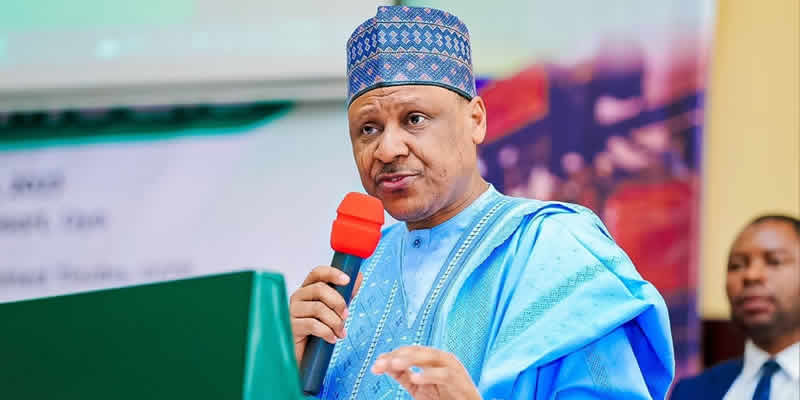
The federal government has urged media organisations to prioritise national stability and patriotism by reducing the prominence given to terrorists, bandits, and other criminal elements in news headlines and front-page reports.
Mohammed Idris, minister of information and national orientation, made the appeal on Thursday in Abuja during a two-day national security summit organised by the Nigeria Union of Journalists (NUJ).

The summit, held in collaboration with the Department of State Services (DSS), focused on the theme, ‘Media and Security Agencies as Partners in Nation Building’.
Idris said although the Tinubu administration remains committed to press freedom, journalists must practise responsible reporting to avoid giving criminals undue attention.
“Yes, we have to do our work, we have to report whatever happens, but you must know that the best reporter, the best editor, is the one that knows what not to report in the interest of nation-building,” he said.
“Please, take these terrorists and criminals off your front pages. This is what they crave for, free of charge.
“It saddens my mind when I see our front pages, when I see our headlines, reporting the activities of these criminals and underplaying the ones by security agencies.”
The minister stressed that a secure and peaceful nation is essential for the media to function effectively.
He highlighted recent successes in the fight against insecurity, including the neutralisation of terrorists and bandits, rescue of kidnap victims, dismantling of criminal hideouts, and improved intelligence operations, warning that misinformation or premature reporting could weaken these efforts.
“National security is not served when misinformation is amplified without verification. Neither is it served when legitimate public concerns are ignored,” he added.
Idris also called on editors to recognise and spotlight the sacrifices of security personnel across the country.
“We must have a Nigeria to report first before we can even have a union or any other media organisation,” he said.
“Please, let’s have that at the back of our minds. It is our collective responsibility to ensure that this nation survives.”
He added that beyond military operations, the government is also tackling insecurity through non-kinetic measures aimed at addressing root causes.
According to him, more than 1.3 million Nigerian students are currently benefiting from the National Education Loan Fund (NELFUND), helping to ensure financial challenges do not prevent access to higher education.
The minister also hinted at plans by the federal government to introduce improved welfare packages for media professionals to enhance morale and economic wellbeing.
Idris further commended collaboration within the print and broadcast sectors, citing the launch of the digital switchover after 15 years as proof of what strategic partnerships can achieve.
Speaking at the summit, Nuhu Ribadu, national security adviser, said the government recognises the media’s role in informing the public but emphasised the need for structured information-sharing that balances transparency with operational security.
Represented by Chido Onumah, his adviser on strategic communication, Ribadu said his office is developing a national security strategic communication framework to support that goal.
“We are all in this together. Journalists must have access to credible information; security agencies must improve their communication and transparency,” he said.
He explained that the framework would help reduce reports that may unintentionally aid terrorists while safeguarding the public’s right to information.
Ribadu also outlined measures being considered to improve relations between the media and security agencies, including quicker verified briefings during crises and designated liaison officers.
In his remarks, Alhassan Yahya, national president of the NUJ, said the summit was designed to strengthen collaboration between journalists and security agencies in support of democracy and public interest.
Other speakers included Musikilu Mojeed, president of the Nigerian chapter of the International Press Institute (IPI), and Ike Neliaku, president and chairman of the governing council of the Nigerian Institute of Public Relations (NIPR).
The summit was attended by heads of several security agencies, representatives of the inspector-general of police, former NUJ presidents, and leaders of media and public relations bodies.