

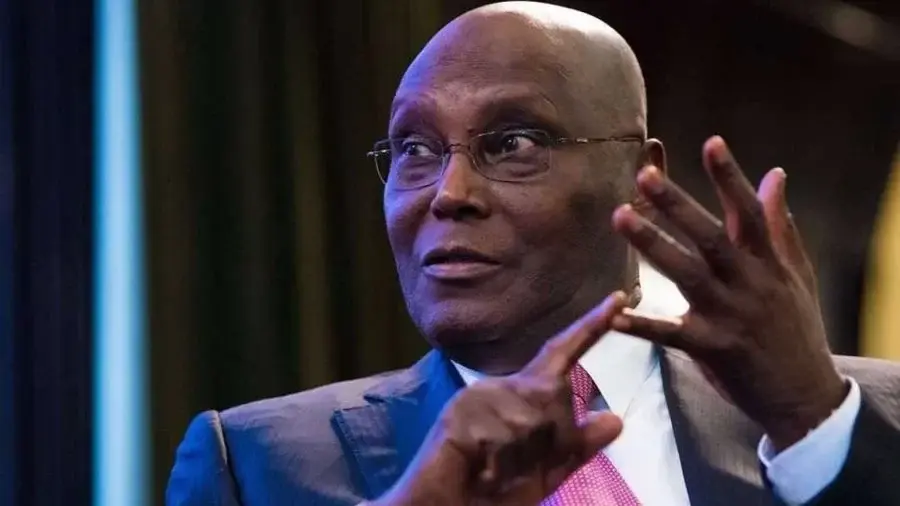
Former Vice-President Atiku Abubakar has alleged bias by the Independent National Electoral Commission (INEC) following the derecognition of the African Democratic Congress (ADC) leadership led by David Mark.
On April 1, the electoral body announced it would no longer recognise both the Mark-led faction and the group headed by Nafiu Bala, citing a court of appeal directive for parties to maintain the status quo before the suit at the federal high court.

Speaking during an interview on BBC Newsday, Abubakar argued that INEC overstepped its authority by interpreting the court’s interim ruling on internal party matters.
“We are accusing them [INEC] of misinterpreting the law, even though it is not their responsibility to do that. The court has already interpreted the law. We are also accusing them of bias,” he said.
When asked whether the alleged bias was intended to keep President Bola Tinubu in power, Abubakar replied: “For sure”.
The Peoples Democratic Party (PDP) presidential candidate in the 2023 election maintained that INEC’s actions contradict supreme court rulings, which state that internal party affairs should not be interfered with by external bodies.
“The commission has not acted according to law because we have a number of cases decided even by the supreme court that the internal affairs of political parties are not the prerogative of any agency other than the political parties themselves, but they have ignored the ruling of the highest court in the land,” he said.
Abubakar also questioned the removal of the ADC leadership’s details from INEC’s website, describing the decision as a setback to Nigeria’s democratic development and a sign of creeping authoritarianism.
“We [call it] dictatorship because we have seen evidence of government interference in the electoral process, even in the judicial process in the country,” he said.
He added that he has spent decades advocating for democracy, warning that recent actions suggest efforts to “completely overthrow” the gains made so far.
On insecurity, Abubakar expressed concern over the country’s safety challenges, questioning the government’s ability to address them effectively.
“Nigeria is a vast country and admittedly so, but we also have in terms of manpower what it takes to have enough resources to counter terrorism and illegal activities going on in the country,” he said.
“It is quite ironic and surprising that Nigeria cannot mobilise its armed forces to counter these activities.”
He further alleged possible collusion in the ongoing insecurity, suggesting that the situation may be used to intimidate citizens, especially farmers and business owners.
“You cannot travel; there is no security everywhere. It’s absolutely uncalled for. Nigeria has a huge population and young, educated men who can be employed in the security services and protect the country, but that is not happening,” he said.
“They scare people and do what they want to do,” he added.
Addressing the economy, Abubakar criticised rising unemployment, warning that it contributes to increasing crime rates.
“Unemployment is very prevalent in Nigeria today. There is no basis for that. Nigeria has enough resources to ensure there is minimal unemployment. We have vast unemployed young men and women, and there is a tendency for them to go into crime,” he said.
He called for greater support for the private sector through incentives to drive job creation and economic growth.
“There is enough investment in the private sector; incentives are given to the private sector to create jobs,” he said.
Abubakar concluded by expressing confidence that Nigerians would elect the “right people” in 2027.