

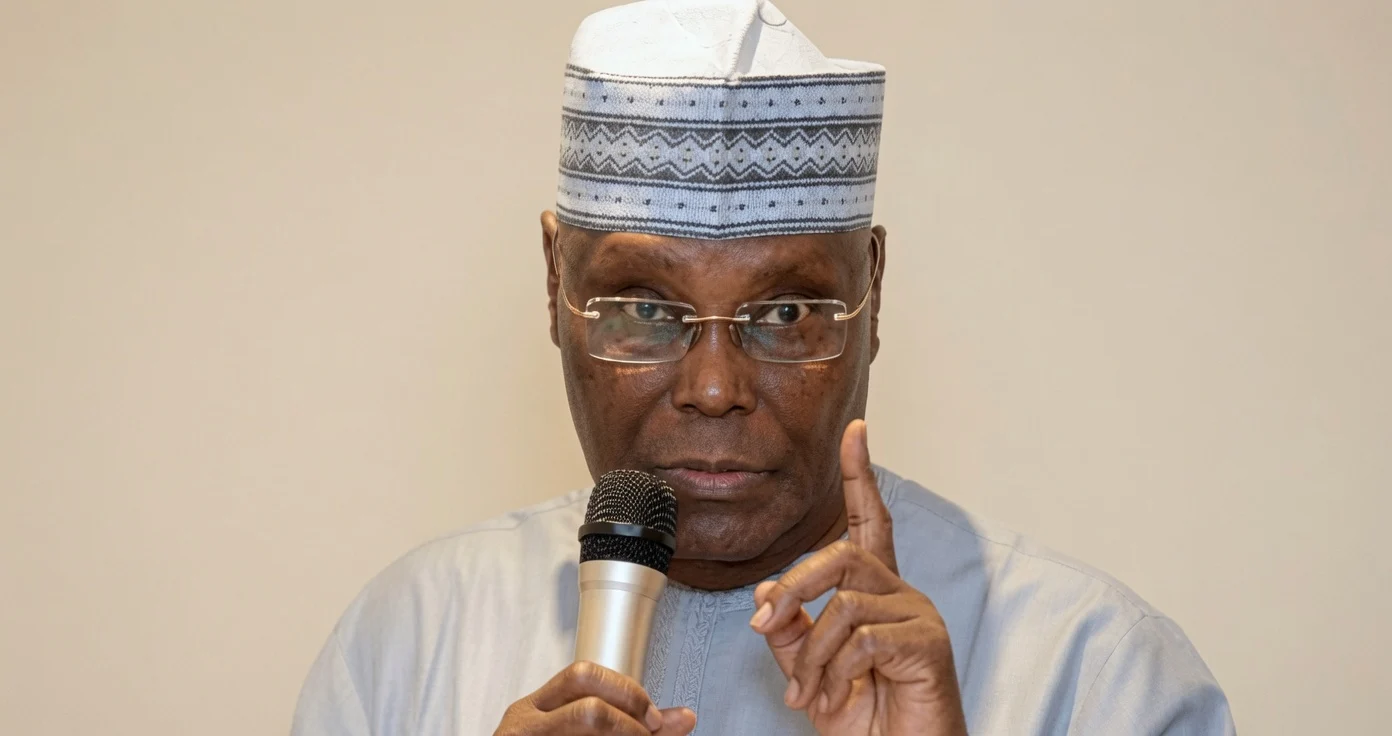
Former Vice-President Atiku Abubakar has criticised the Federal Government over what he described as fiscal indiscipline, warning that increased domestic borrowing is restricting businesses’ access to credit, contributing to job losses and worsening the cost-of-living crisis.
Atiku, the presidential candidate of the African Democratic Congress (ADC), made the remarks in a statement issued on Monday by Phrank Shaibu, his senior special assistant on public communication.

He described the level of government borrowing as “particularly” concerning, especially as crude oil prices have risen above the benchmark used for the 2026 budget.
According to Atiku, the Federal Government borrowed N24.7 trillion from the domestic market between January and August 2026, representing a 90.5 per cent increase from the N12.98 trillion borrowed during the same period in 2025.
“At the beginning of this fiscal year, the Federal Government budgeted on an oil benchmark of $64.85 per barrel. Today, crude oil prices have risen substantially above that benchmark,” the statement reads.
“Yet, instead of this windfall translating into lower borrowing, stronger businesses and relief for Nigerians, the Federal Government went into the domestic market and borrowed a staggering ₦24.7 trillion between January and August 2026.”
‘Where is the money going?’
Atiku questioned the rationale behind the increased borrowing, arguing that the Tinubu administration had already removed the fuel subsidy, floated the naira and benefited from higher nominal government revenues.
“Tinubu removed fuel subsidy and told Nigerians the sacrifice would free up money. He floated the naira and government revenues consequently received a massive nominal boost,” the former vice-president said.
“Oil prices have risen sharply. Revenues have improved. Yet the borrowing has not gone down — it has exploded. So the question Nigerians must ask again is very simple: where is the money going?”
He argued that increased government borrowing was also putting pressure on businesses seeking access to credit.
According to him, credit to the government increased by 43 per cent, compared with a 9.6 per cent rise in credit to the private sector.
“Government credit is expanding about 4.5 times faster than credit to businesses,” he said.
Atiku described the trend as an indication that the government’s economic reforms had failed to provide meaningful benefits for the private sector.
He said the performance of private businesses should be an important measure of economic policy success, as effective reforms should allow companies to expand, invest, employ more workers and access capital more easily.
“But under Tinubu’s economic policy, the exact opposite is happening,” he said.
“The public sector is exerting an increasingly parasitic effect on the private sector — consuming the credit, capital and financial oxygen that productive businesses desperately need.”
‘Businesses pay more for credit, jobs disappear’
Atiku said banks could be more inclined to lend to the government at attractive interest rates and lower perceived risks than provide cheaper financing to businesses.
“When banks can lend to government at attractive, risk-free rates, why would they lend cheaply to the manufacturer in Aba, the furniture maker in Kaduna, the agro-processor in Kano or the young entrepreneur in Lagos?” he asked.
He said the resulting pressure on borrowing costs would make it more difficult for businesses to expand their operations and increase production.
“The result is obvious: businesses pay more for credit, expansion is postponed, factories struggle, jobs disappear and the cost of producing everything from food to household goods rises,” he said.
“This government is not merely borrowing money; it is borrowing away the future of Nigerian businesses.”
Atiku maintained that Nigeria would struggle to achieve sustainable economic growth if the government continued to dominate the domestic credit market.
He said economic expansion depends on businesses being able to secure financing to increase production, farmers accessing affordable loans and entrepreneurs obtaining capital to create employment.
“My administration will impose fiscal discipline, cut waste, prioritise productive expenditure and progressively reduce the government’s suffocating dependence on the domestic credit market,” he said.
“Government must make room for the private sector to breathe, invest, produce and employ.”
In April, President Bola Tinubu said his administration would continue to borrow when necessary, arguing that borrowing should not automatically be viewed negatively.
“If we have to borrow, we borrow. Borrowing is not leprosy; we just have to work hard to be able to pay for it,” the president said.