

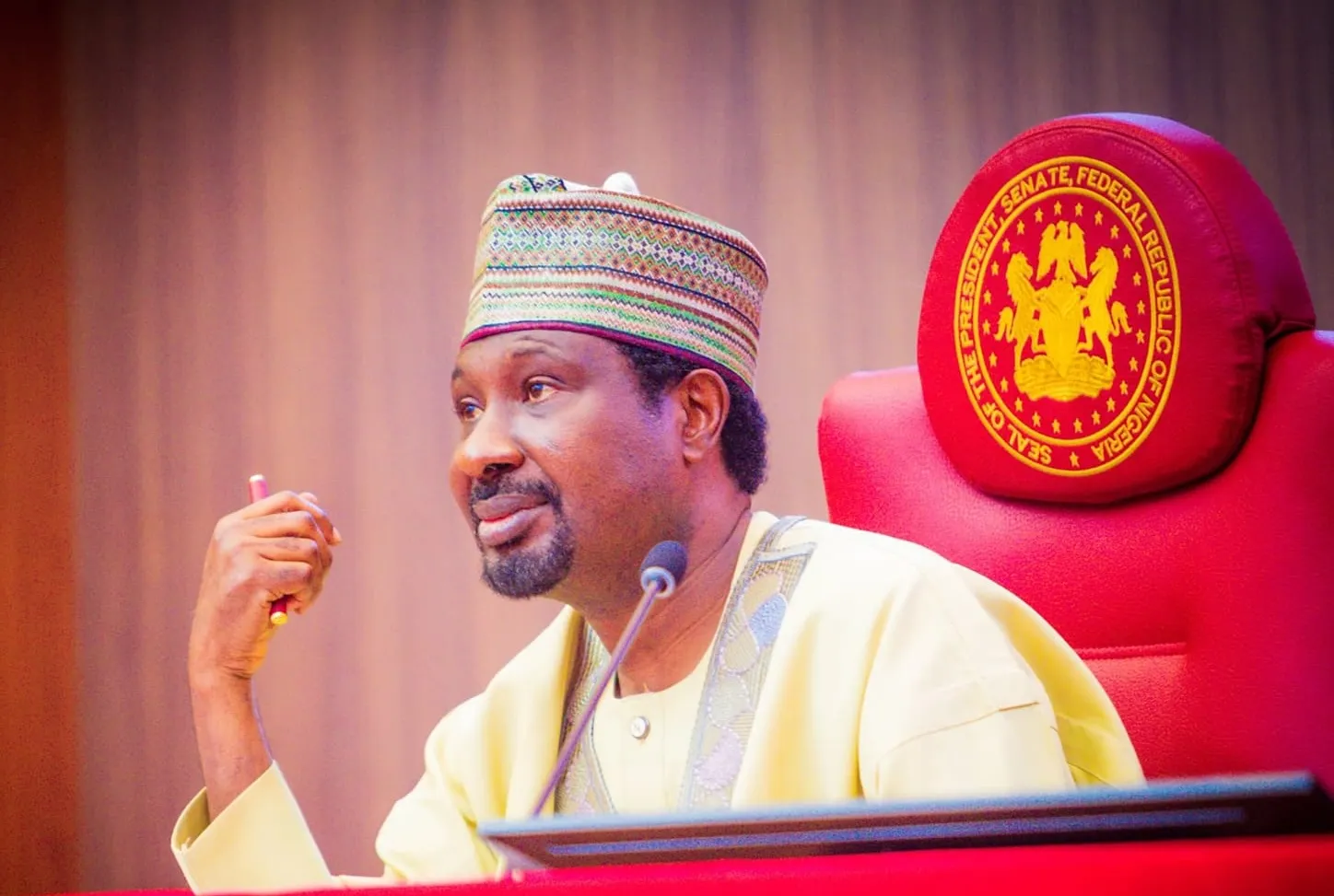
Deputy Senate President Barau Jibrin has described President Bola Tinubu’s push for the establishment of state police as a “masterstroke,” saying it would strengthen Nigeria’s security architecture and improve efforts to combat insecurity, particularly in the North.
Barau made the remarks during an interview on Hannu Da Yawa, a live Hausa programme on Radio Nigeria, Kaduna.

In a statement issued on Sunday by his Special Adviser on Media and Publicity, Ismail Mudashir, the Deputy Senate President said the proposed State Police Bill followed extensive consultations involving the Presidency, the National Assembly, the Inspector-General of Police, retired police officers, policing experts, governors, civil society organisations and members of the public.
He added that the bill also underwent public hearings across the six geopolitical zones and the Federal Capital Territory, with safeguards introduced to prevent abuse.
“President Tinubu carefully studied the situation and discovered that while many Nigerians support state police, there are fears that it could be abused or misused for political or ethnic purposes. That is why safeguards have been built into the system,” Barau said.
He explained that state police would complement the Nigeria Police Force by strengthening community policing through officers recruited from the communities they serve.
“State police operatives, who will be recruited from local communities, know the people, terrain and even the criminals. This will significantly improve our response to banditry, kidnapping and other crimes.
“The North stands to benefit significantly. This initiative is designed to bring lasting peace to the worst-hit areas,” he said while responding to a question from a caller.
Barau said the proposed constitutional framework includes legal protections and institutional checks to prevent political interference.
“If state police are used for intimidation or actions that threaten lives and property, the President has the constitutional authority to intervene and direct the Federal Police to take over,” he said.
He also clarified that the Nigeria Police Force would continue to handle national security issues such as terrorism and cybercrime, while state police would focus on internal security and maintaining public order.
The Deputy Senate President further said state police commandants would be appointed through a transparent process and protected by law from undue political influence.
He acknowledged concerns over funding and operational capacity, noting that the necessary financial and administrative frameworks would be developed as the constitutional amendment process progresses.
Barau expressed confidence that state Houses of Assembly would support the proposal and urged Nigerians to embrace the reform.
“We must re-engineer our security architecture to better protect lives and property while guarding against abuse.
“This is a balanced, consultative initiative built on safeguards and aimed at bringing policing closer to the people,” he said.
The Senate recently passed the Constitution Alteration Bill seeking to establish state police as part of ongoing amendments to the 1999 Constitution. The proposal will require approval by state Houses of Assembly before it can become law.
