

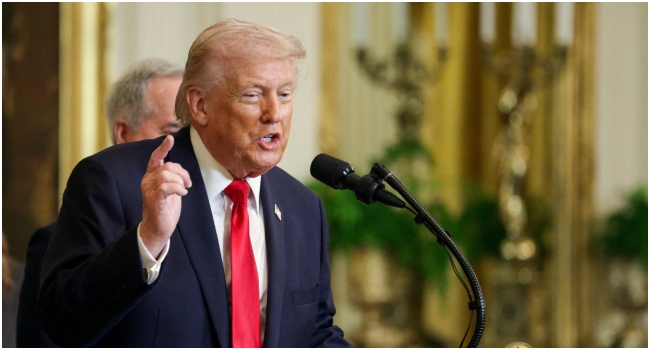
Donald Trump has asked lawmakers to approve a $1.5 trillion defence budget for 2027, citing rising costs from the United States’ ongoing war with Iran and expanding global security commitments.
The proposal would increase Pentagon spending by over 40 per cent in a single year—marking the sharpest rise since World War II—as Washington seeks to sustain military operations and replenish depleted weapons stockpiles.

The request underscores the mounting financial burden of the conflict, now in its fifth week, with US media reports suggesting the war could be costing as much as $2 billion per day. It also sets the stage for a contentious debate in Congress over funding priorities.
To partly offset the increase, the administration has proposed approximately $73 billion in cuts to non-defence spending, targeting areas such as environmental programmes, housing assistance, and education. White House officials argue the reductions would eliminate waste and shift responsibilities to state and local governments.
Trump framed the proposal as a wartime necessity, indicating that military spending must take precedence over certain social programmes. “It’s not possible for us to take care of daycare, Medicaid, Medicare,” he said, suggesting such responsibilities could be handled at the state level.
The plan calls for more than $1.1 trillion to be approved through the standard appropriations process, with an additional $350 billion to be passed through a party-line mechanism that could bypass Democratic support. While some Republican leaders have expressed openness, resistance is expected from both parties, particularly over concerns about rising deficits.
The United States is already facing annual budget shortfalls nearing $2 trillion, with total debt exceeding $39 trillion, limiting fiscal flexibility. Lawmakers have also questioned the scale of the proposed military expansion and the lack of clarity on the trajectory of the Iran conflict.
The administration is also proposing increased funding for federal law enforcement, including a boost of more than $40 billion for the Justice Department. However, critics warn the plan could significantly expand national debt over the coming decade.
Opposition lawmakers have strongly criticised the proposal, describing the war as “reckless” and arguing that greater priority should be given to healthcare and social welfare.