

Israel said on Saturday that its war with Iran had entered a “decisive phase”, as explosions were reported across the Middle East, including attacks on the United States Embassy in Baghdad and a major energy facility in the United Arab Emirates.
Black smoke was seen rising above Washington’s embassy in Baghdad, according to AFP journalists. It marked the second attack on the diplomatic compound since February 28, when the United States and Israel launched strikes on Iran, triggering a regional conflict that has unsettled the global economy.

The fighting, now entering its third week, has displaced millions through waves of drone, missile and aerial bombardments. More than 1,200 people have reportedly been killed in Iran, with no clear indication that the conflict is easing.
Plumes of thick smoke were also reported in Fujairah, home to a major Emirati oil storage and export terminal, shortly after Iran’s military warned civilians in the UAE to avoid port areas.
Israel’s Defence Minister, Israel Katz, said the war had reached a “decisive phase”, though he acknowledged that it could continue “as long as necessary”.
Despite facing the combined military strength of the United States and Israel, Iran has continued its offensive. Tehran has launched missile and drone attacks on at least 10 neighbouring countries and disrupted shipping through the strategic Strait of Hormuz.
Israel’s military also issued evacuation warnings to residents in an industrial zone in Tabriz in northern Iran, indicating a possible imminent strike.
The attack on the US embassy in Baghdad came after strikes against the Iran-backed group Kataeb Hezbollah, which reportedly killed two of its members, including a senior figure.
On Friday, US President Donald Trump said American forces had struck Iran’s Kharg Island, the country’s largest oil export hub, claiming they had “obliterated every MILITARY target” while avoiding damage to energy infrastructure. Iranian media, however, reported that the island’s oil facilities remained intact.
Iran had earlier warned that US-linked oil and energy companies could be “turned into a pile of ashes” if targeted.
Meanwhile, tensions around the Strait of Hormuz have severely disrupted maritime traffic along the route that normally carries roughly one-fifth of global oil supplies.
Trump said the US Navy would begin escorting tankers through the strait “very soon”. Governments worldwide are concerned about prolonged economic impacts, with crude oil prices having risen by more than 40 per cent since the conflict began.
The Palestinian Islamist movement Hamas urged Iran not to target neighbouring countries, a rare public divergence between the allies, though it reaffirmed Tehran’s right to defend itself.
Qatar reported intercepting two missiles over central Doha on Saturday and evacuated sensitive areas after explosions were heard by journalists. Meanwhile, Saudi Arabia said its air defences intercepted dozens of drones on Friday.
Air strikes have continued inside Iran, with powerful explosions shaking Tehran late on Friday. Iran’s health ministry says more than 1,200 people have died from US and Israeli attacks, although these figures have not been independently verified.
The United Nations High Commissioner for Refugees estimates that as many as 3.2 million people have been internally displaced since the war began.
Trump described Iran as “totally defeated” and seeking a deal that he said he was unwilling to consider.
According to the Pentagon, more than 15,000 targets in Iran have been struck by US and Israeli forces within two weeks. Reports in The New York Times and The Wall Street Journal suggest preparations for a possible ground operation, noting that the amphibious assault ship USS Tripoli, carrying about 2,500 Marines, has been deployed to the region.
Iran’s leadership has signalled determination to endure the war and maintain control despite the death of its supreme leader, Ali Khamenei, on the first day of the conflict. His son, Mojtaba Khamenei, has been named the new supreme leader but has reportedly been wounded and has not appeared publicly.
Iran’s Islamic Revolutionary Guard Corps has warned it will deal harshly with any anti-government protests. Thousands were reportedly killed during demonstrations in January, and authorities have imposed a near-total internet blackout since the war began.
Elsewhere in the region, Turkey said NATO forces intercepted a ballistic missile launched from Iran — the third such interception during the conflict.
Lebanon has also become increasingly involved. The Iran-backed group Hezbollah launched attacks on Israel from Lebanese territory following Khamenei’s death. Its leader, Naim Qassem, described the current fighting as an “existential battle”.
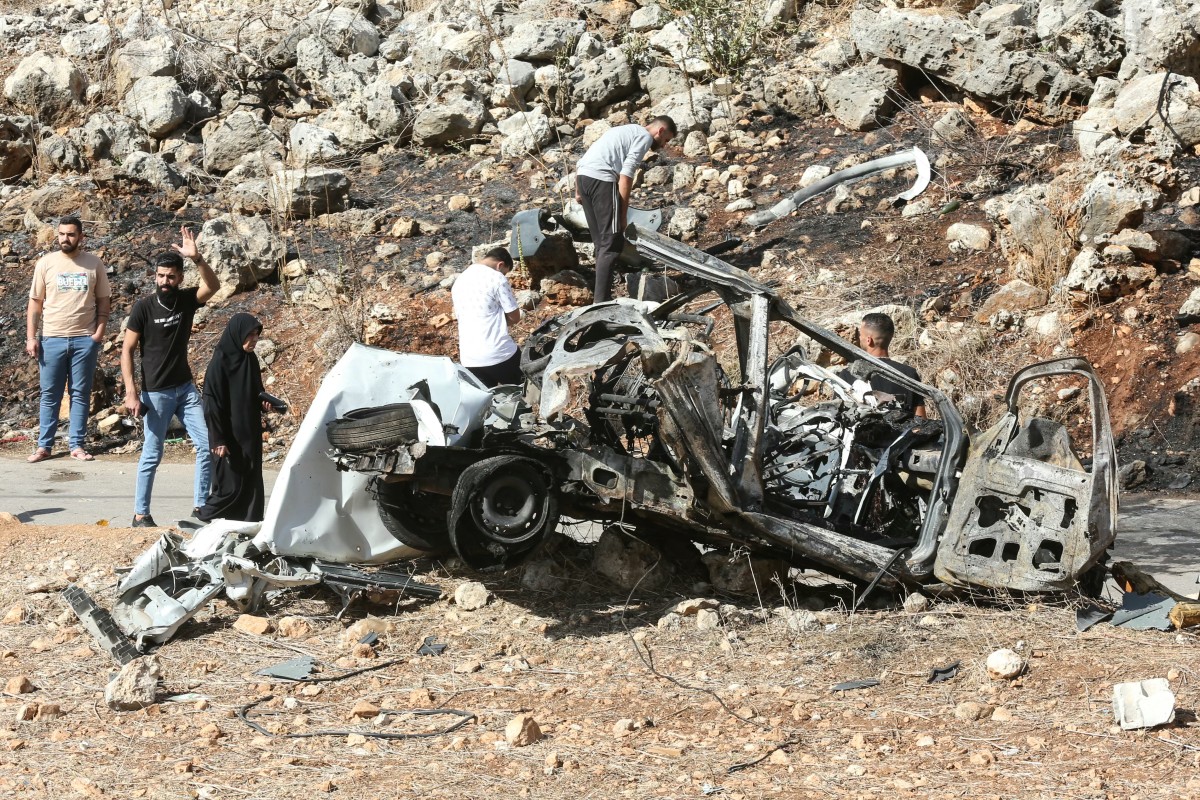
Israel has responded with both air and ground assaults in Lebanon, killing at least 773 people according to Lebanese authorities and forcing hundreds of thousands to flee. An overnight strike in southern Lebanon reportedly killed a dozen doctors, paramedics and nurses at a healthcare clinic, local health officials said.