

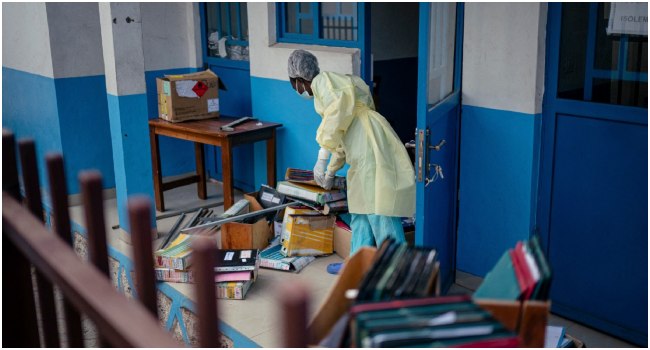
The World Health Organisation (WHO) has increased its risk assessment for the Democratic Republic of Congo (DRC) Ebola outbreak to the highest level, as infections and deaths continue to rise sharply.
The WHO confirmed on Friday that the risk level for the DRC has been upgraded from “high” to “very high”, while the regional risk remains “high” and the global risk stays “low”.

WHO Director-General Tedros Adhanom Ghebreyesus described the situation as “deeply worrisome”.
He said nearly 750 suspected cases and 177 suspected deaths had been recorded in the country, as health teams intensify contact tracing efforts for people who may have been exposed to the virus.
According to him, 82 cases have been confirmed so far in the DRC, with seven confirmed deaths, although the wider outbreak is believed to be significantly larger.
Tedros also noted that the situation in Uganda remains stable, with two confirmed cases linked to travel from the DRC. He added that contact tracing efforts and the suspension of public gatherings, including Martyrs’ Day commemorations, have helped limit further spread.
A US national working in the DRC has tested positive and been transferred to Germany for treatment, while another high-risk US contact has been moved to the Czech Republic, he said.
The WHO has deployed 22 international experts to support response efforts, alongside national staff already on the ground.
However, Tedros warned that ongoing violence and insecurity in parts of the DRC are hindering outbreak control operations.
WHO has revised its overall risk classification to “very high” at national level, “high” at regional level, and “low” globally.
The organisation noted that the current Ebola strain has limited treatment options, with no approved vaccine or therapy specifically for it. Clinical trials are being considered for potential treatments, including monoclonal antibodies and antiviral drugs.
WHO officials also said they are reviewing possible tools and developing strategies for eventual vaccine development targeting the strain responsible for the outbreak.