

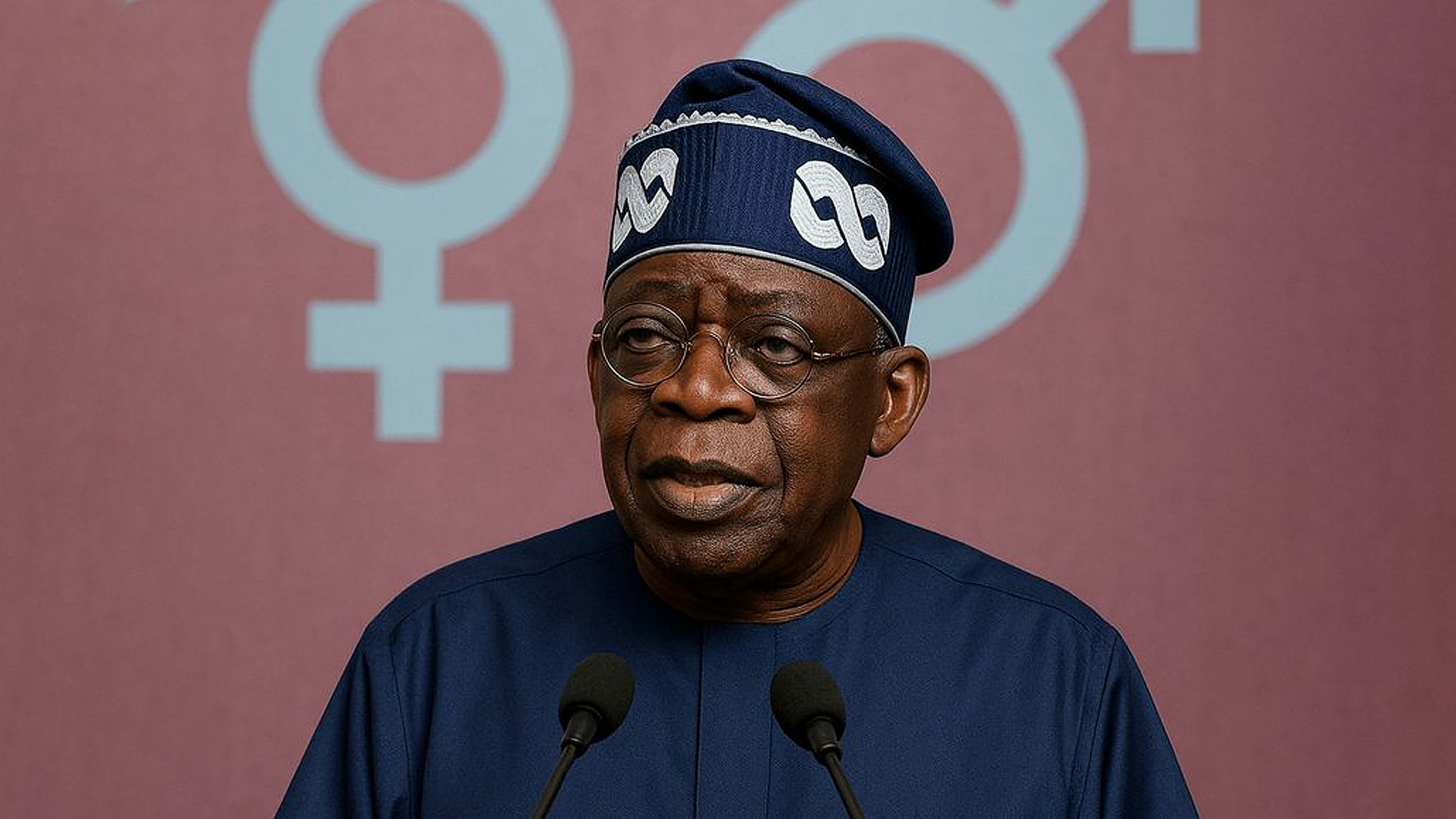
President Bola Tinubu’s decision to appoint Nigeria’s first-ever Special Adviser on Homeland Security was reportedly influenced by growing concerns among service chiefs and intelligence officials over what they viewed as the excessive involvement of the Office of the National Security Adviser in military operations.
According to multiple Presidency and security sources, the appointment followed rising tension between the National Security Adviser, Nuhu Ribadu, and top military and intelligence officials, alongside concerns about the quality of security analysis reaching the President.

A senior Presidency source revealed that dissatisfaction within the security establishment had been growing for months and was beginning to weaken the country’s security coordination framework.
“The truth of the matter is that the service chiefs and the intelligence community are not happy with Ribadu. He is getting involved in operational matters that should be totally out of his purview. What is the job of the National Security Adviser? It is to coordinate the security and intelligence agencies, synthesise information and advise the President, not to dabble in operational matters of the armed forces, the police, or the DSS.”
The source also criticised what was described as an expansion of the NSA’s operational role.
“Now, you have a strange thing that has never happened before; we now have an ONSA tactical team. It’s like he has his own command now.
“You’ll now hear of an ONSA tactical team going on the street. You don’t run a command. You don’t run a military formation. That means dabbling in operational matters.”
On May 11, 2026, Tinubu approved the appointment of retired Major General Adeyinka Fadewa as Special Adviser on Homeland Security.
The appointment was announced in a circular signed by Secretary to the Government of the Federation, Senator George Akume, through the Permanent Secretary, General Services Office, Dr Ibrahim Kana.
According to the statement, the appointment reflects the administration’s determination to strengthen internal security coordination, intelligence-led operations and collaboration among security agencies in addressing emerging threats nationwide.
“The SGF described Fadewa as a highly decorated retired military officer with over three decades of experience in military and intelligence operations, national security strategy, counter-terrorism, and international security diplomacy.
“He noted that Fadewa played a key role in shaping Nigeria’s intelligence coordination framework during his time as Principal General Staff Officer to the National Security Adviser between 2015 and 2021.”
Akume also stated that Tinubu was confident the retired general would support efforts toward achieving a safer Nigeria.
The appointment came shortly after Tinubu, during a meeting with a Plateau State delegation at the State House on April 29, vowed to end the cycle of killings and insecurity across the country.
“My enemies want to use insecurity to get rid of me, but I am a very stubborn politician who refuses to leave.”
Another official said the issue went beyond operational disagreements and involved deeper institutional concerns regarding Ribadu’s policing background and military hierarchy.
“The service chiefs and the intelligence chiefs are tired. They believe that there is this sense that he is a policeman. That thing has always been there. Military guys don’t particularly have regard for police people coming to handle serious security issues like these.”
He added, “But the new adviser is a retired general and is very likely senior to the current service chiefs. He retired in 2021. He is probably senior to the current chiefs. And you know, in the military, it’s about seniority. So the kind of influence and regard that this one will command with the security chiefs will be different. So these are the issues.”
The source further explained that the President desired a broader and more independent perspective on national security matters.
“Another thing is that the President also needs a new, fresh perspective. A perspective from a particular angle might be coloured.
“So, he may not be getting the full and most objective facts, analysis, or appraisal of the situation. Maybe a fresh perspective helps.”
A third senior security source said Tinubu’s frustration with the long-running insurgency crisis and its economic impact also influenced the decision.
“It all boils down to the fact that the President is going to take on and do anything to make sure that we end this insecurity. And the President is actually really concerned. As he said last time, this country has been dealing with this matter for 20 years. It’s taking too long.
“The money we should be spending on education, healthcare, roads and power, we are spending on security. This thing has gulped more than N50tn since 2009.
“If we had spent that on our roads and rail, we would have gone far. So the President wants this to end. And I think he is ready to do anything that will make sure that the whole insurgency crisis ends.”
However, another Presidency official dismissed speculation that the appointment signalled Ribadu’s possible replacement as NSA, insisting that both officials could work together effectively.
“He is the President. The constitution allows him to create any office as long as it helps him to govern and deliver value to Nigerians. For now, his position is Special Adviser on Homeland Security.
“If the President decides to make him NSA, that is the President’s prerogative. Both of them can work side by side, Ribadu and the new man.
“Don’t forget that the man has worked in the Office of the NSA before. If you look at his CV, he worked with General Monguno. So, he is not new to the NSA system and structure. Both of them will benefit from each other. They should be able to manage each other. What the country needs is results, and they should be able to deliver that to Nigerians.”
The Office of the National Security Adviser, established under the National Security Agencies Act, is responsible for coordinating intelligence and security agencies while advising the President on national security matters.
Ribadu, a former chairman of the Economic and Financial Crimes Commission and retired Assistant Inspector-General of Police, was appointed NSA by Tinubu in June 2023, succeeding retired Major General Babagana Monguno.
As of the time the report was filed, the NSA’s office had not officially commented on the development.
An anonymous Presidency official also argued that the appointment should not automatically be compared to previous government restructuring examples.
“Anyone who understands what has been happening lately would quickly make reference to the Oyedele scenario. It is very possible to think like that. In the case of Oyedele, there has been an established pathway of performance and competence. He can explain tax to a five-year-old and they will understand. So there is a reform pathway. But that is not the same case here. The two are not the same cases.”
