

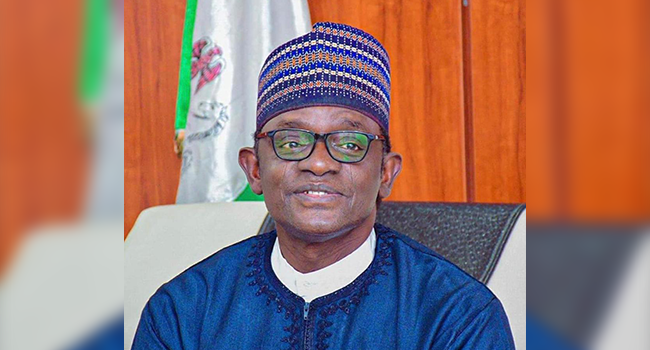
The N300 million pledge made by Yobe State Governor, Mai Mala Buni, towards the proposed Jama’atu Izalatil Bid’ah Wa Iqamatis Sunnah university has sparked criticism from residents and activists in the state.
Buni made the pledge on Sunday at a JIBWIS national symposium held in Jos, Plateau State, where discussions focused on political participation, social justice, national unity and development.

While the governor’s gesture was directed at supporting the planned religious university, some Yobe residents questioned whether such a huge amount should have been committed to the project when several sectors in the state still require urgent attention.
A Peoples Democratic Party member in the state, Umar Yobe, alleged that the money came from government coffers and criticised the governor for making the donation without public consultation.
Umar said, “N300 million was carelessly donated to Sheikh Jingir’s project from the public purse without anyone’s consent. He can’t afford a fraction of said amount outside power. This is how some people abuse power.”
He added, “Nigeria is a joke of a country, and states like Yobe are where the real drama unfolds. Haba!”
An activist, KY Tebo, also raised concerns about healthcare services, particularly for residents battling kidney-related illnesses in Bade and Jakusko Local Government Areas.
Tebo said, “Kidney disease is killing residents in Bade and Jakusko Local Government Areas of the state, while the governor failed to build a dialysis centre.”
He argued that the donation had brought renewed attention to the need for better funding of healthcare facilities.
“When you look at the amount of N300 million, you begin to ask what could have been done with that money in our hospitals,” he said.
According to Tebo, the criticism should not be interpreted as opposition to the religious university.
“It is not because they are against religion or against the proposed university. The question is about priority,” he said.
Education activist, Adamu Bello Jana, similarly called for greater government attention to the education sector, citing poor school infrastructure and the large number of children out of school.
Jana said, “The education sector is among the worst in the state, and this is an area that should receive serious attention from the government.”
He added, “We have many out-of-school children in Yobe, and instead of seeing serious investment in education, we continue to see schools that are dilapidated.”
The development has also generated reactions on social media, with some residents arguing that the funds could have been channelled into renovating schools, improving hospitals and providing other basic infrastructure.
However, the Yobe State Government has rejected claims that public funds would be used to finance the governor’s pledge.
In a statement issued on Tuesday, the Director-General, Press and Media Affairs to the Governor, Mamman Mohammed, said Buni’s contribution was made in his personal capacity.
Mohammed explained that the governor attended the JIBWIS event in Jos with other dignitaries, including the governors of Kano, Sokoto and Jigawa.
He said the Special Adviser to the President on Political Affairs, Kabiru Masari, announced a N300 million personal donation before making another N300 million pledge on behalf of Buni towards the construction of the university.
“The donations made by Hon. Kabiru Masari on behalf of his humble self, and Governor Buni, were very personal and not on behalf of Yobe State Government,” Mohammed said.
The governor’s media aide further clarified that Masari had no authority to commit Yobe State Government funds to the project.
He described reports suggesting that the donation was a state government commitment to be funded from public resources as “totally false, inaccurate, misleading and a distortion of facts.”
The clarification has settled the government’s position on the source of the donation, although residents and activists continue to debate whether the state’s limited resources should prioritise education, healthcare and other essential services.
