
Osogbo flood: It is time to stop managing the flood and start managing the river, By ‘Kunle Rasheed Adegoke, SAN

There comes a point when flooding ceases to be merely an unfortunate consequence of heavy rainfall and becomes a question of governance, planning and public infrastructure.
What happened across Osogbo and several communities in Osun State in recent days should be viewed through that lens.

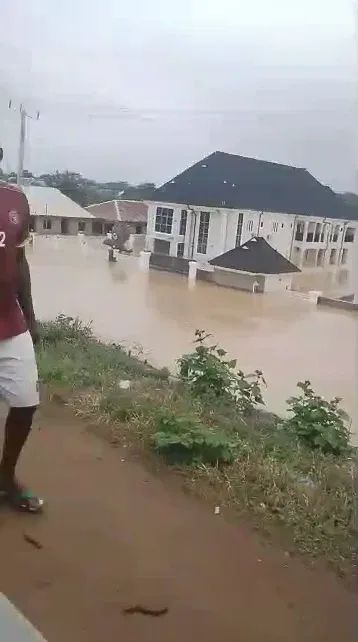
Following prolonged rainfall, floodwaters inundated homes, roads, businesses and public infrastructures in parts of Osogbo and other affected communities. In areas such as Ijetu, residents were reportedly forced out of their homes as water entered residential buildings. Similar incidents were recorded in Sasa, Famson and other locations across the State.
A visit to some of the affected communities revealed a troubling reality: submerged roads, overwhelmed drainage channels, damaged property and anxious families scrambling to salvage their belongings. Yet beyond the immediate humanitarian concerns lies a more fundamental question: How much longer will Osogbo continue to treat flooding as an annual emergency rather than a long-term infrastructure challenge requiring a comprehensive and sustainable solution?
Beyond Drainage: The Need for a New Approach
Emergency responses remain essential. Affected residents require support. Blocked drains must be cleared. Damaged roads and bridges need urgent attention. Communities at risk deserve timely warnings and coordinated intervention.
The Osun State Government has taken steps in that direction through assessments, dredging efforts and public sensitisation campaigns. Governor Ademola Adeleke’s warning against indiscriminate dumping of refuse into waterways and the construction of buildings along natural water channels is both timely and necessary.
However, a city cannot permanently solve a river-system problem through periodic drain clearing and reactive interventions. The conversation must evolve from flood response to flood resilience.
Instead of asking only how to remove water from flooded streets, we must begin to ask more strategic questions: Where is the water coming from? Where is it going? What volume can existing waterways safely accommodate? What infrastructure is required to convey excess water without endangering lives and property?
Answering these questions demands a comprehensive hydrological and flood-management strategy for the metropolitan Osogbo.
Managing the River, Not Just the Symptoms
One intervention deserving serious consideration is the scientific channelisation and management of critical sections of the Osun River and other waterways that influence flooding within the city.
This should not be interpreted as a call to indiscriminately concrete every stream or watercourse. Rather, it requires rigorous engineering analysis to determine where interventions are necessary and what solutions are most appropriate.
Such measures may include strategic dredging of silted channels, widening of constrained river sections, reinforced riverbanks, embankments, flood-retention basins, improved culverts and bridges, storm-water diversion channels, upgraded drainage networks, erosion-control structures and, where appropriate, the restoration of natural waterways.
The objective should be a connected flood-management system, not isolated drainage projects scattered across the city.
Every intervention must be informed by hydrological modelling and sound engineering. Before billions of naira are committed to physical works, decision-makers should understand rainfall intensity patterns, catchment behaviour, river capacity, peak discharge levels, downstream implications and climate-related risks. Otherwise, flooding may simply be transferred from one community to another.
Protecting Osogbo’s Most Valuable Heritage.
Flood management in Osogbo carries an additional responsibility. Osogbo is not merely a growing urban centre; it is home to the Osun-Osogbo Sacred Grove, a UNESCO World Heritage Site of immense cultural, spiritual and ecological significance. The Grove contains the meandering Osun River, sacred shrines, sculptures and one of the last surviving remnants of primary high forest in southern Nigeria.
Any intervention affecting the Osun River must therefore be approached with exceptional care. The city cannot solve flooding by compromising the very environmental and cultural heritage that distinguishes it. On the contrary, the need to protect the Sacred Grove strengthens the argument for a more sophisticated flood-management strategy.
The future lies in integration: protecting the city while preserving the Grove; safeguarding lives and property while maintaining the ecological and spiritual integrity of one of Africa’s most important heritage assets.
Why Concrete Alone Is Not the Answer.
Modern flood management recognises that engineering solutions and environmental stewardship must work together. Concrete channels may be necessary in some locations, but they are not a universal remedy. Poorly designed channelisation can accelerate water flow, worsen downstream flooding, increase erosion and disconnect rivers from their natural floodplains.
Osogbo therefore requires a hybrid model – one that combines civil engineering, environmental science, urban planning, hydrology and heritage conservation.
Where engineered structures are necessary, they should be deployed. Where wetlands, floodplains and natural waterways can safely absorb and regulate excess water, they should be preserved and restored. This balanced approach represents global best practice in flood management.
A City-Wide Flood Master Plan.
The time has come for the commissioning of a comprehensive Osogbo Urban Flood Management Master Plan. Such a plan should map all major waterways, drainage channels, bridges, culverts, floodplains and vulnerable communities across the metropolitan area. It should identify risk corridors, encroachment zones, infrastructure deficiencies and priority intervention areas.
Not every location requires the same solution. Some areas need dredging. Others require drainage reconstruction, bank protection, redesigned bridges, development restrictions or the removal of structures obstructing natural waterways.
The first step toward solving a problem is understanding it comprehensively.
Development Control Must Become Non-Negotiable.
Flood management is not solely a government responsibility. Individuals who build on waterways, obstruct drainage channels or indiscriminately dispose of waste contribute significantly to the problem. While public education remains important, enforcement must become more effective. Government should establish clearly defined flood-risk maps, transparent development controls and consistent enforcement mechanisms.
At the same time, any relocation programme necessitated by genuine flood risks must be humane, transparent and fair. Flood management should never become a pretext for arbitrary demolition.
From Emergency Dredging to Continuous Maintenance.
Dredging should not be treated as a periodic political event. It should be part of a predictable and transparent maintenance programme. Rivers and drainage channels naturally accumulate sediment, debris and runoff. Consequently, maintenance must be continuous rather than reactive.
The State should institutionalise annual inspection schedules, publish maintenance plans, disclose project costs and make performance reports publicly available. Flood management must become a measurable public infrastructure programme with clear accountability.
Financing Resilience, Not Emergencies.
Osun State should aggressively pursue available federal ecological interventions and other legitimate sources of financing for flood-control infrastructure.
Ecological funding should be directed toward long-term protective assets rather than short-term clean-up exercises. Properly designed flood-control projects can be structured as multi-year programmes capable of delivering lasting benefits to communities.
Thinking Beyond City Boundaries.
A river does not recognise local government boundaries. Effective flood management therefore requires collaboration among federal agencies, neighbouring states, river basin authorities, technical institutions and relevant stakeholders responsible for managing the wider Osun River system.
The State should also establish a robust early-warning system that integrates weather forecasts, river-level monitoring, satellite imagery, GIS mapping and community reporting. The technology already exists. What is needed is the commitment to deploy it.
Flood Management as Economic Development.
Flood resilience can also be an economic opportunity.
Designing, constructing and maintaining flood-control infrastructure creates jobs for engineers, environmental scientists, surveyors, artisans, contractors, equipment operators and technology professionals. Universities and research institutions can contribute data, analysis and innovation. Local businesses can participate in implementation and maintenance.
In this way, flood management becomes more than an environmental intervention; it becomes part of a broader economic and infrastructure-development strategy.
The Real Question Before Osogbo.
The evidence is clear. Flooding is no longer an occasional disruption. It is a recurring challenge that requires long-term planning and sustained investment. Urban expansion, environmental pressures, drainage constraints and changing rainfall patterns all point to the need for a more resilient city.
The real question is not whether Osogbo will experience heavy rainfall again. The question is what kind of city we intend to build. Will it remain a city that responds to floods after they occur, or will it become a city designed to withstand them?
Will residents continue to fear every rainy season, or will they live within a system built on sound engineering, environmental stewardship and strategic planning?
From Flood Response to Flood Resilience.
The immediate priority remains supporting affected residents. But once the floodwaters recede, the conversation must not recede with them.
A technical committee comprising hydrologists, civil engineers, environmental scientists, urban planners, heritage experts, traditional institutions, local governments and community representatives should be established to develop a comprehensive flood-resilience blueprint for Osogbo. That blueprint should identify projects, timelines, costs, funding sources and responsible agencies.
This is not about assigning blame to any administration. It is about recognising that flood management is a generational responsibility. Governments will come and go. Political parties will rise and fall. Public officials will change. But the Osun River will remain. Osogbo will remain. And our responsibility to protect lives, property, livelihoods and heritage will remain.
The time has come to stop managing the flood only when it arrives. The time has come to manage the river, protect the floodplain, strengthen our infrastructure and build a more resilient Osogbo. The floodwaters will eventually recede. Our determination to solve the problem permanently must not.
‘Kunle Rasheed Adegoke, SAN, is the APC candidate for Osun Central Senatorial District in the forthcoming January 2027 elections
