
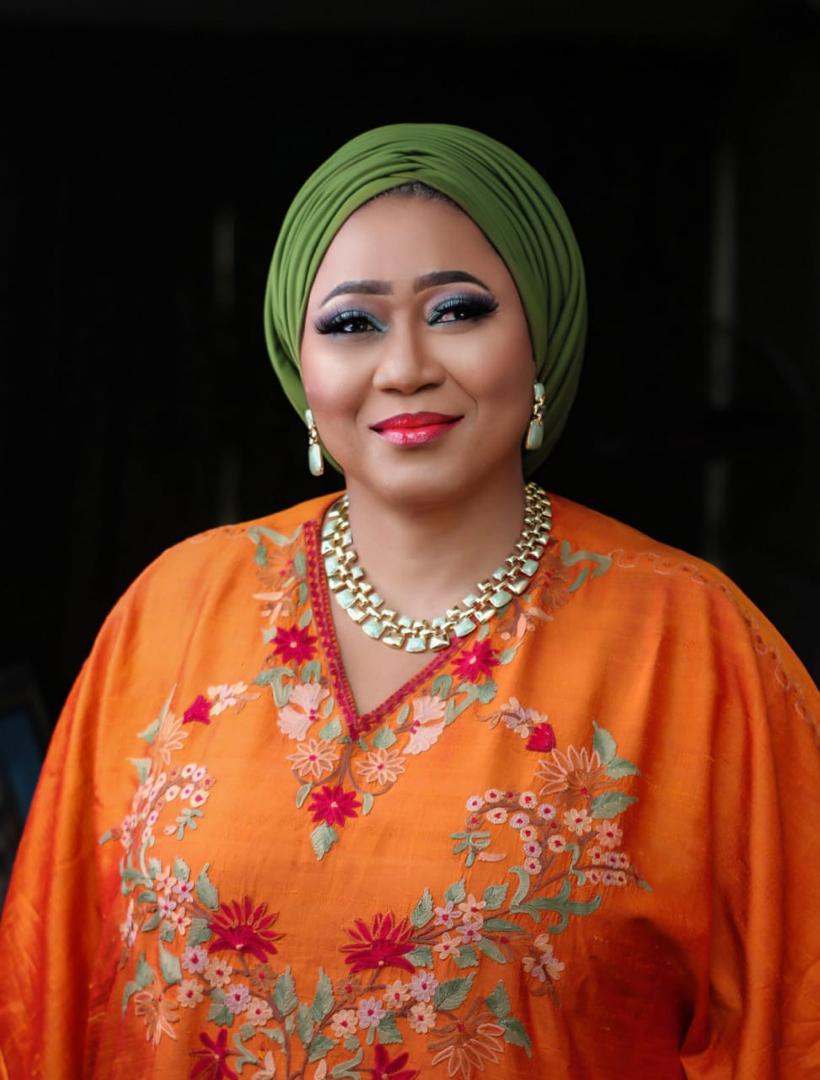
When Culture Speaks, Crisis Listens™: Rethinking Crisis Management Through a Cultural Lens, By Dr. Nkechi Ali-Balogun

On this World PR Day, as we celebrate “The Golden Age of Strategic PR”, I want to argue that cultural intelligence is perhaps the most irreplaceable of all the strategic competencies that define this golden age,and nowhere is that more evident than in Nigeria.
I suspect that much of the global conversation today will predictably turn to artificial intelligence, the metaverse, and the future of digital communications. These are important conversations. But I want to speak about something that predates every algorithm and will outlast every platform; something that PR professionals in Africa, and in Nigeria in particular, understand in ways that our counterparts in the West are only beginning to appreciate: the decisive, irreducible role of culture in public relations, and nowhere is this more consequential than in the management of crises.

In my years of studying, practicing, and teaching public relations in Nigeria, I have observed that crisis management frameworks, however sound in their technical construction, are incomplete when they fail to apply or ignore the cultural realities and nuances of the communities they seek to serve. This is the conversation that I would like to bring to the fore on this World PR Day.
Culture Is Not Context. It Is Content.
Organisations in Nigeria and across Africa frequently face the challenge of treating culture as background noise in crisis management: something to be acknowledged in a footnote while the work of communication proceeds along universally accepted lines. Yet this approach carries significant risk. Culture is not context. It is content. It determines what people perceive as a crisis in the first place, how they interpret the responses of governments and organisations, whom they trust to speak on matters, and what recovery ultimately looks and feels like.
For instance, in many Nigerian communities, a public health crisis may not simply be a medical emergency but may carry moral, spiritual, and communal dimensions that a press release from a government ministry will never fully address. An industrial disaster is not only an operational failure; it is an affront to community dignity that demands responses rooted in empathy, acknowledgement, and inclusive dialogue. These interpretations are not irrational. They are deeply human, and they are the terrain on which successful crisis communication must operate.
The Collective Dimension: A Critical Variable in Crisis PR
Crisis communication models vary considerably across cultural contexts. What is worth appreciating about many African communities, including Nigeria, is that collective well-being frequently takes precedence over individual interest. Decisions of consequence are reached through consultation, not proclamation. Authority resides not only in governmental or corporate titles, but in the hands of elders, traditional rulers, and religious leaders whose legitimacy is derived from community trust built over generations. These are not barriers to effective crisis communication. They are assets, when properly understood and engaged.
An effective crisis response in this environment must actively engage these community structures rather than work around them. When respected traditional and religious voices are brought into crisis communication early and genuinely, compliance, cooperation, and recovery follow far more naturally. Nigeria’s experience during the 2014 Ebola response, where the strategic engagement of community and religious leaders proved decisive, is a compelling illustration of this principle in action.
Language, Trust, and the Architecture of Crisis Communication
Nigeria is home to over 500 languages and an extraordinary diversity of cultural traditions. A crisis communication strategy that speaks only in English, or that relies exclusively on digital platforms, will structurally exclude the majority of those it claims to serve. Future-ready crisis PR in Nigeria demands multilingual communications, translated not just linguistically but culturally; using symbols, idioms, and frames of reference that resonate within specific communities rather than speaking over them in the standardized language of institutional authority.
Trust, moreover, is not a commodity that can be manufactured at the moment of crisis. It is a long-term relational asset, built through consistent, transparent, and respectful engagement with communities across time. Communities that have experienced a deficit of trust in institutions will turn instead to informal networks, community voices, and, increasingly, social media channels where misinformation fills the vacuum that trusted official communication has failed to occupy. The PR lesson here is as old as the profession itself: you cannot borrow trust you have not built.
Cultural Gaps in Crisis Response: The Cost of Overlooking Nuance
Crisis management practice in Nigeria and across West Africa has, at various points, revealed the significant cost of overlooking cultural nuance — responses that were technically sound but culturally misaligned, and that consequently struggled to achieve the outcomes they sought. These gaps take many forms: communicating in languages communities do not speak; deploying solutions without consulting those they are designed to help; disregarding the customary protocols around communal grief and loss; failing to acknowledge the spiritual or moral dimensions of a crisis that communities regard as central; or excluding women, youth, or other key community voices from crisis dialogue.
These gaps are not as a result of malicious intentions, they stem from a lack of cultural intelligence: the trained capacity to read, respect, and respond to cultural difference as a professional competency. This is why cultural intelligence must be embedded in every dimension of PR training and practice, not treated as an elective module for those working in specialized settings. Every setting carries its own cultural logic. Every crisis is, at its core, a cultural event. And every PR practitioner in Nigeria carries the demanding and important responsibility of bridging that gap.
Nigeria as a Case Study: The Sophistication of Cultural PR Practice
Nigeria presents one of the most instructive case studies in culturally complex public relations practice anywhere in the world. Managing communications in a society of over 200 million people, across hundreds of ethnic groups and languages, within a context of diverse institutional trust levels, deep religious conviction, and rapid digital transformation, is a formidable professional undertaking. The PR practitioner operating in this environment must simultaneously be a strategist, a cultural interpreter, a trust architect, and a community bridge-builder.
The competencies that these demand for example, inclusive leadership, cultural empathy, community consultation, multilingual communication, the strategic engagement of traditional and religious authority, and the long-term cultivation of institutional trust, are not Nigeria-specific requirements. They reflect a broader set of global best practices that are becoming increasingly relevant as societies everywhere grow more diverse, more connected, and more culturally assertive. Nigeria’s experience as a case study offers valuable insights for the global PR profession as it grapples with these same challenges.
A Call to the Global PR Community
On this World PR Day, I extend a challenge to my colleagues across the globe: as we rightly celebrate innovation, technology, and the future of our profession, let us not lose sight of the enduring human foundations on which all effective communication rests. Culture is not an obstacle to good crisis management, rather, it is the very medium through which trust is built, communities are served, and institutions earn or forfeit their legitimacy.
The Nigerian PR practitioner carries a weight that is unique and underappreciated. The weight of navigating complexity that few professional environments in the world demand in equal measure. On this World PR Day, that work deserves its rightful recognition. Culture speaks loudly in every crisis. The PR professionals who listen and respond with intelligence, empathy, and cultural grounding are the ones who will build the trust that endures.
Happy World PR Day!
#WorldPRDay #CultureAndPR #CrisisManagement #NigerianPR #PublicRelations #CulturalIntelligence #PRExcellence #NECCIPR #AfricanPR #StrategicCommunications
Nkechi Ali-Balogun, Ph.D, fnipr is the Principal Consultant of NECCI Limited and Founder/Convener of and the NECCI PR Roundtable, since 2000. She is also the Chairman, Public Relations Consultants Association of Nigeria (PRCAN). She is the author of the forthcoming Culture and Public Relations in Nigeria — a landmark work examining the intersection of cultural intelligence and strategic communications in the Nigerian context. She is a leading voice in institutional PR consultancy, strategic communications training, and professional development across Nigeria and West Africa.
