
‘It will make states subservient to FG,’ PDP faults S’court verdict affirming president’s emergency powers

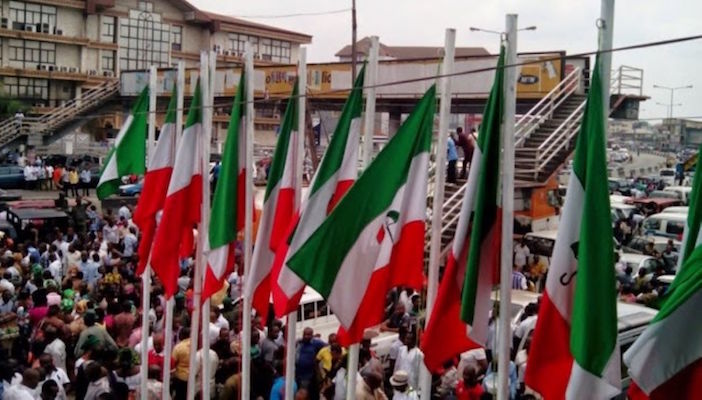
The Peoples Democratic Party (PDP) has criticised the supreme court’s judgement that affirmed the president’s authority to declare a state of emergency and suspend elected officials in any part of the country.
BACKROUND
In March, President Bola Tinubu declared emergency rule in Rivers state, suspending Governor Siminalayi Fubara, his deputy, Ngozi Odu, and the state house of assembly for six months.

Governors elected under the PDP platform questioned the legality of the action, particularly whether the president has the constitutional power to suspend or interfere with the offices of a governor and deputy governor and replace them with a sole administrator.
The governors later approached the supreme court, contending that Tinubu’s decision breached provisions of the 1999 Constitution relating to the powers, independence and functions of state governors and legislatures.
However, in its judgement delivered on Monday, the supreme court upheld the president’s authority to declare a state of emergency and suspend elected officials for a specified period to prevent a breakdown of law and order.
Mohammed Idris, who delivered the majority judgement, said section 305 of the 1999 Constitution grants the president discretion to determine the measures required during a state of emergency.
In a split decision of six to one, the apex court further ruled that the president may suspend elected officials for a limited duration.
The court subsequently struck out and dismissed the suit filed by the plaintiffs for lack of jurisdiction.
Tinubu lifted the emergency rule in Rivers state in September.
‘DANGEROUS DEMOCRATIC BEND’
Reacting in a statement on Monday, PDP spokesperson Ini Ememobong described the supreme court’s ruling as a “dangerous democratic bend with far-reaching implications” for federalism and constitutional governance.
“While we respect the authority of the apex court and recognise its finality within our jurisdiction, we are nevertheless compelled to draw attention to the grave dangers that can emanate from the interpretation of the reasoning in this judgement on the political landscape of our country,” the statement said.
“Our concern is anchored on the age-long principle of law that the express mention of one thing excludes others (expressio unius est exclusio alterius), and the clear constitutional position that no person or institution (other than the state house of assembly or a court of law) is empowered to remove a governor from office, even temporarily, during the subsistence of a constitutional term.
“To hold otherwise is to create a pathway by which a president, with the active support of the national assembly, can compel political alignment or compliance through the instrumentality of emergency powers in ways not envisaged by the constitution.
“We submit that the interpretation of this judgment has the potential to reverse the hard-won democratic gains by unwittingly making state governments completely subservient to the federal government, forcing them to seek to ‘connect to the centre’ by joining the ruling party, as we are already witnessing.
“We cannot reconcile how, in a federation (not a unitary state), an elected president can be empowered to dismantle the democratic structures of a federating unit, sack elected officials, and appoint leaders there, without consciously promoting authoritarianism and entrenching tyranny.”
Ememobong urged the national assembly to “urgently initiate constitutional and legislative safeguards” to clearly define and restrict the scope of the president’s emergency powers in order to prevent potential abuse and protect Nigeria’s federal structure.