
[LEGENDS IN POLITICS] Samuel Ladoke Akintola: Biography, Political career, achievements and death

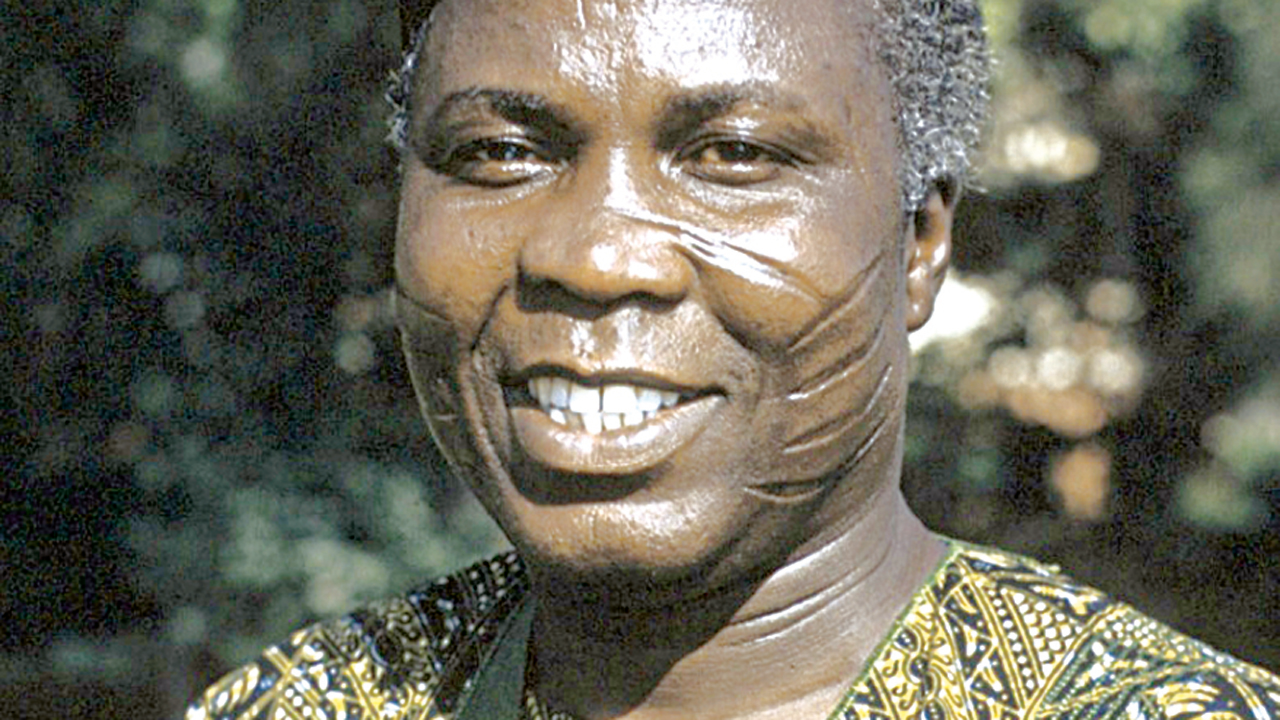
Chief Samuel Ladoke Akintola, popularly known as S. L. Akintola, was a Nigerian lawyer, journalist, politician and statesman who served as the Premier of the Western Region of Nigeria from 1960 until his death in 1966.
He was one of the most influential and controversial political figures in Nigeria’s First Republic.

Akintola played a major role in the politics of the old Western Region, the development of political parties in Nigeria and the political crisis that contributed to the collapse of the First Republic. His political rivalry with Chief Obafemi Awolowo and the divisions within the Action Group remain important subjects in the study of Nigerian political history.
1. Early Life and Background
Samuel Ladoke Akintola was born on 10 July 1910 in Ogbomoso, in present-day Oyo State, southwestern Nigeria.
He grew up during the colonial period, when Nigeria was under British rule. His early experiences came at a time when Western education, newspapers, political associations and campaigns for self-government were becoming increasingly important in Nigerian society.
Akintola developed an interest in education, public affairs and politics. His professional and political activities eventually made him a prominent voice in the struggle over how Nigeria should be governed after independence.
2. Education
Akintola received his early education in southwestern Nigeria before pursuing further studies and professional training.
He later studied law in Britain and qualified as a barrister. His legal education helped him build a career in public life, where constitutional issues, regional administration and the future of Nigeria’s political system were central concerns.
His education and professional experience also contributed to his ability to participate in debates about constitutional development and governance.
3. Career as a Journalist
Before becoming one of Nigeria’s leading politicians, Akintola worked as a journalist.
Journalism provided an avenue for him to engage with public affairs and communicate political ideas. During the colonial era, newspapers played a significant role in educating the public, criticising government policies and promoting nationalist movements.
Akintola’s experience in journalism helped develop his public-speaking and political communication skills, which later became important assets in his political career.
4. Entry into Politics
Akintola became involved in nationalist politics during the period when Nigerian leaders were campaigning for greater self-government and independence from Britain.
He joined the Action Group (AG), a political party founded in 1951 and associated with Chief Obafemi Awolowo.
The party became particularly influential in the Western Region, where it promoted policies on education, social welfare, economic development and regional administration.
Akintola rose through the party’s ranks and became one of Awolowo’s leading political associates. He held important responsibilities in the Western Region’s government and played a role in the party’s national political activities.
However, the relationship between the two men eventually deteriorated, producing one of the most consequential political rivalries of Nigeria’s First Republic.
5. Political Positions and Public Service
Akintola held several important political offices during the final years of British colonial rule and the early years of Nigeria’s independence.
His major positions included:
- Deputy leader of the Action Group: He became one of the party’s leading figures under Awolowo.
- Federal Minister: He served in ministerial positions, including responsibilities for health, communications and aviation.
- Premier of the Western Region: He became premier in 1959 and continued in the office after Nigeria gained independence in 1960, although political conflict interrupted his tenure.
- Leader of the Nigerian National Democratic Party: After breaking with the Action Group, he established a new political base through the NNDP.
- Aare Ona Kakanfo of Yorubaland: He held one of the most prominent traditional military titles in Yoruba society.
Akintola’s role in Nigeria’s independence struggle
Akintola was among the nationalist politicians who pushed for Nigeria’s independence from Britain.
On 26 March 1957, he moved a motion in the Western House of Assembly calling for Nigeria’s independence. The demand formed part of the wider political campaign that eventually led to independence on 1 October 1960.
Although he later became a controversial political figure, his participation in the nationalist movement was an important part of his public career.
6. How Akintola Became Premier of the Western Region
Akintola became Premier of the Western Region in 1959, succeeding Obafemi Awolowo, who moved to the federal legislature to lead the opposition.
When Nigeria became independent in 1960, Akintola remained premier. His administration was responsible for governing the Western Region, which then included areas that today form several states in southwestern Nigeria.
The Western Region was an important centre of education, commerce and political organisation. Its government played a significant role in the development of public services and regional institutions.
Akintola also travelled abroad after independence to seek industrial investment and encourage economic cooperation for the region. Records held by the John F. Kennedy Presidential Library and Museum describe his international outreach as an effort to attract investment and support Western Nigeria’s development.
However, his administration became increasingly entangled in a fierce struggle within the Action Group, a crisis that would threaten both his premiership and the stability of the region.
7. The Political Rift Between Akintola and Obafemi Awolowo
One of the most significant events in Akintola’s life was his falling-out with Chief Obafemi Awolowo, the Action Group leader who had previously been his political ally.
Their disagreement involved political strategy, party leadership and the relationship the Western Region should maintain with the federal government, which was dominated by the Northern People’s Congress (NPC).
Why did they disagree?
Awolowo and Akintola differed over the Action Group’s political direction and its relationship with other parties.
Awolowo favoured a more ideologically defined approach to politics, while Akintola supported closer cooperation with the NPC-led federal government. Akintola believed that such cooperation could help the Western Region secure greater influence and resources at the federal level.
The dispute also involved competing ambitions within the Action Group. As the disagreement deepened, the party became divided into rival camps.
The conflict was not merely a personal disagreement between two politicians. It reflected broader questions about political power, regional interests, party ideology and the distribution of influence in Nigeria’s young federation.
Akintola’s removal from office in 1962
The dispute escalated in 1962 when a group of Action Group legislators opposed Akintola’s leadership.
He was removed from office following a vote of no confidence, and Chief D. S. Adegbenro was put forward to replace him.
Akintola, however, refused to accept the political situation as settled. The dispute produced a serious confrontation within the Western Region’s legislature and government.
The federal government subsequently declared a state of emergency in the Western Region in May 1962. Dr Moses Majekodunmi was appointed administrator during the emergency.
The crisis exposed the depth of political division in the region and became a major episode in the history of Nigeria’s First Republic.
How Akintola returned as premier
After the emergency period, Akintola returned to office in 1963.
His political separation from Awolowo became permanent. Akintola formed the Nigerian National Democratic Party (NNDP), while Awolowo continued to lead the Action Group.
The two politicians subsequently became leading figures on opposing sides of Western Nigerian politics. Their rivalry shaped political alliances and electoral contests in the region until the First Republic ended in January 1966.
8. The Nigerian National Democratic Party (NNDP)
The NNDP was central to Akintola’s political survival after his break with the Action Group.
The party became a major force in the Western Region and entered into an alliance with the Northern People’s Congress, the dominant party at the federal level.
Awolowo’s Action Group, by contrast, joined forces with the National Council of Nigerian Citizens (NCNC), which was influential in the Eastern Region, in an opposition alliance known as the United Progressive Grand Alliance (UPGA).
These rival political arrangements intensified competition between the parties and their supporters.
Akintola’s NNDP remained in power after the disputed 1965 regional election, but the result was fiercely contested. The election controversy contributed to widespread unrest in the Western Region, adding to the political instability that preceded the January 1966 military coup.
9. The Western Region Crisis and the 1965 Election
The 1965 Western Region election became one of the most contentious political contests in Nigeria’s First Republic.
The NNDP, led by Akintola, was declared the winner. However, the opposition challenged the result, and the competing claims of victory aggravated existing tensions.
Political violence spread across parts of the region. The unrest became associated with the period popularly remembered as “Operation Wetie”, in which political opponents and suspected supporters were attacked, with some victims reportedly doused with petrol and set on fire.
The crisis reflected more than an ordinary disagreement over election results. It demonstrated how party rivalry, disputed electoral outcomes and weak political trust could threaten public order.
The violence in the Western Region became one of the major sources of instability facing Nigeria’s First Republic in its final months. Historians commonly identify the crisis as part of the wider political circumstances preceding the military coup of January 1966.
10. Achievements and Contributions
Despite the controversies surrounding his political career, Akintola made contributions to public administration, education, infrastructure and regional development.
A. Promoting economic development
As premier, Akintola sought to attract investment to the Western Region. His international visits were intended to encourage industrial development, establish partnerships and attract investors.
He believed that cooperation with the federal government and foreign investors could help the region advance economically.
B. Supporting education
Education was a major issue in Western Nigerian politics during the period. Akintola’s administration operated within a region that had already developed an extensive educational system under successive governments.
His legacy is associated with efforts to maintain and expand public institutions, although the region’s educational progress was the result of the contributions of several administrations and political leaders rather than one individual alone.
C. Infrastructure and community development
Biographical accounts credit Akintola with supporting development projects in Ogbomoso and other parts of the Western Region. These included improvements to roads, water supply and electricity, as well as efforts to strengthen local educational facilities.
The Nigerian Dictionary of National Biography identifies electricity, water infrastructure and educational development among the projects associated with his public service. NDNB.ng
D. Promoting Western Nigerian interests
Akintola believed that the Western Region needed a strong voice in the federal government. His approach favoured political cooperation with the ruling party at the centre, which he saw as a way of protecting the region’s interests.
His strategy remains debated. Supporters have viewed it as pragmatic political engagement, while critics have argued that his alliance with the NPC weakened the Action Group and contributed to political divisions in the West.
E. Public communication and political oratory
Akintola was recognised for his public speaking and command of language. His background in journalism and politics helped him communicate his ideas to the public.
He was particularly associated with Yoruba oratory, and his speeches and political broadcasts remain part of the historical record of the First Republic.
11. Akintola as Aare Ona Kakanfo of Yorubaland
The title is traditionally associated with a leading military figure or generalissimo in Yoruba society. Its holder has historically been expected to embody courage, leadership and responsibility for the defence of the Yoruba people.
Akintola’s position gave him significance beyond party politics. He was a political leader and a traditional titleholder whose public identity was closely connected to Yoruba history and culture.
He is commonly described in biographical accounts as the 13th Aare Ona Kakanfo of Yorubaland. Some accounts differ in how they number historical holders of the title, so the numbering should be treated with that qualification.
12. Personal Life and Family
Akintola was married to Faderera Akintola, and biographical accounts report that they had five children.
His family was with him in Ibadan during the political crisis that culminated in his death. One of his sons, Abayomi Akintola, later recounted the circumstances surrounding the attack on the family residence during the January 1966 coup.
Although Akintola’s public life was dominated by politics, law and regional administration, his family also became part of the history surrounding his final hours.
13. How Samuel Ladoke Akintola Died
Akintola died on 15 January 1966, during Nigeria’s first military coup.
What happened on 15 January 1966?
In the early hours of 15 January 1966, a group of military officers launched a coup against Nigeria’s civilian government. The operation targeted leading political figures and military officers across the country.
Akintola was killed at his official residence in Ibadan, the capital of the Western Region at the time.
According to accounts later given by his son, Abayomi Akintola, soldiers surrounded the residence during an extended attack. His father eventually went out to confront the attackers after members of the family had urged him to remain inside.
His death was one of the most consequential events of the coup, which brought an end to Nigeria’s First Republic.
How old was he when he died?
Akintola was in his mid-50s when he was killed. Many biographical accounts give his birth date as 10 July 1910 and his death date as 15 January 1966, making him 55 at the time of his death. Some records give a different birth date, so biographical sources are not entirely consistent on the exact date.
Was Akintola’s death the end of the political crisis?
His death occurred as part of a wider military intervention that dismantled the First Republic. The coup did not immediately resolve Nigeria’s political problems. Instead, the country entered a period of military rule and further instability, culminating in the Nigerian Civil War in 1967.
Akintola’s killing therefore remains significant both as a personal tragedy and as part of the broader breakdown of Nigeria’s first post-independence democratic system.
14. The First Republic and Akintola’s Place in Nigerian History
Nigeria’s First Republic operated from independence in 1960 until the military coup of January 1966.
During this period, political parties were strongly associated with regional interests. The Northern People’s Congress dominated much of the North, the NCNC had a major base in the East, and the Action Group was influential in the West.
Akintola’s political career reflected the strengths and weaknesses of this regional political arrangement.
His split with Awolowo weakened the Action Group and produced rival political camps. His NNDP’s alliance with the NPC helped him maintain power, but it also deepened opposition to his government in the Western Region.
The disputed 1965 election and subsequent violence became part of the chain of events that undermined confidence in civilian government before the 1966 coup.
It would be too simplistic to attribute the collapse of the First Republic to Akintola alone. Nigeria faced several interconnected challenges, including regional rivalry, electoral disputes, party divisions and tensions between political leaders and the military. Nevertheless, the Western Region crisis was an important part of the country’s political breakdown.
15. Controversies and Criticisms
Akintola remains a divisive figure in Nigerian history. Assessments of his legacy often depend on how people interpret his political decisions and his relationship with Awolowo.
His break with Awolowo
Critics argue that his conflict with Awolowo divided the Action Group and weakened one of the most influential opposition parties in the country.
Others interpret the disagreement as a genuine dispute over political ideology, federal relations and how best to advance the interests of the Western Region.
His alliance with the NPC
Akintola’s cooperation with the Northern People’s Congress was controversial because the NPC controlled the federal government while his former allies opposed its political dominance.
Supporters saw the alliance as a practical means of gaining federal influence. Critics regarded it as a political compromise that undermined the Action Group’s opposition strategy.
The 1965 election crisis
His government’s continuation in power after the disputed election made him a central figure in the political conflict that engulfed the Western Region.
The resulting violence severely damaged public confidence in the political system. However, the crisis involved several parties and political actors, and responsibility for the unrest should not be reduced to one person alone.
16. Institutions and Places Named After Him
Akintola’s name continues to be associated with education and public life in Nigeria.
Ladoke Akintola University of Technology (LAUTECH)
Located in Ogbomoso, Oyo State, the university specialises in technological, scientific and related fields. Its name keeps Akintola’s memory alive among students, academics and the wider public.
The institution is one of the most visible reminders of his place in the history of Ogbomoso and southwestern Nigeria.
17. Interesting Facts About Samuel Ladoke Akintola
Here are some important facts about his life:
- Full name: Samuel Ladoke Akintola.
- Popular initials: S. L. A.
- Birthplace: Ogbomoso, in present-day Oyo State, Nigeria.
- Birth year: 1910.
- Profession: Lawyer, journalist, teacher and politician.
- Political party: He was initially a leading member of the Action Group before founding the Nigerian National Democratic Party.
- Premier: He led the Western Region during Nigeria’s transition to independence and the early First Republic.
- Traditional title: He held the title of Aare Ona Kakanfo of Yorubaland.
- Political rival: Chief Obafemi Awolowo, his former ally and Action Group leader.
- Major political crisis: The Action Group split, the 1962 emergency in the Western Region and the disputed 1965 election.
- Death: He was killed in Ibadan on 15 January 1966 during Nigeria’s first military coup.
- Legacy: The Ladoke Akintola University of Technology in Ogbomoso bears his name.
18. Why Is Samuel Ladoke Akintola Important Today?
Akintola remains important because his life offers insight into the challenges Nigeria faced in building a stable democratic system after independence.
His career raises enduring questions about political alliances, party loyalty, regional interests, electoral credibility and the relationship between political ambition and public responsibility.
His supporters may emphasise his administrative experience, nationalist contributions, public speaking and attempts to attract investment to the Western Region. His critics are more likely to focus on his break with Awolowo, his alliance with the NPC and the political crisis that developed under his government.
Both sides of the debate form part of his historical significance.
For students of Nigerian history, political science, journalism and public administration, Akintola’s career is a useful case study in how political disagreements can escalate into institutional crises when democratic processes lose public confidence.
Conclusion
Samuel Ladoke Akintola was one of the most prominent political figures of Nigeria’s First Republic. From his early work in education and journalism to his legal career, nationalist politics and leadership of the Western Region, he played an important role in the country’s transition from colonial rule to independence.
His legacy, however, is complex. He is remembered for his political skills, public service and traditional status, but also for his bitter conflict with Obafemi Awolowo and the instability that engulfed the Western Region in the 1960s.
His death during the January 1966 coup marked the end of his political career and coincided with the collapse of the First Republic. Decades later, his life remains central to discussions about the history of southwestern Nigeria and the challenges of democratic governance in Nigeria.