

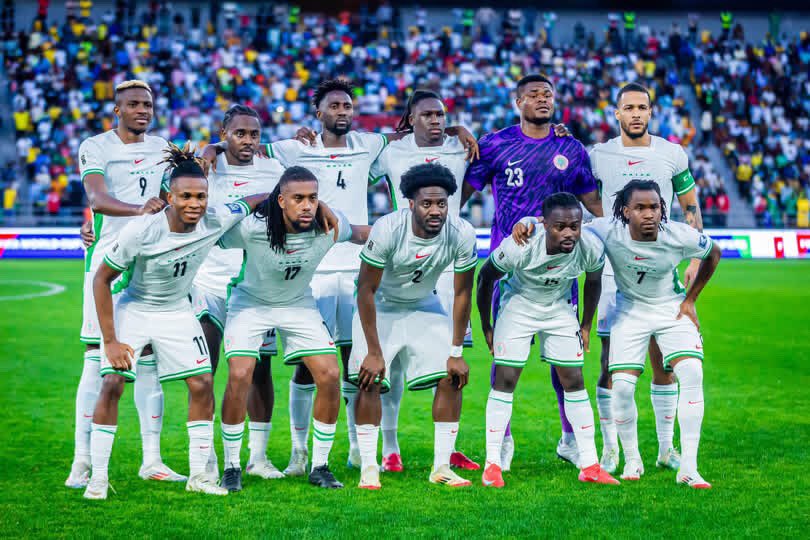
Nigeria’s run at the 2025 Africa Cup of Nations delivered one of the strongest defensive displays of the tournament, built on organisation, discipline, and intelligent game control. Highlights just how effective the Super Eagles were without relying on last-ditch defending.

At first glance, conceding only four goals in seven matches stands out. The underlying statistics make the case even stronger. Opponents averaged just 0.55 expected goals per game and attempted only 7.7 shots per match, most of which came from poor positions. Rather than scrambling to block shots, Nigeria focused on preventing chances from developing in the first place.
How Nigeria Defended as a Unit
From aggressive pressing at the front to coordinated interceptions in midfield and a commanding backline led by Calvin Bassey, the Super Eagles operated as a compact defensive unit. This approach consistently denied opponents access to dangerous areas.
Rivals managed only 2.14 shots on target per match, while the number of clear-cut chances conceded remained minimal throughout the competition. Even during sustained pressure, Nigeria rarely lost shape, often forcing attacks wide or slowing play before real danger emerged. Across the tournament, just 31 shots were allowed from inside the penalty area, underlining how difficult it was to break them down.
Toughest and Most Dominant Defensive Performances
Nigeria’s most demanding defensive test came against Tunisia, where they conceded their highest expected goals figure of the tournament at 1.07. Despite moments of pressure and a near collapse after taking a three-goal lead, the Super Eagles maintained enough control to avoid a complete breakdown.
In contrast, the clash with Mozambique marked the peak of their defensive dominance. Nigeria restricted their opponents to only two shots and an expected goals figure of just 0.10. Against both Algeria and Mozambique, opponents recorded zero expected goals on target, reflecting total defensive control.
AFCON History Confirms Defence Wins Titles
A review of AFCON tournaments since 2008 shows a consistent trend: Nigeria’s best runs are rooted in defensive solidity. Over seven editions, the Super Eagles have scored 57 goals while conceding only 28, producing a healthy +29 goal difference.
The pattern is clear. In 2013, Nigeria won the tournament after scoring 11 goals and conceding four. In 2021, they allowed only two goals in four matches. The 2025 campaign stands out even more, with just four goals conceded and 14 scored, resulting in a +10 goal difference — their strongest across the period analysed.
By comparison, the 2008 tournament, Nigeria’s least effective attacking display, also proved their weakest defensively, ending with an even goal difference.
Smart Game Management at the Core
The data suggests that Nigeria’s most successful AFCON campaigns are not driven by attacking flair alone but by defensive control that allows attacking moments to be decisive. What sets the Super Eagles apart in recent tournaments is their ability to manage games intelligently.
In 2025, they protected leads without dropping too deep, kept compact spacing between lines, and pressed aggressively when opportunities arose. Defensive actions were often made high up the pitch, cutting off passing lanes and limiting opponents’ buildup play.
Goalkeeping, Structure, and What Lies Ahead
Goalkeeping also played a supporting role, as Nigeria finished the tournament with a positive goals-prevented figure of +0.39. While modest, it reflects a system that rarely allowed clear chances, meaning opponents needed exceptional opportunities to score.
Historically, the Super Eagles have always been difficult to beat, and the 2025 AFCON data reinforces that reputation. With one of the lowest expected goals conceded figures paired with strong attacking output, Nigeria appear to have rediscovered a defensive foundation capable of supporting sustained continental success.
