


A lot of Nigerians relying on bank transfers to pay for goods and services, fraudsters are coming up with different ways to steal from unsuspecting people.
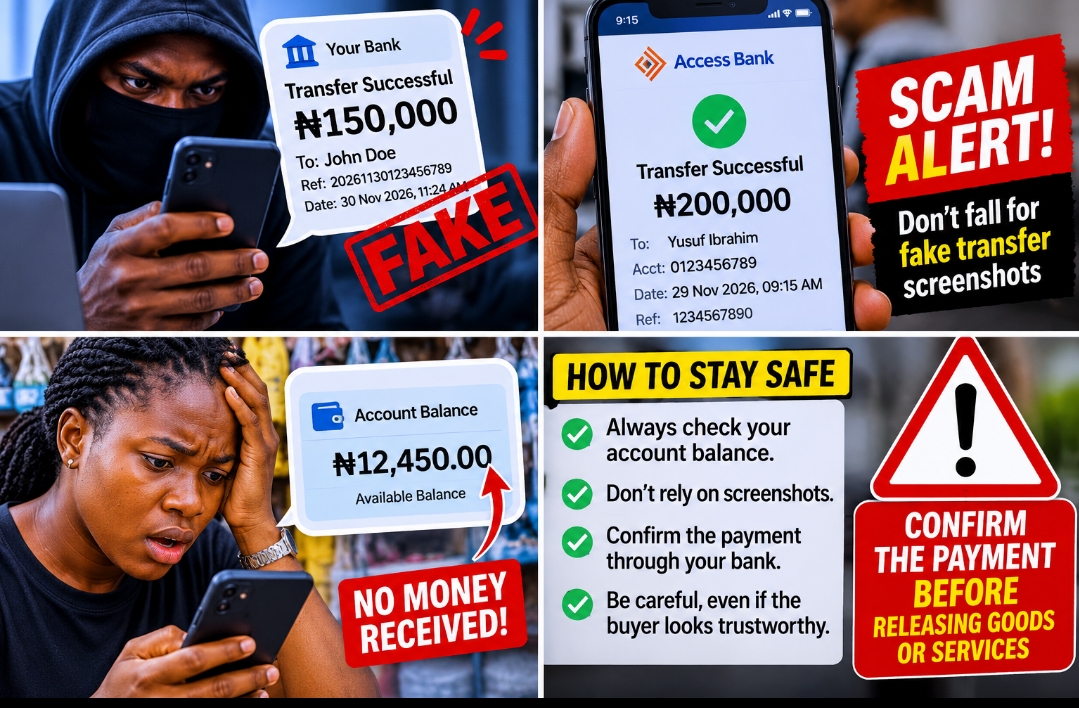
One of the tricks they use is sending fake bank transfer screenshots to make victims believe they have received money.
The scam usually happens when someone wants to buy a product or pay for a service. After agreeing on the price, the supposed customer claims to have made a transfer and quickly sends a screenshot showing that the payment was successful. But there is a problem: the money may never have been sent.
Some scammers use photo-editing applications or fake banking apps to create receipts that look exactly like genuine bank transaction alerts. They can add the receiver’s name, account number, amount, date and transaction reference to make the screenshot look real.
In other cases, fraudsters send screenshots of pending transactions and tell sellers that the money will reflect in their accounts shortly. They may even blame network problems or bank delays to convince their victims.
The aim is to make the seller release the goods before discovering that no payment was made.
For instance, a trader selling a phone online could receive a screenshot showing a successful transfer of ₦150,000. Believing the payment is genuine, the trader hands over the phone. Only later does the seller discover that the account balance has not changed and no money was received.
Small business owners, online vendors, market traders and other people who regularly receive bank transfers are particularly exposed to this type of fraud.
To avoid falling victim, Nigerians are advised to always check their bank balance or transaction history before releasing goods or providing services. A screenshot sent by a customer should never be treated as proof that money has entered an account.

Even when a buyer appears trustworthy or is in a hurry, sellers should take time to confirm every payment directly through their banking channels.
The lesson is simple: Seeing a transfer receipt does not mean you have received the money. Always confirm the payment in your account before completing a transaction.
