
‘Presidential Promotion Council’: “How does a fictitious agency appear in the national budget?” Ex-minister queries Presidency over Adeyemi

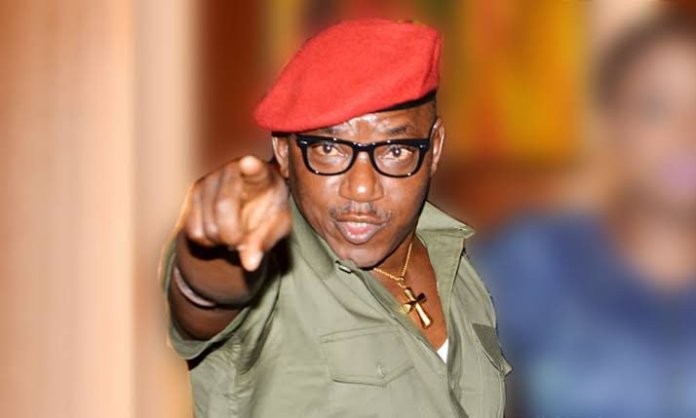
Former Minister of Youth and Sports, Solomon Dalung, has reacted to the Presidency’s defence of Femi Gbajabiamila over allegations of bribery involving Adeniyi Adeyemi, saying the government’s statement raised more questions than answers.
Dalung, in a statement, said the response issued by Bayo Onanuga on behalf of the Presidency appeared aimed at shutting down public scrutiny but instead deepened concerns surrounding the controversy.
He questioned how an allegedly non-existent agency could have secured office space within the Federal Secretariat, interacted with government institutions, and even appeared in the national budget with a multi-billion naira allocation.
According to the former minister, “if that is truly what happened, then this is no longer just the story of an alleged fraudster. It is also the story of spectacular institutional failure. Either government systems were astonishingly easy to deceive, or there are questions that still have not been answered.”
He stressed that accountability should not end with prosecuting one individual but must also include explaining how government institutions allegedly validated or failed to detect what is now described as a fabricated agency.
His full statement below:
“I just read the statement issued by Bayo Onanuga on behalf of the Presidency, which supposedly trying to put a defence for the Chief of staff, Gbajabiamila.
However, I think the Presidency’s statement was clearly intended to shut down public scrutiny. Ironically, it has achieved the exact opposite. It answered some questions, but in doing so, it exposed even bigger ones.
Let us assume, for a moment, that every allegation against Prince Adeyemi is true. Even then, the statement leaves glaring gaps that no amount of rhetoric can paper over.
You are asking Nigerians to believe that one private citizen woke up one morning, invented a presidential agency, forged his own appointment, secured office space inside the Federal Secretariat, recruited staff, held meetings with diplomats, corresponded with government institutions, allegedly opened a CBN account through official channels, and if the official budget documents are anything to go by, the same “non-existent” agency found its way into the Appropriation Act with an allocation running into billions.
If that is truly what happened, then this is no longer just the story of an alleged fraudster. It is also the story of spectacular institutional failure. Either government systems were astonishingly easy to deceive, or there are questions that still have not been answered.
The statement conveniently glosses over the budget issue. That silence is deafening.
How does a fictitious agency appear in the national budget? Budget allocations do not descend from heaven. They pass through ministries, the Budget Office, executive review and legislative approval. Who introduced the line item? Who processed it? Who signed off on it? Who failed to ask whether the agency even existed?
Those are not political questions. They are governance questions.
Then there is the issue of the Federal Secretariat office. Offices inside government complexes are not roadside kiosks. How was the space obtained? Under whose authority? How long did it operate? Who interacted with the occupants? Who looked the other way?
Again, silence.
Then comes the most curious part of the story.
The Presidency says the very person allegedly identified as the link between Adeyemi and the purported appointment, Dolapo Babatunde Tanimola, had died in a hotel fire just five days before Adeyemi’s arrest.
That is an extraordinary detail. Yet we are given almost nothing beyond it.
Was there an autopsy? Was there a coroner’s inquest? What did investigators conclude about the fire? Were his electronic devices, communications and financial records examined? If he was central enough to be named in the statement, why is the public expected not to ask what became of the investigation into his death?
These are not conspiracy theories. They are the obvious questions any serious investigator would ask.
The Presidency wants Nigerians to focus exclusively on whether Adeyemi is an impostor. Fair enough. The courts will determine that.
But the Presidency cannot ask the public to ignore the conduct of government institutions in the same breath.
This is bigger than one man.
If the council was fake, explain how it entered the budget.
If the appointment was forged, explain how government systems repeatedly interacted with the supposed beneficiary.
If official channels were deceived, explain where the safeguards failed.
If there was no insider involvement, show the documentary trail that proves it.
Accountability does not begin and end with charging one individual. It also requires explaining how the machinery of government appeared to validate, accommodate or fail to detect what is now described as a complete fabrication.
The public deserves more than a carefully written press statement. It deserves answers backed by records, timelines and evidence.
Until those answers are provided, this matter is far from settled.”
Barr. Solomon Dalung
Ex Minister of Youths & Sports