

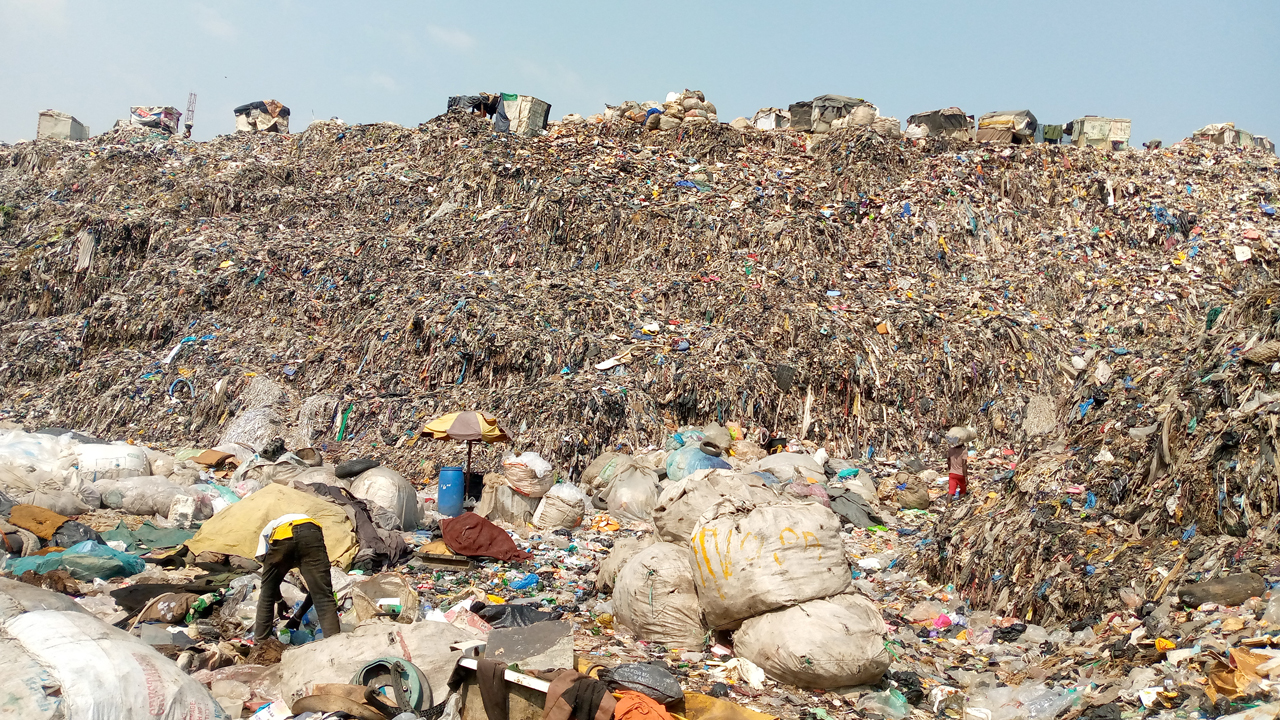
The Lagos State Government has revealed plans to shut down several major landfills that are no longer effective, as part of its broader initiative to enhance waste management and promote environmental sustainability across the state.
Commissioner for the Environment and Water Resources, Tokunbo Wahab, made this known in a post on X (formerly Twitter) on Wednesday, following a meeting with chairmen of all 57 Local Government Areas and Local Council Development Areas.

According to Wahab, the decision aligns with the state’s long-term goal of creating a cleaner and flood-free Lagos through better collaboration between state and local governments.
“We are decommissioning landfills like Olusosun and Solous 3 that have outlived their usefulness, while ensuring that functional ones like Epe remain active and efficient,” he stated.
The meeting, held at the Ministry of the Environment and Water Resources, also had in attendance the Commissioner for Transportation, Oluwaseun Osiyemi; Commissioner for Local Government, Chieftaincy Affairs and Rural Development, Bolaji Roberts; Secretary to the State Government, Bimbola Salu-Hundeyin; Special Adviser on the Environment, Olakunle Rotimi-Akodu; as well as Permanent Secretaries and heads of agencies.
Wahab said the gathering focused on strengthening collaboration with local councils to address flooding and environmental infractions at the community level.
“Our message was clear: environmental management begins at the grassroots.
“We must all work together to build a cleaner, flood-free Lagos where waste becomes a resource rather than a burden,” he said.
The commissioner emphasised that each local government must play an active role in ensuring proper waste collection, community sensitisation, and enforcement against indiscriminate dumping.
He also reminded council chairmen that the ban on street trading remains in effect and warned that environmental offences must be addressed decisively.
“The state is building resilient drainage and flood control infrastructure; our Local Governments must mirror this commitment in their own communities,” Wahab added.
He stressed that environmental sustainability is a shared responsibility that requires cooperation among all tiers of government.
“The State Government will continue to lead from the front, but true progress will come when all tiers of government work hand in hand,” Wahab said.
