
IMF retains 4.1% growth forecast for Nigeria, says higher essential commodities prices may worsen poverty, food insecurity

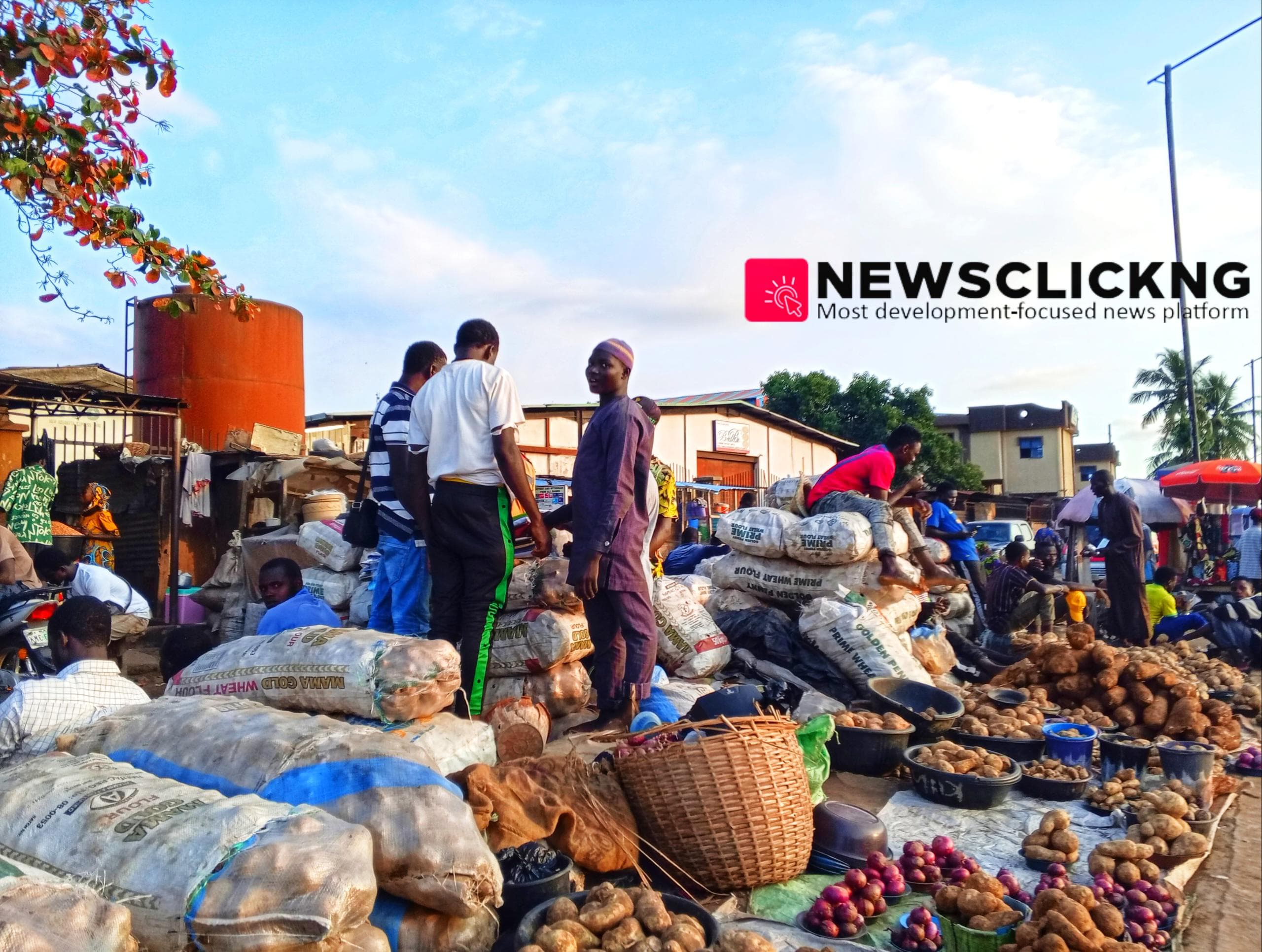
The International Monetary Fund (IMF) has retained Nigeria’s economic growth forecast at 4.1 percent for 2026, but warned that higher prices for essential commodities will worsen poverty and food insecurity.
In its July 2026 World Economic Outlook (WEO) Update released on Wednesday, the IMF said Nigeria’s gross domestic product (GDP) would expand by 4.1 percent this year and improve to 4.3 percent in 2027 — unchanged from its April forecast.
The Bretton Woods institution also maintained sub-Saharan Africa’s growth outlook at 4.3 percent for 2026 and 4.5 percent for 2027.
“Nigeria is supported by improved macroeconomic stability and favorable terms-of-trade effects, though higher prices for essentials are expected to further aggravate poverty and food insecurity,” the IMF said.
“Growth in sub-Saharan Africa is expected to remain broadly stable at 4.3 percent in 2026, though this masks substantial divergence across countries, reflecting differences in policy space, reform implementation, and exposure to external shocks”.
“Oil-importing, non-resource-intensive economies are more adversely affected by higher energy and food prices, whereas some larger economies continue to benefit from earlier stabilisation and reform efforts, even though they are largely absent from the AI-driven global technology upswing and face headwinds from the decline in official development assistance.”
In the report, the multilateral institution downgraded its global growth forecast for 2026 to 3 percent from 3.1 percent projected in April, while raising its 2027 projection to 3.4 percent.
“The modest slowdown reflects the effects of the war in the Middle East being partly offset by accelerated demand-driven momentum in the global technology cycle thanks to advances in artificial intelligence (AI) and its adoption,” the organisation said.
The IMF said the global economy has remained resilient despite heightened uncertainty, noting that downside risks continue to dominate the outlook.
“The balance of risks remains tilted to the downside,” the IMF said, warning that renewed trade tensions, geopolitical conflicts, and tighter financial conditions could weaken global growth further.
The IMF advised countries to rebuild fiscal buffers amid elevated debt levels, higher borrowing costs, and growing external uncertainty.
“Rebuilding fiscal space remains essential given elevated debt, higher borrowing costs, and heightened external uncertainty,” the fund said.
The lender said fiscal consolidation should be anchored on stronger revenue mobilisation, improved tax administration, and more efficient public spending.
“Credible medium-term consolidation should rest on durable revenue measures, stronger tax administration, greater spending efficiency, and reallocation toward growth-enhancing priorities such as infrastructure, skills, and well-targeted social protection,” the report said.
The IMF also urged commodity-exporting countries to avoid procyclical spending during periods of higher revenues.
“Economies benefiting from commodity windfalls and the upturn in the global technology cycle should avoid procyclical spending and save or redeploy gains within a credible medium-term fiscal framework anchored in debt sustainability,” it said.
The lender urged policymakers to accelerate structural reforms to improve productivity, strengthen labour markets, expand digital and physical infrastructure, and deepen international cooperation to support sustainable global growth.
The IMF also called for predictable trade policies to reduce uncertainty and encourage private investment.
