

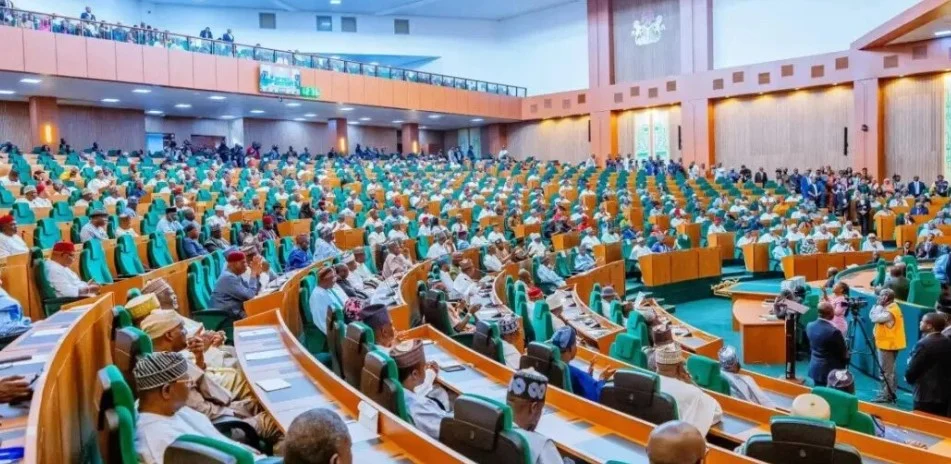
The House of Representatives has begun debating a bill seeking to create the National Commission for Rural Infrastructure and Development, an agency aimed at improving infrastructure and accelerating development in rural communities across the country.
Opening debate on the bill during Wednesday’s plenary, its sponsor, Saidu Abdullahi (APC, Niger), said Nigeria’s quest for sustainable economic growth would remain difficult if rural communities continued to lack access to essential infrastructure and economic opportunities.

He argued that rural development should be treated as “a strategic economic priority” because rural areas are home to a large percentage of the country’s population and serve as the backbone of agricultural production and raw material supply.
Abdullahi said the proposed commission would coordinate, finance and monitor rural infrastructure projects while providing policy direction and technical support nationwide.
“No nation can attain sustainable economic growth while neglecting the communities that produce its food, supply its raw materials and sustain its local economy. Rural development must therefore be regarded not merely as a social obligation but as a strategic economic priority,” he said.
The proposed legislation, HB 2795, which was introduced on July 9, 2026, also provides for the establishment of a National Rural Development Fund to finance infrastructure projects in underserved communities.
The lawmaker noted that while existing ministries and agencies are responsible for sectors such as roads, agriculture, power, education, health and water resources, there is no central institution coordinating rural development across the federation.
“The proposed commission is therefore not intended to replace or duplicate the statutory functions of existing Ministries, Departments and Agencies. Rather, it is designed to complement and strengthen their efforts by providing a unified institutional framework for financing, coordination, policy guidance, monitoring, technical assistance and performance evaluation,” he stated.
Abdullahi explained that the commission would operate mainly as a funding and oversight body, leaving project implementation to State Rural Infrastructure and Development Boards or other designated state agencies under a counterpart funding arrangement.
He said state governments would be responsible for preparing development plans, providing counterpart funding, executing approved projects and accounting for the use of intervention funds.
According to him, the funding mechanism would draw resources from federal appropriations, grants, development partners, private sector contributions, state counterpart funding, investment income and other legally approved sources.
The bill also proposes funding from portions of VAT revenue, returns from the Sovereign Wealth Fund and proceeds from assets permanently forfeited in corruption cases, subject to approval by the National Assembly.
Abdullahi stressed that legislative oversight would remain intact because all funding sources would still require appropriation by lawmakers.
He said the proposal aligns with Sections 14(2)(b) and 16(2)(d) of the 1999 Constitution, which mandate government to promote citizens’ welfare and improve living conditions through infrastructure development.
The lawmaker recalled the experience of the defunct Directorate of Food, Roads and Rural Infrastructure, saying it showed the positive impact targeted rural investments could have despite facing funding and institutional challenges.
He added that the new commission would be guided by “modern principles of transparency, accountability, intergovernmental collaboration, sustainable financing, digital monitoring and legislative oversight.”
Abdullahi also pointed to South Korea’s Saemaul Undong initiative and similar rural development programmes in countries such as India, China, Brazil, Indonesia, South Africa and the United States as successful examples.
If enacted, the commission would support investments in rural roads, bridges, water supply, sanitation, renewable energy, irrigation, schools, healthcare facilities, digital connectivity, markets, storage facilities and agro processing centres.
He said the intervention would improve food security, boost agricultural output, attract private investment, create jobs and slow rural to urban migration.
“This bill is not merely about creating another commission. It is about creating a national institution dedicated to ensuring that rural communities receive the infrastructure, investments and opportunities necessary for sustainable development,” Abdullahi said.
He appealed to his colleagues to support the bill’s second reading and allow it to proceed to the committee stage for further consideration.
