
Yeye Dupe’s Missive: Osogbo Deserves Respect, Not Political Sweet Talk, By AbdulLateef Adeola Ibrahim

Politics, at its noblest, is the art of persuasion. It is the ability to inspire confidence, build consensus and mobilise citizens around a shared vision of progress. Yet persuasion loses its virtue the moment it slips into condescension. When political communication begins to sound like a favour being dispensed rather than a partnership being sought, it inevitably provokes resentment rather than loyalty.
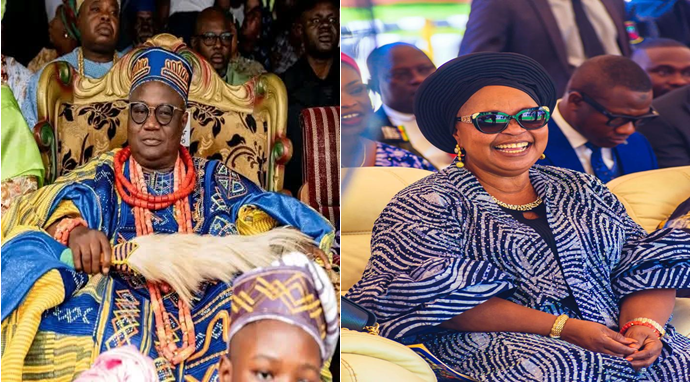
It is against this backdrop that many residents of Osogbo received the recent remarks reportedly made by Yeye Dupe Adeleke at the Olorunda Local Government campaign rally. The essence of the message, as widely interpreted, was that Osogbo’s path to producing a future governor of Osun State would first require the city to secure another term for Governor Ademola Adeleke. Whether intended or not, the statement struck many as patronising.

It conveyed the impression that the governorship of Osun is a reward to be earned through political obedience rather than a constitutional office open to every qualified citizen and every community within the state. To many sons and daughters of Osogbo, it sounded less like a statement of political strategy and more like an attempt to dangle a future possibility before the people in exchange for present-day political support. Such a proposition misunderstands both the character and the history of Osogbo.
Osogbo is not a political outpost waiting for validation from any individual, family or political dynasty. It is the capital of Osun State. It is a city whose contributions to the political evolution, economic development and cultural identity of Osun are neither incidental nor insignificant. Long before contemporary political actors emerged on the scene, Osogbo had established itself as a centre of administration, commerce, intellectual engagement and democratic participation.
Its people are not strangers to leadership, nor are they apprentices in the business of politics. They understand power, they understand governance and, perhaps more importantly, they understand the difference between genuine partnership and political patronage.
The aspiration of Osogbo to produce a governor is neither a favour to be granted nor a privilege to be bestowed by any political household. It is a legitimate democratic aspiration rooted in citizenship and equality. Like every other community in Osun State, Osogbo possesses the inalienable right to aspire to the highest office in the state. That right does not depend on endorsements from political godfathers, nor does it require certification from those who temporarily occupy positions of influence.
Democracy does not function based on political inheritance. It thrives on the sovereignty of the people.
Indeed, one wonders how such a message would have been received had it been delivered in Ile-Ife, Ilesa, Iwo, Ikirun, Ede or any other major town in Osun State. Would their citizens quietly accept being told that their future political ambitions are conditional upon first delivering electoral victories to another interest group? It is doubtful. Politically conscious communities, regardless of their partisan affiliations, naturally recoil when their collective aspirations are presented as rewards contingent on obedience. Communities deserve respect, not political bargaining chips.
The truth is that no town owns the governorship of Osun State. No family owns it. No political party owns it. No individual possesses the authority to allocate it as though it were personal property. The office belongs exclusively to the people of Osun State, who reserve the right to choose their leaders through the democratic process.
This is why political leaders must exercise caution in the language they employ. Words matter. They shape perceptions, influence relationships and often reveal underlying attitudes. When communities perceive that they are being spoken to from a position of superiority rather than partnership, trust begins to erode.
The people of Osogbo are politically mature enough to know that elections are not won on promises of future favours. They are won through demonstrable performance, credible leadership, competence, accountability and a compelling vision for the future. Their votes are not tokens to be exchanged for speculative promises. They are instruments of democratic choice.
Furthermore, reducing the political aspirations of a historic city such as Osogbo to a transactional arrangement diminishes the very spirit of democratic competition. Leadership should emerge from merit, vision and the confidence of the electorate, not from suggestions that one community must first secure another person’s political future before being considered worthy of pursuing its own.
At a time when Nigerians increasingly demand issue-based politics, inclusive governance and respect for democratic institutions, political actors must rise above rhetoric that appears feudal in tone and transactional in substance. The electorate is becoming more enlightened, more discerning and less willing to accept narratives that portray political offices as gifts distributed by powerful interests.
Osogbo seeks no special privilege. It asks for no preferential treatment. It merely insists on what every democratic society should guarantee: respect, equality and the unrestricted right to aspire. As the Yoruba wisely remind us, “Ọ̀gbọ́n tí a fi ń wo ara ẹni kì í ṣe ọ̀gbọ́n” – self-admiration is not wisdom.
True political wisdom lies in humility. It lies in recognising that every community matters. It lies in understanding that no town’s destiny is tied to the benevolence of another. Above all, it lies in appreciating that the people are not subjects to be managed but citizens to be respected.
Osogbo deserves that respect. Not political sweet talk, not conditional promises but respect !
AbdulLateef Adeola Ibrahim, a community activist writes from Agowande Area, Ward 1, Olorunda Local Government, Osogbo.
